
Chloé Zhao’s filmmaking journey reached a new milestone with her film Hamnet, currently nominated for Best Picture at this year’s Academy Awards. This deeply personal and imaginative creation explores the inspiration behind William Shakespeare’s iconic play Hamlet, blending fiction with heartfelt emotion. Zhao’s sensitive directing style and unique methods have contributed to the film’s critical acclaim and her own nomination for Best Director, positioning her to potentially become the first woman to win this award twice.
Integrating Rituals and Energy on the Set
Zhao infuses her creative process with rituals that establish intention and energy on set. Prior to Hamnet’s premiere at the Toronto International Film Festival last year, she led the audience through a guided meditation and breathing exercise to set a reflective tone. Her approach extends beyond the confines of traditional filmmaking; during a recent screening in Los Angeles, she invited the audience to dance along with her to a Rihanna track, underscoring her belief in connection and communal energy.
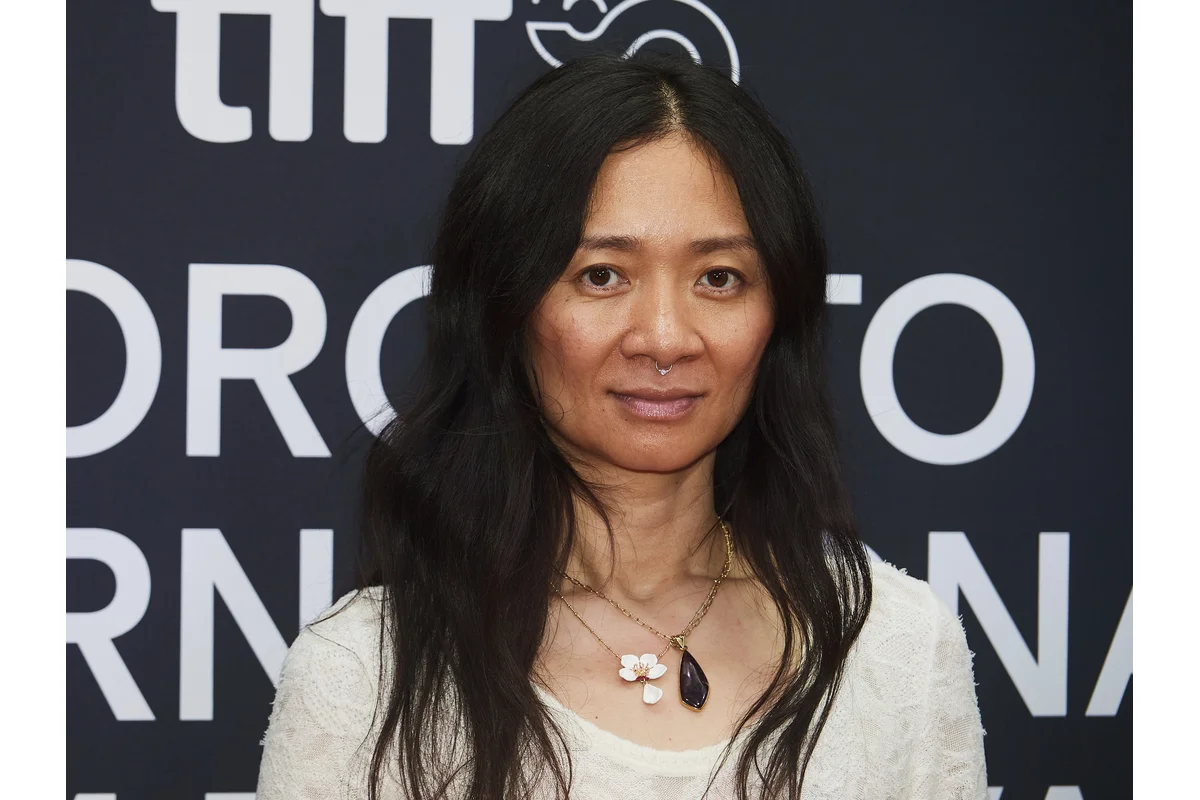
The production itself was marked by regular dance parties among cast and crew, fostering a relaxed and vibrant atmosphere. For a photo shoot and interview held in Beverly Hills, Zhao chose music described as “drones and tones,” reflecting her preference for ambient soundscapes that align with her films’ moods. Captured in a delicate white gown behind sheer curtains at the Waldorf Astoria hotel, her contemplative presence mirrored the introspective nature of her work.
Dreams and Symbolism as Creative Tools
Zhao considers dreams and symbols integral to her filmmaking style, regarding the craft as a magical, collective experience. During the interview, a coincidental glass globe on the desk sparked a conversation about dreams and inner awareness.
“They’re your inner crystal ball, your inner Chloé,”
Zhao said, emphasizing the subconscious layers she brings into her work. She encouraged an open interpretation of these symbols as facets of personal psyche, which in turn influence the emotional depth of her films.
Growing into Leadership and Emotional Awareness
She explained that directing requires more than technical guidance; it involves emotional leadership.
If you’re captain of any ship, you are not just giving instructions; people are also looking to you energetically as well,
Zhao said.
Whether it’s calmness, it’s groundedness, it’s feeling safe: then everyone else is going to tune to you.
Her mastery of this energetic presence has evolved over time, shaped by her experiences growing up in Beijing and later studying at New York University, where filmmaker Spike Lee was among her instructors. She refined her skills at the Sundance Institute labs alongside fellow creatives like Ryan Coogler, building a diverse and adaptive directing style.
A Versatile Filmography Shaping an Oscar-Winning Career
Zhao’s body of work defies easy categorization, spanning intimate indie dramas and large-scale blockbusters. Her debut, Songs My Brothers Taught Me, explored life on a Lakota Sioux reservation, whereas she later directed Marvel’s superhero installment Eternals. Her breakthrough came with Nomadland, which won Best Picture and earned her the first Best Director Oscar in 2021. Now she is preparing to helm a reboot of Buffy the Vampire Slayer, further demonstrating her range and determination.
Creating Intimacy Through Unconventional Methods on Hamnet
Hamnet delves into the painful loss of a child, a subject Zhao approached with extreme care and emotional openness. She incorporated somatic and tantric exercises to start and end shooting days, emphasizing presence and vulnerability. The lead actors Paul Mescal and Jessie Buckley were actively involved in shaping the atmosphere, participating in dance, painting, and meditation sessions to connect deeply with the story’s themes.
She created an atmosphere where everybody who chose to step in to tell this story was there for a reason that was deeply within them,
Jessie Buckley said, reflecting the environment Zhao cultivated. Buckley, a strong contender for the Best Actress Oscar this year, described how Zhao had her document her dreams as a means of accessing internal emotions.
A tone and texture of that essence,
was how Buckley described the music she shared with Zhao, which became part of their creative ritual, uniting cast, crew, and camera to tap into a shared unconscious.
Steven Spielberg Commends Zhao’s Empathy and Fearlessness
Hamnet’s exploration of communal grief resonated strongly with those involved, including co-producer Steven Spielberg, who lauded Zhao’s empathetic directing as a “superpower.” Speaking at the Directors Guild of America awards, Spielberg recognized Zhao’s meticulous attention to emotional details.
In every glance, in every pause and every touch, in every tear, in every single moment of this film, every choice that Chloé made is evidence of her fearlessness,
Spielberg remarked.
In Hamnet, Chloé also shows us that there can be life after grief.
A Journey of Emotional Growth and Catharsis
Zhao disclosed that the process of making Hamnet stretched over five years and coincided with a personal midlife crisis, during which she developed the emotional resilience necessary to tell such a demanding story.
I hope it could give people a two-hour little ceremony,
she shared.
And in the end, I hope that a point of contact can be made. That means that there’s a heart opening. But it will be painful, right? Because when your heart opens, you feel all the things you usually don’t feel. And then a catharsis can emerge.
Honoring Sound and Silence in Storytelling
As the interview concluded, Zhao and the interviewer shared a quiet moment reflecting on the importance of ambient sound, known as room tone, in film production. Zhao recounted advice from her late friend Michael Wolf Snyder, her sound recordist for Nomadland.
He said to me, ‘I don’t always need it, but just so you know, I am going to watch you. And when I tell that you are a little frazzled, I’m going to ask for a room tone … just to give you space.’
Zhao recalled.
‘And if you feel like you need the silence space, you just look at me, nod. I’ll come ask for a room tone.’
This moment of peace marked the end of the interview ceremony, offering a symbolic closure to a conversation about Zhao’s singular artistic vision and emotional depth.
