
The César Awards organizers in Paris have firmly rejected online rumors claiming that Jim Carrey was replaced by an impersonator during the ceremony held on February 26. Addressing the growing Jim Carrey clone controversy, officials confirmed that the actor’s appearance at the event was authentic and prearranged.
These rumors erupted after Alexis Stone, a drag artist and makeup illusionist, shared an Instagram post on March 1 suggesting he had transformed into Carrey. The post featured pictures from the awards night alongside an image displaying a mask, fake teeth, and a wig, fueling speculation that a prosthetic double had stood in for the 63-year-old actor. Social media quickly amplified this theory as viewers questioned the reality of what they saw, mixing skepticism with the power of hyperreal makeup effects.
Official Response to Claims of an Impersonator at the César Awards
Gregory Caulier, the César Awards’ general delegate, dismissed the clone theory by detailing the long-standing arrangements made with Jim Carrey and his team. According to Caulier, the actor’s visit was planned since the previous summer and involved several months of preparation, including carefully practicing his speech in French. Carrey was accompanied by numerous close individuals, including his partner, daughter, grandson, twelve friends and family members, as well as his longtime publicist. Filmmaker Michel Gondry, a known friend and collaborator, was also present at the ceremony.
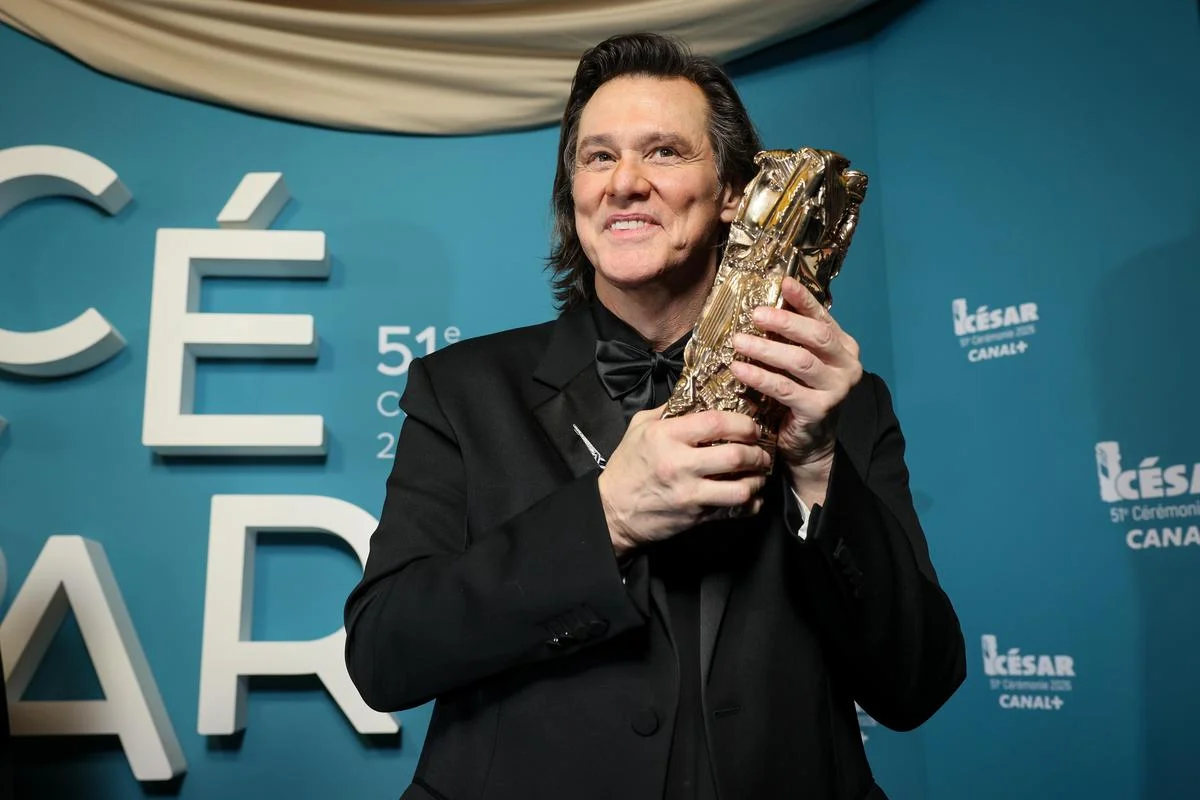
Caulier described the rumors as baseless and emphasized Carrey’s professionalism and generosity throughout the event. He provided a clear timeline and list of attendees to counter the online speculation, making it evident that the event was authentic and well-documented.
The viral Instagram post featuring the mask and prosthetics lacked any transparent evidence of an actual transformation or proof of access to the ceremony, meaning those claims remain unverified. Carrey’s publicist further stated, as widely reported, that it was indeed the actor himself who attended the awards show, effectively debunking the impersonator story.
Context Behind the Plastic Surgery Speculation
This clone controversy did not emerge in isolation. For months prior to the César Awards, Jim Carrey’s changing appearance had sparked separate conversations about possible cosmetic procedures. Driven by high-definition photos and lighting that exposed subtle facial alterations, some observers speculated about surgical work.
In November, Dr. John Diaz, a Beverly Hills-based board-certified plastic surgeon, commented publicly that Carrey appeared to have had facial surgery. Diaz noted features such as a distinct line beneath Carrey’s jawline, suggesting neck muscle tightening, which gave the actor’s profile a more refined contour compared to earlier images. Despite this, Diaz emphasized that his observations were speculative and that he had no direct knowledge or involvement in Carrey’s medical history. The actor has not addressed or confirmed any plastic surgery claims.
Why the Clone Rumor Gained Traction
The combination of rising plastic surgery chatter and the illusionist’s striking Instagram post created fertile ground for the clone rumor to spread. The public’s distrust of visual evidence, amplified by the realism of prosthetic makeup, encouraged some to believe in a more theatrical explanation over natural aging or cosmetic enhancements.
Nonetheless, the César Awards officials have maintained a straightforward narrative: Jim Carrey was invited well in advance, attended the event with his close circle, and performed his French-language speech himself. This official account stands in direct contrast to the unfounded claims lacking any verified proof.
The ongoing fallout from this incident highlights broader challenges in the digital age, where misinformation can spread quickly and blur the lines between reality and artifice. As the Jim Carrey clone controversy continues to simmer online, the César Awards’ firm denial serves as a critical reminder to approach sensational claims with caution while respecting verified facts.
The general delegate for the Cesar Awards in Paris is weighing in on a viral conspiracy theory that someone impersonated Jim Carrey in the comedian's place at the event. https://t.co/aRao6Xvgkb
— Us Weekly (@usweekly) March 2, 2026
NEW: Cesar Awards delegate responds after makeup artist Alexis Stone appeared to have taken credit for being Jim Carrey in Paris.
Stone shared a post and a series of stories on Instagram with the caption: Alexis Stone as Jim Carrey in Paris.
In response to the new post from… pic.twitter.com/V50iphDrUD
— Collin Rugg (@CollinRugg) March 2, 2026
EXCLUSIVE: It really was Jim Carrey at the award show in Paris, his publicist says.
Read more: https://t.co/TSUrCjj3wM pic.twitter.com/l2UJX7YFpQ
— TMZ (@TMZ) March 2, 2026
Jim Carrey Had Some 'Facial Rejuvenation Procedures,' Plastic Surgeon Speculates After Star’s Unrecognizable Look Goes Viral https://t.co/Bfb0x5nhaD pic.twitter.com/a0RHyzQOCB
— OK! Magazine USA (@OKMagazine) November 13, 2025
