
Gillian Anderson has publicly addressed the ongoing gender pay gap in Hollywood, revealing she was once offered significantly less money than her male co-star. The 57-year-old American actress, recognized for her roles as Dana Scully in The X-Files and Jean Milburn in Sex Education, described this disparity despite her long and celebrated career alongside prominent male colleagues.
Over her 40-year career, Anderson has earned acclaim through awards like the Emmy and Golden Globe, yet she continues to face unequal pay battles. Although she successfully narrowed this wage gap during the original run of The X-Files in the 1990s, when the show was revived as a miniseries in 2016, she encountered the same unequal pay challenges from decades prior. The offer for her return was reportedly half that of David Duchovny’s salary, reigniting her frustration with the issue.
The Struggle Behind Equal Pay During and After The X-Files
Anderson spoke about her experience on the Great Chat Show with Josh Smith, expressing surprise that this problem persisted so many years later.
“I think for a long time I either didn’t want the responsibility of being a role model or being labelled as a role model,”
she explained, highlighting her hesitation around repeatedly advocating for equal pay. Reflecting on the situation, she said,
“oh my God, they want to talk about this again.”
— Gillian Anderson, Actress
She admitted that the offer of a “huge percentage less” than her male co-star pushed her to speak out publicly, making her realize the issue remains very much current. Anderson revealed,
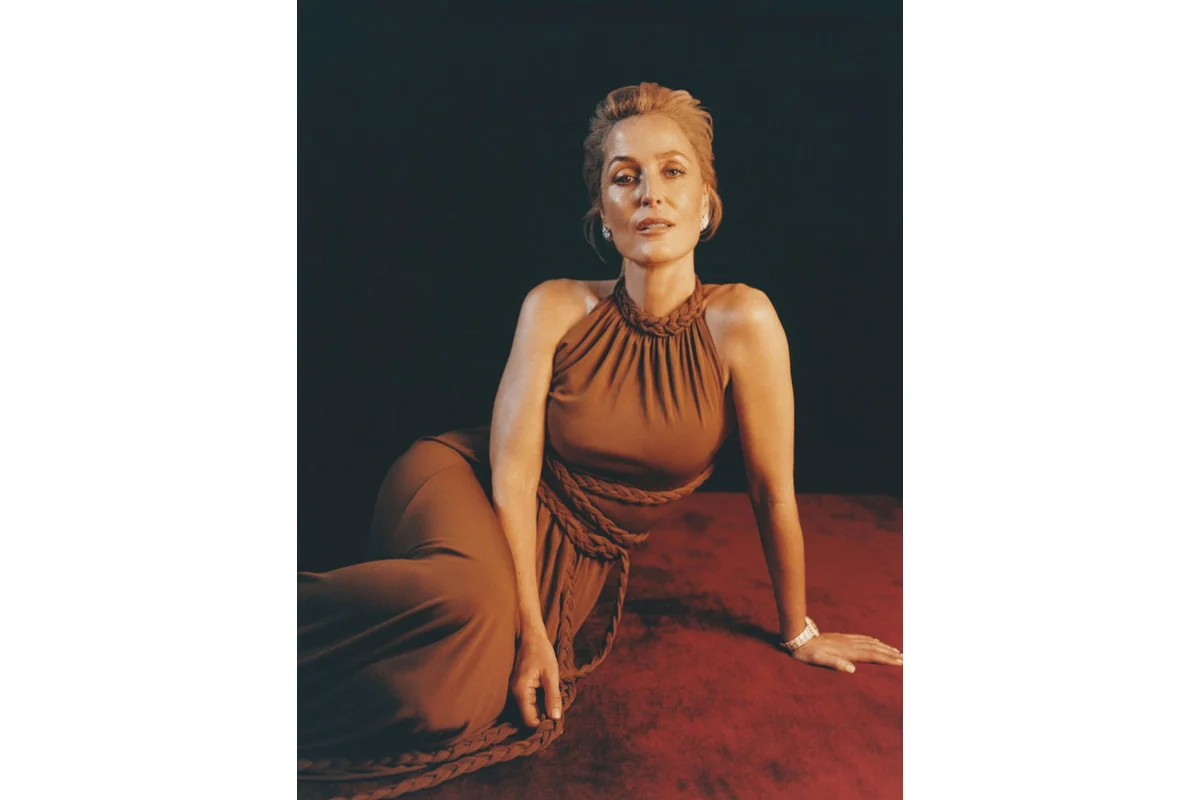
“I’ve been pushing it away because it felt like old news, but actually it’s still in our present.”
The actress also touched on how fame affected her willingness to openly confront such topics. She described the challenges of privacy invasions from paparazzi and fans but noted a recent change in attitude, inspired by her work on Sex Education and her entrepreneurial endeavors with a functional drinks brand.
“In the last couple of years, I have been embracing that and actually starting to kind of enjoy it a little bit,”
she reflected.
“No, I won’t you know, speak of the university. No, I won’t be too vocal of an advocate for something.”
— Gillian Anderson, Actress
In the past, Anderson frequently declined public advocacy roles, but now she is more willing to engage and say yes to such opportunities.
On-Set Barriers Highlighting Gender Imbalance From The X-Files’ Early Days
During the first three seasons of The X-Files, Anderson faced not only pay disparities but also on-screen marginalization. The studio required her character, Dana Scully, to be positioned several feet behind David Duchovny’s character, Fox Mulder, in every scene. This visual staging underscored her sidekick status rather than equal partnership.
Recalling this positioning, Anderson speculated,
“I can only imagine that at the beginning, they wanted me to be the sidekick.”
She added that the show’s producers might have believed
“maybe it was enough of a change just to see a woman having this kind of intellectual repartee with a man on camera.”
She added with a touch of irony,
“Surely the audience couldn’t deal with actually seeing them walk side by side!”
— Gillian Anderson, Actress
This dynamic reflected the limitations imposed on female characters even during a groundbreaking series that featured a strong female lead in a genre rarely led by women at the time.
Impact and Future Implications of Anderson’s Advocacy on Pay Equity
Gillian Anderson’s candid revelations about her experiences with the gender pay gap spotlight ongoing inequalities in the entertainment industry, despite its advances. Her willingness to address these issues openly may encourage broader discussions and reforms aimed at closing persistent salary gaps between men and women.
By highlighting that the problem resurfaced even after years of activism, Anderson emphasizes the need for continued vigilance and advocacy to ensure fair compensation for female actors. Her evolving stance from reluctant advocate to vocal supporter signals a shift in how influential industry figures confront systemic challenges.
As Anderson embraces her role more publicly, her efforts could inspire younger actors and industry professionals to push for transparency and fairness in pay structures, potentially leading to lasting change in Hollywood and beyond.
