
Christopher Nolan is widely recognized as one of the most innovative directors in modern cinema, largely due to his recurring focus on time as a core narrative element. Across numerous films, Nolan treats time not simply as a backdrop but as a dynamic force that shapes both the emotional and intellectual layers of his storytelling. His fascination with time offers audiences a distinctive lens through which to view memory, perception, and human experience.
In Nolan’s works, time becomes a device to challenge conventional storytelling, frequently bending and manipulating it to mirror characters’ inner conflicts while engaging viewers in complex narratives. This approach emphasizes his deep commitment to the theme of Christopher Nolan time obsession, which emerges as a defining trait of his cinematic style.
Why Christopher Nolan Views Time as Cinema’s Most Compelling Subject
Discussing his fixation on time during an interview with NPR, Nolan described it as “the most cinematic of subjects.” He explained that before the invention of the movie camera, humans lacked any way to observe time in altered forms—reversed, slowed, or accelerated. This inability to experience time visually sparked Nolan’s interest in using film as a medium to explore its possibilities.
Time is the most cinematic of subjects because before the movie camera came along, human beings had no way of seeing time backwards, slowed down, sped up. I think that went some way to sort of explain to me why I’ve been interested in exploring it in movies, because I think there’s a really productive relationship.
The director recounted how this fascination influenced his creative vision, starting with his early work in Memento (2000) and culminating in the complex narrative of Tenet (2020). Nolan shared a specific visual idea that haunted him for years—a bullet being sucked backward out of a wall and into the gun’s barrel—and his ambition to turn this into a tangible reality for his characters.
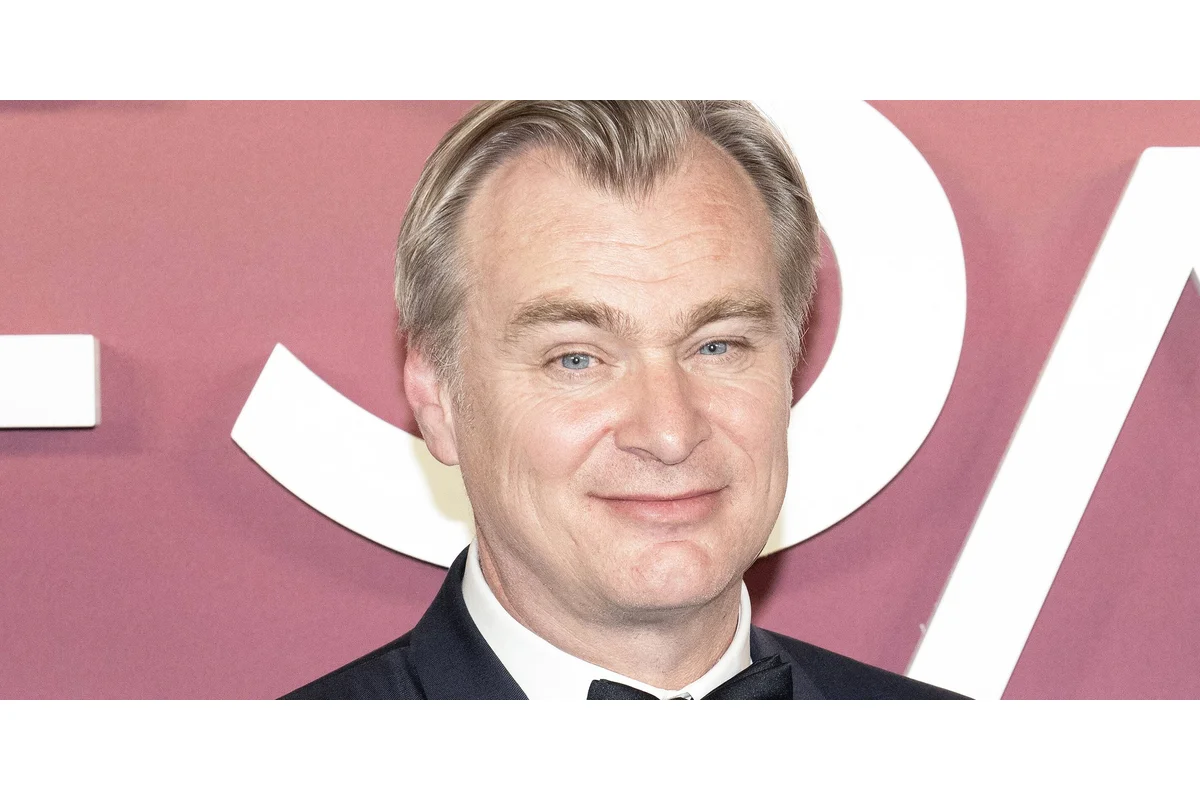
I had this visual notion of a bullet that’s in a wall, being sucked out of the wall and into the barrel of the gun it was fired from. And I put the image in “Memento,” my early film. But I always harbored this desire to create a story in which the characters would have to deal with that as a physical reality. And that eventually grew over the years into “Tenet.”
The Role of Time in Christopher Nolan’s Films
Unlike straightforward narratives, Nolan’s films often refuse linear progression, instead incorporating time as a flexible concept that can be stretched, compressed, or reversed to reflect various themes. This technique invites audiences to reconsider how narrative unfolds and how the experience of time shapes understanding.
Films such as Inception (2010), Interstellar (2014), Tenet (2020), and Memento all interrogate time from different perspectives. Whether through exploring memory, scientific phenomena, the fluidity of dreams, or non-linear storytelling, Nolan consistently uses time to probe human consciousness and emotional truth. His manipulation of temporal flow highlights the ways individuals perceive and relate to past, present, and future differently, often aligning the audience’s experience with that of his characters.
How Time Shapes Narrative and Character in Nolan’s Storytelling
Nolan’s distinctive use of time challenges viewers to engage actively with his films’ unfolding mysteries. By warping timelines or presenting events out of sequence, he creates suspense and encourages deeper analysis of characters’ motives and perspectives. This non-traditional temporal structure has become integral to Nolan’s identity as a filmmaker and continues to set his work apart in the industry.
His exploration goes beyond mere gimmickry, using the malleability of time to reveal complex emotional states and philosophical questions about existence. The consistent presence of this theme underlines Nolan’s belief in time as not only a storytelling device but a fundamental aspect of the human experience.
What Nolan’s Fixation on Time Means for Cinema and Audiences
Christopher Nolan’s persistent engagement with time pushes the limits of cinematic form and encourages viewers to reconsider how they interpret narrative and reality. By transforming temporal experience into a central theme, he expands the possibilities of film as an art form. His works inspire both audiences and fellow filmmakers to contemplate the profound impact time has on storytelling and human perception.
As Nolan continues to develop his cinematic language, it remains clear that his obsession with time will keep shaping his projects, promising more intellectually stimulating and emotionally resonant films in the future.
