
During this year’s BAFTA Awards ceremony, a controversial moment involving John Davidson, a Tourette syndrome advocate, sparked heated debate. Davidson, whose life inspired the biopic I Swear, involuntarily uttered a racial slur onstage due to his neurological condition, causing an intense backlash that centered around the Jamie Foxx Tourette controversy.
The incident occurred amid widespread attention to issues of racism in America, where public sensitivity towards offensive language often leads to swift condemnation and career consequences. The event raised difficult questions about the intersection of medical conditions and social accountability in moments that demand outrage.
Understanding Tourette Syndrome and Its Impact
Tourette syndrome is a neurological disorder characterized by involuntary motor and vocal tics that can range from minor twitches to disruptive speech. John Davidson’s case is particularly severe due to coprolalia, an uncommon symptom involving uncontrollable utterances of obscenities. This condition inspired the film I Swear, which portrays Davidson’s painful journey, including bullying, physical assault, and a suicide attempt prompted by the stigma and difficulties of his disorder.
Despite the film’s success—winning five awards such as Best British Film, Best Actor, and Best Screenplay—Davidson’s struggles with Tourette’s continued to manifest dramatically at the celebration itself, complicating what should have been a purely triumphant occasion.
Involuntary Outburst of Offensive Language
During the ceremony, Davidson experienced several vocal tics, one of which involved the use of the N-word while actors Michael B. Jordan and Delroy Lindo presented an award. He later told Variety that he
“ticked perhaps 10 different offensive words”
that night, with the racial slur being one of many involuntary utterances.
Davidson emphasized the disconnect between his true beliefs and the words his disorder forced from him, stating,
“What you hear me shouting is literally the last thing in the world I believe; it is the opposite of what I believe. The most offensive word that I ticked at the ceremony … is a word I would never use and would completely condemn if I did not have Tourette’s.”
The audience had been forewarned that vocal tics including involuntary swearing might occur during the event.
Immediate Reactions and Calls for Understanding
Host Alan Cumming addressed Davidson’s outburst from the stage, asking for understanding and apologizing “if you were offended.” Shortly after, Davidson left the ceremony, acknowledging the distress his condition caused to others.
However, the response from some members of the entertainment community shifted from empathy to condemnation. Black actor Wendell Pierce wrote on the social media platform X that
“it doesn’t matter the reasoning for the racist slur,”
insisting that “the insult … takes priority.”
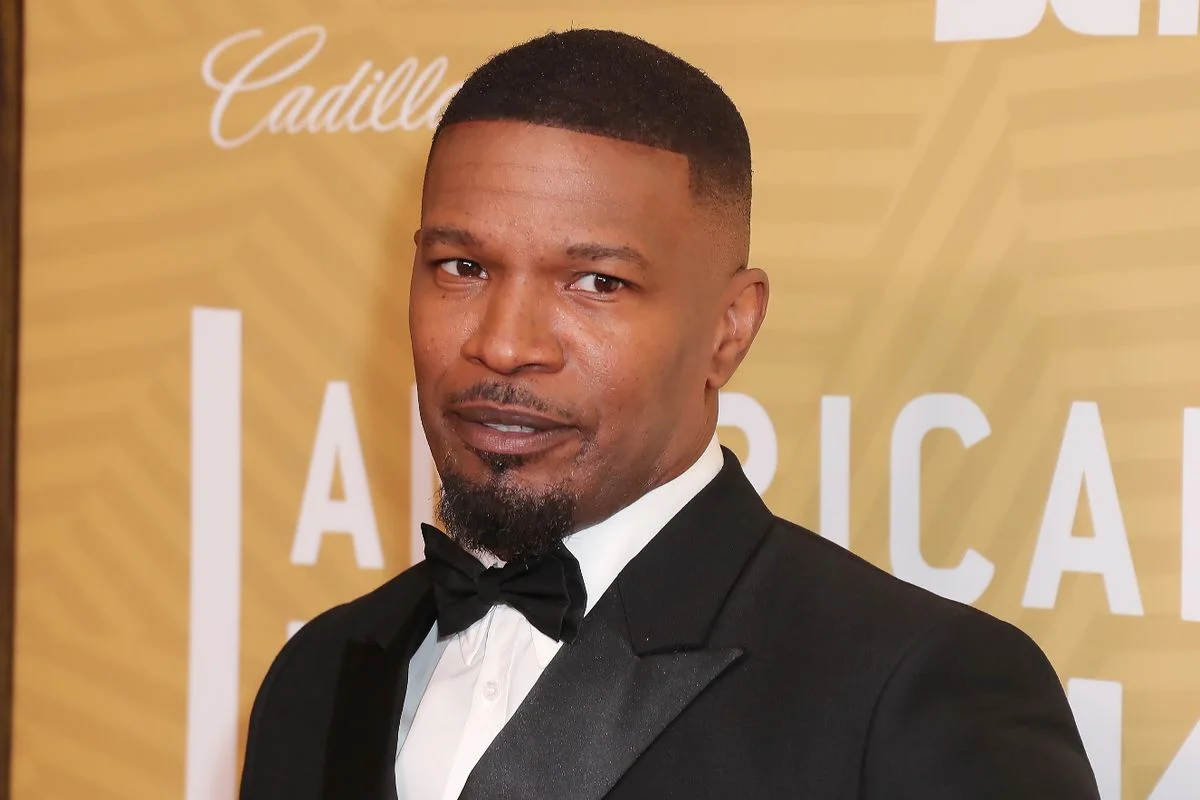
Jamie Foxx’s comment was even more direct on Instagram: “Nah, he meant that s**t.”
Sinners production designer Hannah Beachler, who attended the BAFTAs, criticized the apology as insufficient, describing it as a “throw away” statement lacking in sincerity.
The cautious wording of Cumming’s on-stage apology—“if you were offended”—highlighted the difficulty of balancing accountability with compassion. To apologize unequivocally for Davidson’s words could wrongly suggest intent or moral failing in someone whose outbursts are beyond their control, while ignoring the impact of such language would seem callous.
Davidson sought to clarify this balance the following day, stating,
“Whilst I will never apologize for having Tourette syndrome, I will apologize for any pain, upset and misunderstanding that it may create.”
The Limits of Public Forgiveness for Involuntary Slurs
Davidson tried to differentiate between feeling regret for the consequences of his actions and accepting blame for them. Yet in the case of the N-word, such nuance proved elusive. In the United States, the utterance of this particular racial slur, regardless of intent or context, is considered among the most severe moral offenses possible.
This expectation forced Davidson into a public display of contrition meant to quell outrage rather than promote understanding. The reaction focused less on justice and more on reinforcing the social hierarchy of acceptable and unforgivable sins.
The controversy underscores a broader cultural problem: by treating Black Americans predominantly as symbols of perpetual victimhood, it reduces individuals to their racial identity and neglects their humanity. This dynamic was apparent in how even a celebrated celebrity like Jamie Foxx was portrayed as a victim of Davidson’s uncontrollable outburst.
Such an approach denies personal agency on multiple fronts. While it is clear that Davidson’s words were not deliberate, there is also an implication that Foxx himself might be justified in his accusatory response due to the weight of the slur involved.
This mentality also stifles honest discussion about significant challenges within some Black communities—such as crime rates, family instability, and educational struggles—because addressing these topics is often seen as controversial or offensive.
The Role of Identity, Morality, and Science in the Debate
Underlying much of the dispute is the assumption that systemic racism has inflicted so much damage on Black Americans that their moral responsibility is diminished. The ongoing discourse about “white supremacy” at the core of American society has become widespread, sometimes promoted as scientific fact.
Yet other scientific findings complicate this narrative. Research has found that Black Americans often report higher average self-esteem than whites, with some studies, such as a 2011 Journal of Personality Research paper titled Racial Differences in Narcissistic Tendencies, finding elevated grandiose narcissistic traits among Black participants.
While Tourette’s-related involuntary slurs are rare, the BAFTA incident starkly highlights the challenge for society to acknowledge two truths simultaneously: that racial slurs carry deep offense and historical burden, and that neurological conditions can mitigate personal responsibility for certain behaviors.
If society cannot hold these perspectives in balance, it faces a more profound difficulty. The current cultural climate of constant alertness to racism often protects narratives over truth, making honest conversations about intention and context nearly impossible.
This approach risks making society brittle, unable to withstand pressure because of its unwillingness to engage in direct and nuanced dialogue.
It’s infuriating that the first reaction wasn’t complete and full throatted apologies to Delroy Lindo and Michael B. Jordan. The insult to them takes priority. It doesn’t matter the reasoning for the racist slur. https://t.co/oqFj9SdoST
— Wendell Pierce (@WendellPierce) February 23, 2026
And a third time at a Black woman. I understand and deeply know why this is an impossible situation. I know we must handle this with grace and continue to push through. But what made the situation worse was the throw away apology of "if you were offended"
— HannahBeachler (@HannahEBeachler) February 23, 2026
