
Director Maggie Gyllenhaal brings a fresh interpretation of Mary Shelley’s legendary novel with the film A Noiva!, premiering this week in selected theaters in the United States, the United Kingdom, and Brazil. Starring Jessie Buckley and Christian Bale, the movie explores the creation of Frankenstein’s monster’s companion during the 1930s, blending horror, romance, and comedy to examine female identity and autonomy. This ambitious project highlights Jessie Buckley’s electrifying portrayal of the reanimated bride.
The story centers on the solitary monster, played by Bale, who persuades a scientist to create a mate from a murdered woman. Upon resurrection, the bride embarks on a journey of self-awareness, challenging the rigid social norms of the era. Filmed in IMAX, this marks Gyllenhaal’s second feature as a director, following A Filha Perdida. The film’s release began on March 4th across the U.S. and U.K., with Brazilian screenings starting March 5th.
Revitalizing a Gothic Legendary Narrative
The Frankenstein story has captured filmmakers’ imaginations for over a century, with treatments ranging from chilling horror to comedic parodies. Gyllenhaal’s version shifts the focus toward the bride’s perspective, emphasizing her rejection and craving for connection. Buckley delivers complex performances as both the original victim and the awakened bride, enriching the character with emotional layers. Bale’s depiction of the monster humanizes a traditionally fearsome figure by infusing him with vulnerability.
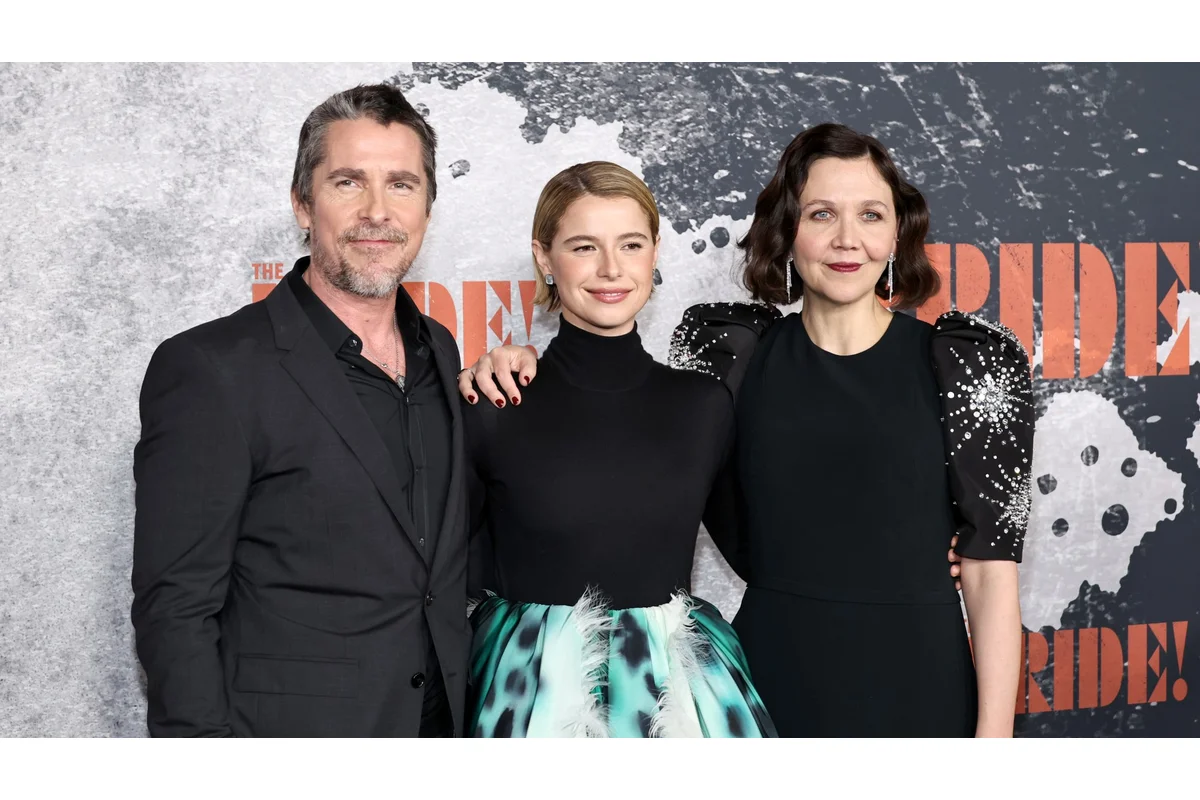
This retelling exposes male hubris in creation, engaging conversations about gender representation in filmmaking. Scholars argue that previous adaptations spotlighted the scientist’s grand ambitions while neglecting feminine elements embedded in Shelley’s text. Gyllenhaal’s film redresses this imbalance by giving the bride a distinct voice, transforming her into an icon of female empowerment. The narrative unfolds dynamically through moments of escape and confrontation.
Exceptional Performances and Creative Excellence
Jessie Buckley’s portrayal oscillates between frailty and fierce determination, capturing the confusion of a woman reborn into a harsh world. Her expressions vividly communicate pain and defiance. Christian Bale complements her with a nuanced portrayal of a lonely, sentient monster whose isolation propels the story forward. The supporting cast features acclaimed actors such as Annette Bening and Penelope Cruz, who contribute depth to the film’s universe.
Along with directing, Gyllenhaal penned the screenplay and co-produced the project. Drawing from autobiographical inspirations related to Mary Shelley’s life marked by loss, Gyllenhaal infuses the story with personal resonance. The production involved collaboration with seasoned professionals, resulting in intricately designed sets that evoke the Depression-era ambiance, filmed in locations including Chicago. The budget allowed for a blend of practical and digital effects to create compelling visuals.
Hildur Guðnadóttir’s orchestral score intensifies the emotional impact, while Lawrence Sher’s cinematography balances stark shadows with vivid colors. These technical elements combine to make the film an immersive sensory experience. Early critical response applauds the film’s bold approach, though some highlight that its mix of genres might challenge conventional horror audiences.
Exploring Gender and the Act of Creation
The film interrogates why so few female directors have taken on Frankenstein, despite Mary Shelley’s groundbreaking authorship at just 18 years old. Shelley’s writing was shaped by personal experiences of child loss and trauma, which Gyllenhaal weaves into her adaptation by positioning the bride as a symbol of mourning and resilience. This female creature rejects the fate imposed upon her, seeking liberation within a restrictive patriarchal society.
This new angle brings to light elements previously ignored in male-dominated adaptations, such as gender-based violence found in the original novel’s destruction of the bride. Contemporary scholars and students apply modern gender debates to enrich the story’s interpretations. The film prompts viewers to consider the role of artistic creation, likening directors to scientists who shape and manipulate existence.
The bride stands as a disruptive force, defying societal norms through unexpected alliances and clashes with authority figures. The evolving relationship between her and the monster shifts from ownership to partnership, adding complexity and emotional depth. Eschewing a straightforward plot, the film’s stylistic shifts blend dark humor with drama, mirroring Shelley’s exploration of human psychological complexity.
Legacy and Influence of Frankenstein in Cinema
Film adaptations of Frankenstein span more than a century, beginning in 1910 and peaking in the 1930s with Universal Pictures’ definitive versions. James Whale’s 1935 film, featuring Boris Karloff as the monster, cemented iconic visuals that continue to influence portrayals today. Subsequent adaptations, ranging from Mel Brooks’ comedic 1974 take to Kenneth Branagh’s dramatic 1994 rendition, have diversified the narrative. Guillermo del Toro’s recent adaptation introduced emotional layers, while Gyllenhaal distinguishes her version by centering the bride’s story.
The scarcity of women directors in Frankenstein’s cinematic history reflects early filmmaking’s gender disparities. Pioneers like Alice Guy-Blanché were rare, and horror films traditionally attracted male filmmakers. Experts attribute this male dominance to a “God complex” inherent in creating life, which parallels the filmmaking process. Gyllenhaal’s interpretation shifts this focus, correcting historical imbalances and offering a fresh lens on ambition and downfall.
Where the 1935 film silenced the bride character to mere screams, Gyllenhaal grants her a voice, enabling the expression of thoughts and emotions that revitalize the character’s potential.
Reception and Early Reviews
The film has garnered acclaim for its daring narrative and performances. Jessie Buckley has been heralded as a standout revelation, with Christian Bale providing a compelling counterpart. Gyllenhaal’s direction is praised for vision and innovation, although some critics note narrative inconsistencies. The mix of punk aesthetics and genre blending has polarized viewers but attracted those seeking fresh cinematic experiences.
Early screenings and festivals highlighted the film’s distinctive blend of gothic and modern costume design. Its premiere coincides with ongoing conversations about diversity in horror, broadening audience interest. Box office predictions suggest moderate commercial success fueled by star power and strategic marketing.
The Enduring Cultural Resonance of Frankenstein
Frankenstein has sustained a profound influence on popular culture for over 200 years, inspiring films, comics, and literature. Initially, Mary Shelley faced skepticism about her authorship, as it was unusual for a young woman to conceive such a dark narrative. Her personal history of familial losses imbues the story with enduring themes of creation and grief. Indirect adaptations like 2021’s Titane explore female viewpoints, though most direct remakes have remained male-led until now.
Gyllenhaal retains the core theme of male arrogance but expands it to highlight feminine vulnerability. The bride emerges not as a passive victim but as an active agent of change. This reinterpretation invites fresh readings of the original novel, particularly in educational settings where gender issues are discussed.
Set against Chicago’s Depression-era backdrop, the film reflects social inequality of the period. Scenes depicting revolution and escape symbolize broader collective struggles, connecting historical and contemporary societal challenges. The production prioritizes diversity behind the scenes, assembling a team whose varied perspectives enrich the project. Special effects favor practical makeup over excessive digital imagery, lending authenticity and tactile realism.
Behind the Scenes and Technical Craftsmanship
Filming locations meticulously evoke the hardship of the Depression period, with Karen Murphy’s production design creating atmospheres that feel simultaneously oppressive and liberating. The musical score intensifies the emotional range, shifting between tension and melancholy.
Gyllenhaal worked closely with her actors during filming, encouraging improvisation to deepen authenticity. Buckley prepared for her role by studying the movements of newborns, capturing the bride’s disorientation and vulnerability. Christian Bale approached the monster’s character through the lens of innocence, a stark contrast with its fearsome surface.
The official trailer, released well in advance, generated excitement with its striking visuals. Promotional campaigns emphasize the exclamation mark in the title, symbolizing the film’s energetic and transformative spirit.
Future Directions for Horror and Classic Adaptations
With the release of A Noiva!, the door opens wider for more female filmmakers to engage with classical stories. The horror genre is evolving towards including diverse voices that enrich and challenge traditional narratives. Maggie Gyllenhaal has announced plans to develop future projects exploring similar themes, solidifying her growing reputation as a director.
Both Jessie Buckley and Christian Bale continue to pursue varied roles in dramas and blockbusters, expanding their versatile careers. The film’s contribution to feminist discussions in cinema is expected to ripple across generations of audiences and filmmakers alike.
Growing the Frankenstein Mythos Beyond its Origins
Iconic portrayals such as Boris Karloff’s monster and Elsa Lanchester’s bride have shaped the collective imagination despite earlier depictions limiting the bride’s presence. Gyllenhaal’s film develops the bride’s narrative fully, providing her with a robust character arc.
Mary Shelley’s novel was influenced by contemporary scientific debates like galvanism, a theme carried into cinematic adaptations through evolving technologies. While modern versions integrate new effects, Gyllenhaal’s interpretation adds social dimensions, notably addressing female oppression in the 1930s.
Some critics draw parallels between this film and Joker: Folie à Deux for their genre hybridization, though they also note its originality. The bride symbolizes defiance, echoing historical women’s rights movements. Her transformation from victim to protagonist resonates strongly with today’s audiences, underscoring the film’s cultural and social relevance.
