
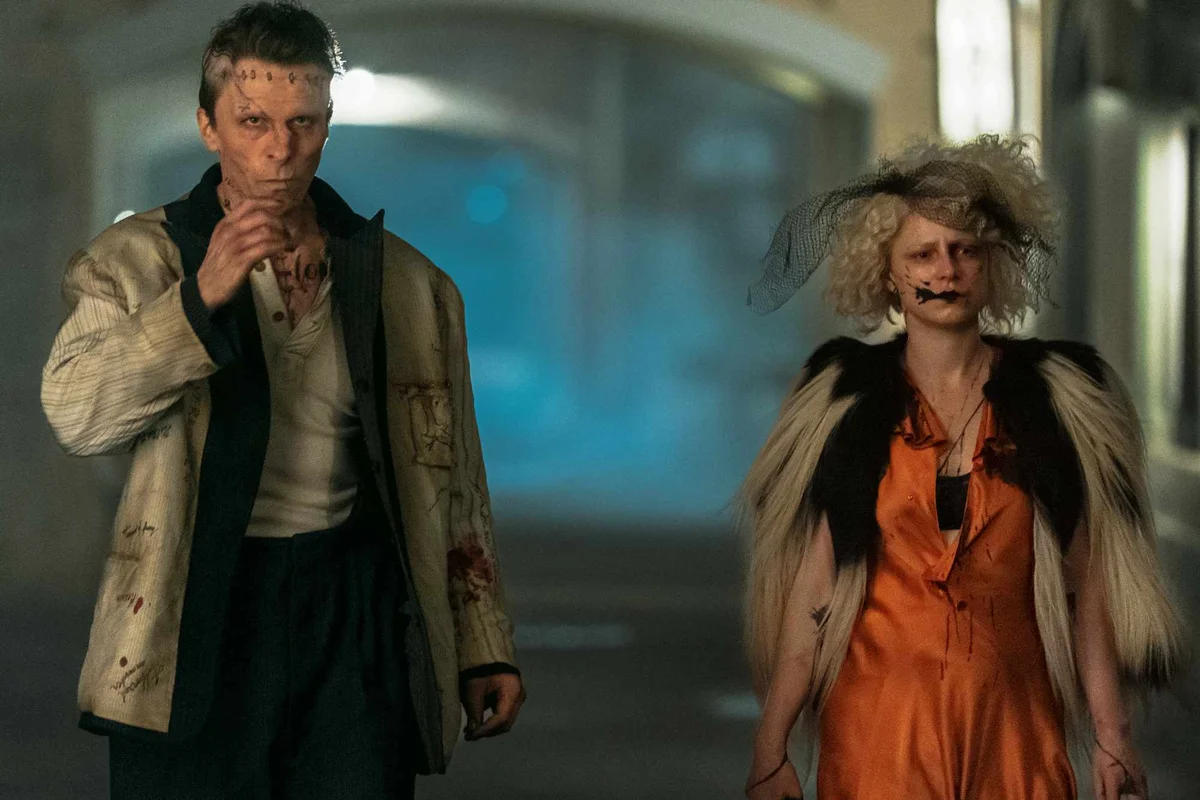
The true significance of the last shot in the movie The Bride! has been unveiled by Christian Bale, who stars as Frank, the monster created by Doctor Frankenstein. Set in 1930s Chicago, the film follows Frank’s quest for companionship, which leads him to Dr. Euphronius (Annette Bening), who uses her scientific expertise to bring life to a dead woman, known as the Bride (Jessie Buckley). The film concludes with both Frank and the Bride dead, but a final scene shows lightning sparking inside the laboratory as their bodies are reanimated and seen holding hands, suggesting a continuation beyond death.
In a detailed discussion with CinemaBlend, Bale shared his interpretation of this closing moment, emphasizing the theme of reinvention. He pointed out how the scene is not only literal but also symbolic of refusing to be defined or limited by past events or others’ judgments.
The Theme of Reinvention Through Frank and the Bride
Christian Bale elaborated on the message behind The Bride!’s ending, highlighting that reinvention lies at the core of the story. He said,
“It’s a wonderful piece. There’s a language to the film where that becomes a possibility that these things can happen to them. But reinvention is essential. That’s something that the bride does. She reinvents herself every single day and that no matter what has happened to you, don’t let other people tell you who you are or that’s the end. You can reinvent yourself and you can start again. And, literally with this, obviously they have the machines that you’ve thrown us with with the possibility that she can actually bring them back to life.”
Christian Bale, Actor
Throughout the film, both Frank and the Bride evolve continuously, even in the moments leading to their death. The ending scene’s electrical revival hints that their ability to redefine themselves will persist, which Bale extends as a broader metaphor for overcoming adversity. This message applies as well to other characters such as Dr. Euphronius, Myrna Malloy (Penélope Cruz), and Mary Shelley (portrayed by Jessie Buckley). Each character challenges the societal constraints imposed by a patriarchal system.
Other Characters Challenging Societal Limits
Dr. Euphronius breaks scientific norms by reviving Frank and the Bride, while Myrna Malloy defies gender roles by becoming a detective in a male-dominated profession. Meanwhile, the portrayal of Mary Shelley symbolizes defiance over death and authority by commanding the dead from the afterlife. These acts collectively reinforce the film’s intense exploration of identity, power, and rebellion.
The Impact and Interpretation by Critics
In his review for ScreenRant, Gregory Nussen praised the film’s thematic boldness, describing The Bride! as,
“an explosive representation of social disruption”
and
“a clarion call against upper-crust hedonism, police complicity, violence against women, and the patriarchal system that binds them all.”
Gregory Nussen, Film Critic
Nussen awarded the film an 8 out of 10, highlighting its powerful emotional and social resonance, even though it received mixed ratings from critics and audiences alike, with Rotten Tomatoes showing 60% and 71%, respectively, at the time of this writing.
Continuing Legacy Through the Bride’s Rebellion
The supporting cast includes Detective Jake Wiles (Peter Sarsgaard), actor Ronnie Reed (Jake Gyllenhaal), and mob boss Lupino (Zlatko Burić), who play key roles in the story’s unfolding tension. The closing credits show women inspired by the Bride’s defiance taking revenge on Lupino, demonstrating the wider impact of the Bride’s rebellion. These scenes emphasize how the idea of reinvention and resistance extends beyond the protagonists, influencing others to stand up and reshape their destinies.
Ultimately, Christian Bale’s insights into The Bride! deepen the understanding of the film’s complex message about identity, transformation, and refusing to surrender to societal pressures or limitations. The lasting image of the lovers’ revival serves as a poignant reminder that self-reinvention is a continuous, powerful process.
