
The Wild Bunch, released in 1969, is often hailed as a landmark film in Western cinema, representing a pivotal moment in the genre’s evolution. Despite its critical acclaim and importance, Clint Eastwood voiced his dislike for the film’s depiction of violence during a 1992 interview. Known for his influence on the revisionist Western movement, Eastwood’s critique offers insight into his complex relationship with the genre’s changing landscape.
Eastwood’s Criticism of The Wild Bunch and Its Portrayal of Violence
Prior to the late 1960s, Western movies generally presented a black-and-white vision of the Old West, with clear heroes and villains, often creating a mythic, sanitized version of frontier life. This shifted dramatically with the arrival of Eastwood’s iconic “Man With No Name” in Sergio Leone’s Dollars trilogy, a character that embodied a tougher, more ambiguous interpretation of the Western hero.
While earlier films like 1950’s Broken Arrow and 1952’s High Noon introduced more complex narratives, and even 1935’s Westward Ho, starring John Wayne, planted seeds of revisionism, it was Eastwood who came to symbolize the modern, gritty Western figure during the genre’s evolution in the latter 20th century. Given this, many expected him to embrace Peckinpah’s The Wild Bunch, a film widely regarded as a groundbreaking critique of Western mythology and violence.
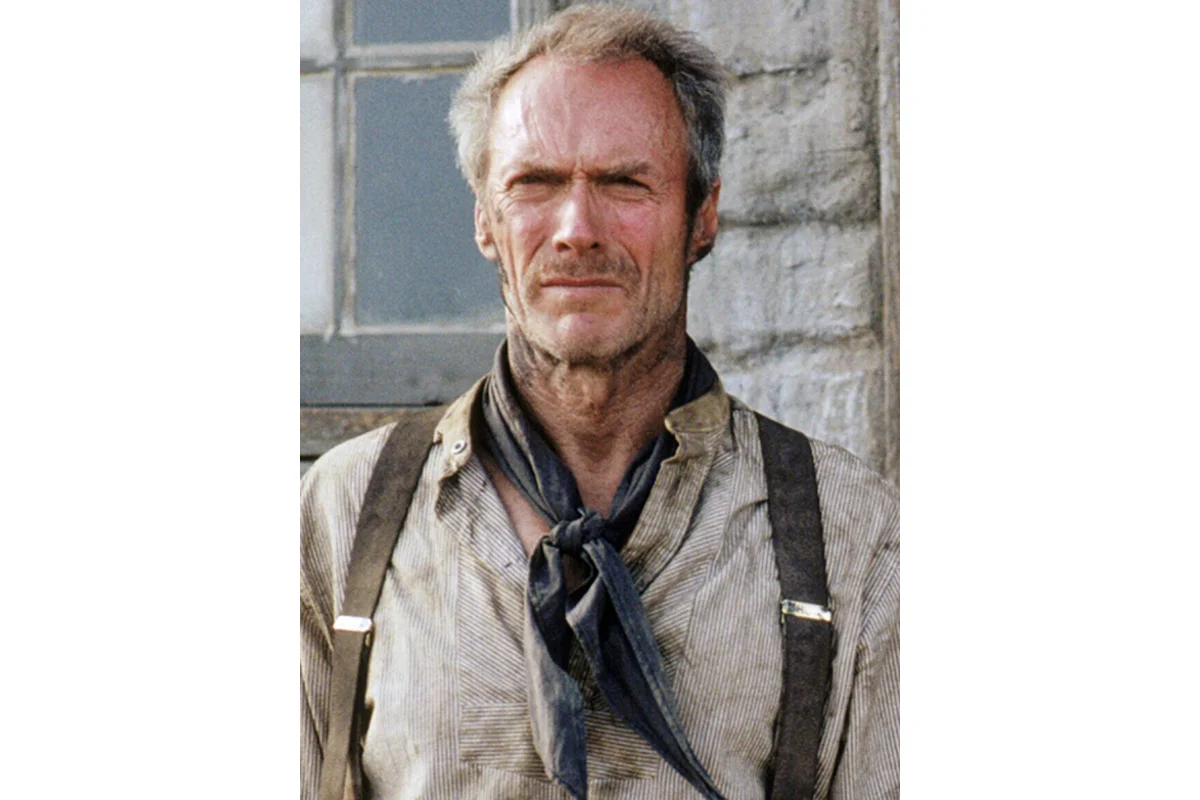
Contrary to those assumptions, Eastwood expressed apprehension about Peckinpah’s approach. In an interview with the Los Angeles Times in 1992, he acknowledged The Wild Bunch as a good movie, but criticized what he called its “ballet of violence.”
“but I’ve never been one for the slow-motion technique, the ballet of violence.”
— Clint Eastwood, Actor and Director
Eastwood conceded that Peckinpah’s film was successful in reminding audiences of the brutal realities of violence and death, going so far as to call it
“the predecessor to a lot of people trying to do the same thing.”
Yet, despite this praise, Eastwood remained personally unenthused by the film’s graphic style and pacing.
“I’ve always thought that drama is really the anticipation before the action happens, the buildup to it, and the action itself is like shuffling a deck of cards, so fast it’s kind of unreal.”
— Clint Eastwood, Actor and Director
His stance revealed a desire for tension and suspense leading up to violent moments, rather than focusing on drawn-out depictions of brutality. While Eastwood was progressive in redefining Western heroes, he still preferred a more restrained treatment of violence, which clashed with Peckinpah’s stark, slow-motion sequences and the unflinching final scenes of The Wild Bunch.
Eastwood’s Revisiting of Western Themes in Unforgiven and His Discomfort with Brutal Realism
At the time of his interview, Eastwood was promoting Unforgiven (1992), a film that many consider the definitive revisionist Western. In this movie, Eastwood portrayed William Munny, a former outlaw haunted by his violent past, who reluctantly returns to arms in pursuit of justice after a sex worker is brutalized. The film delves deeply into the emotional consequences of violence, emphasizing regret and remorse instead of glorifying bloodshed.
Both Unforgiven and The Wild Bunch challenge the traditional Western narrative, exposing the darker side of frontier life and outlaw mythology. Yet, Eastwood’s depiction of violence in Unforgiven is markedly different—as it focuses on the psychological toll rather than graphic spectacle, which might explain his discomfort with Peckinpah’s more explicit style.
Part of Eastwood’s distaste could also stem from the characters’ nature. The outlaws in The Wild Bunch are harsher and less sympathetic than even Eastwood’s notoriously cold “Man with No Name.” While his own characters have a measured sense of morality amid the chaos, Peckinpah’s band of cowboys often revel in brutality and moral ambiguity.
Additionally, Eastwood’s professional frustrations at the time may have colored his judgment. While Peckinpah was hailed for his gritty Western, Eastwood was involved with Paint Your Wagon (1969), a musical Western that he later rued. This contrast may have added to his reluctance to fully endorse The Wild Bunch.
Reexamining the Legacy of Revisionist Westerns through Eastwood’s Lens
Clint Eastwood’s critique of The Wild Bunch is significant, as it highlights the tensions within the Western genre during its transition from romanticized tales to darker, more realistic portrayals. His rejection of Peckinpah’s “ballet of violence” suggests a preference for dramatic subtlety over graphic spectacle, even while championing complex narratives that question traditional heroism.
This divergence also reflects a broader debate about the limits of on-screen violence and how it should be portrayed. Eastwood’s contributions as both an actor and director helped redefine the Western hero, making him a crucial figure in this transformative period, even if he did not always agree with his contemporaries’ methods.
Looking ahead, Eastwood’s reservations may encourage audiences and filmmakers to consider different paths in storytelling—balancing the unvarnished truth of violence with narrative restraint. His perspective continues to influence how Westerns are crafted and received, underscoring the diverse approaches that exist within this enduring American genre.
