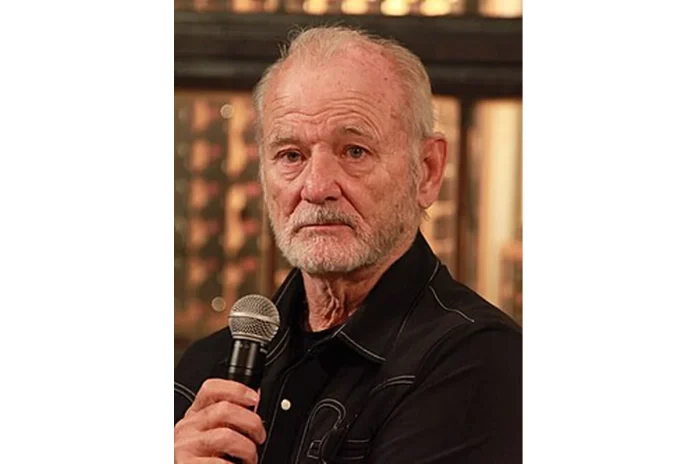
Bill Murray Bio
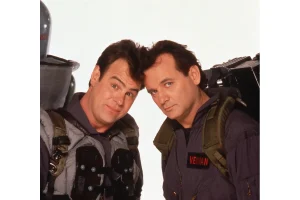
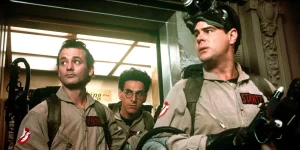
William James Murray (born September 21, 1950) is an American actor and comedian, known for his deadpan delivery in roles ranging from studio comedies to independent dramas. He has received several accolades including a BAFTA Award, a Golden Globe Award, and two Primetime Emmy Awards as well as a nomination for an Academy Award. Murray was awarded the Mark Twain Prize for American Humor in 2016. Murray became a national presence on Saturday Night Live from 1977 to 1980, receiving a Primetime Emmy Award for Outstanding Writing for a Variety Series. He established his stardom by acting in a string of successful comedy films, including Meatballs (1979), Caddyshack (1980), Stripes (1981), Scrooged (1988), What About Bob? (1991), and Groundhog Day (1993). He also had supporting roles in Tootsie (1982), Little Shop of Horrors (1986), Ed Wood (1994), Kingpin (1996) and Osmosis Jones (2001). Murray also starred as Dr. Peter Venkman in Ghostbusters (1984), and Ghostbusters II (1989) and has reprised his role in various projects within the Ghostbusters franchise. He has done voice acting work in films, such as Garfield (2004), Garfield: A Tail of Two Kitties (2006), Fantastic Mr. Fox (2009), The Jungle Book (2016) and Isle of Dogs (2018). He has frequently collaborated with director Wes Anderson, acting in ten of his films starting with Rushmore (1998), followed by roles in films such as The Royal Tenenbaums (2001), The Life Aquatic with Steve Zissou (2004), Fantastic Mr. Fox (2009), Moonrise Kingdom (2012), The Grand Budapest Hotel (2014), and Isle of Dogs (2018). He played an aging actor in Sofia Coppola’s dramedy Lost in Translation (2003), earning Golden Globe and BAFTA Awards as well as a nomination for the Academy Award for Best Actor. He also acted in films such as Broken Flowers (2005), Zombieland (2009), Get Low (2010), Hyde Park on Hudson (2012), St. Vincent (2014), On the Rocks (2020), and The Friend (2024).
Early Life and Background
Murray was born on September 21, 1950, in Evanston, Illinois, to Lucille, a mail room clerk, and Edward J. Murray, a lumber salesman. He attended Loyola Academy, an all-boys Jesuit school in Wilmette, Illinois, a northern suburb of Chicago. Murray and his eight siblings grew up in an Irish Catholic family. His paternal grandfather was from County Cork, while his maternal ancestors were from County Galway. Three of his siblings, John Murray, Joel Murray and Brian Doyle-Murray, are also actors. A sister, Nancy, is an Adrian Dominican nun in Michigan; she has traveled the United States in two one-woman programs, portraying Catherine of Siena and Dorothy Stang. His brother Ed Murray died in 2020. Their father died in 1967 at the age of 46 from complications of diabetes when Bill was 17. As a youth, Murray read children’s biographies of American heroes like Kit Carson, Wild Bill Hickok and Davy Crockett. He attended St. Joseph’s grade school and Loyola Academy. During his teen years, he worked as a golf caddy to fund his education at the Jesuit high school, was the lead singer of a rock band (the Dutch Masters) and took part in high school and community theater. After graduating from Loyola Academy, Murray attended Regis University in Denver, Colorado, taking pre-medical courses, but quickly dropped out and returned to Illinois. In 2007, Regis awarded him an honorary Doctor of Humanities degree.
Path to Hollywood
With an invitation from his older brother Brian, Murray got his start at Chicago’s The Second City, an improvisational comedy troupe, studying under Del Close. In 1974, he moved to New York City and was recruited by John Belushi as a featured player on The National Lampoon Radio Hour. In 1975, the Off-Broadway The National Lampoon Show led to his first television role as a cast member of the ABC variety show Saturday Night Live with Howard Cosell. That same season, another variety show, NBC’s Saturday Night, premiered. Cosell’s show lasted just one season, canceled in early 1976. After working in Los Angeles with the “guerrilla video” commune TVTV on several projects, Murray rose to prominence in 1976. He officially joined the cast of NBC’s Saturday Night Live for the show’s second season, following the departure of Chevy Chase. Murray was with SNL for three seasons from 1977 to 1980. A Rutland Weekend Television sketch Monty Python’s Eric Idle brought for his appearance on SNL developed into the mockumentary All You Need Is Cash (1978). Murray appeared as “Bill Murray the K”, a send-up of New York radio host Murray the K, in a segment that parodies the Maysles Brothers’s documentary The Beatles: The First U.S. Visit. During the first few seasons of SNL, Murray was in a romantic relationship with fellow cast member Gilda Radner. Murray landed his first starring role with Meatballs (1979).
Bill Murray Career
Early Career (1973–1979)
In the early 1980s, he collaborated with writer-director Harold Ramis and starred in a string of box-office hits, including Caddyshack (1980) and Stripes (1981) and had a role in Tootsie (1982). He portrayed Hunter S. Thompson in Where the Buffalo Roam (1980). Murray was the first guest on NBC’s Late Night with David Letterman on February 1, 1982. He later appeared on the first episode of the Late Show with David Letterman on August 30, 1993, when the show moved to CBS. On January 31, 2012, 30 years after his first appearance with Letterman, Murray appeared again on his talk show. He appeared as Letterman’s final guest when the host retired on May 20, 2015. Murray began work on a film adaptation of W. Somerset Maugham’s novel The Razor’s Edge. The film, which Murray co-wrote, was his first starring role in a drama. He later agreed with Columbia Pictures to star in Ghostbusters—in a role originally written for John Belushi—to get financing for The Razor’s Edge. Ghostbusters became the highest-grossing film of 1984 and, at the time, the highest-grossing comedy ever. The Razor’s Edge, which was filmed before Ghostbusters was released, was a box-office flop. Disappointed over the failure of The Razor’s Edge, Murray took a hiatus from acting for four years to study philosophy and history at Sorbonne University, frequent the Cinémathèque in Paris, and to spend time with his family in their Hudson River Valley home. During that time, his second son, Luke, was born. With the exception of a cameo in Little Shop of Horrors (1986), he made no film appearances, but participated in public readings in Manhattan organized by playwright-director Timothy Mayer and in a stage production of Bertolt Brecht’s A Man’s a Man. Murray returned to film with Scrooged (1988) and Ghostbusters II (1989).
Breakthrough (1980–1993)
Murray made his first and only attempt at directing when he co-directed Quick Change (1990) with producer Howard Franklin. He co-starred in Frank Oz’s What About Bob? (1991) alongside Richard Dreyfuss. He starred in Harold Ramis’s fantasy comedy Groundhog Day (1993). The Washington Post’s Hal Hinson praised Murray’s performance: “Murray is a breed unto himself, a sort of gonzo minimalist. And he’s never been funnier as a comedian or more in control as an actor than he is here. It’s easily his best movie.” That same year, he starred in the comedy Mad Dog and Glory alongside Robert De Niro and Uma Thurman. Vincent Canby of The New York Times wrote, “The great satisfaction of Mad Dog and Glory is watching Mr. De Niro and Mr. Murray play against type with such invigorating ease.”
Notable Works and Milestones
After the success of Groundhog Day, Murray appeared in a series of well-received supporting roles in films like Tim Burton’s Ed Wood (1994) and Peter Farrelly’s Kingpin (1996). Also in 1996, he appeared as himself in the Looney Tunes live action comedy Space Jam with Michael Jordan. However, his starring roles in Larger than Life (1996) and The Man Who Knew Too Little (1997) were not as successful with critics or audiences. He received much critical praise for his role in Wes Anderson’s coming of age comedy Rushmore (1998), opposite Jason Schwartzman and Olivia Williams. Lisa Schwarzbaum of Entertainment Weekly wrote, “Murray turns in a thrillingly knowing, unforced performance — an award-worthy high point in a career that continues.” Murray received the Best Supporting Actor awards from the New York Film Critics Circle, the National Society of Film Critics, and the Los Angeles Film Critics Association (tying with Billy Bob Thornton for A Simple Plan). Murray then took on more dramatic roles in Wild Things (1998) and Cradle Will Rock (1999). Murray decided to take a turn towards more dramatic roles and experienced a resurgence in his career. In 2000, he portrayed Polonius in Michael Almereyda’s Hamlet, based on the play by William Shakespeare. The film starred Ethan Hawke in the title role, as well as Kyle MacLachlan, Julia Stiles, Liev Schreiber and Sam Shepard. The film received mixed reviews. Also in 2000, Murray portrayed Luther Billis in a concert version of the stage musical South Pacific at Lincoln Center. The following year, Murray reunited with Wes Anderson in the family comedy-drama The Royal Tenenbaums (2001) which starred Gene Hackman, Owen Wilson, Luke Wilson, Ben Stiller, Gwyneth Paltrow and Anjelica Huston. In the film, Murray plays Raleigh St. Clair, the meek and mild-mannered neurologist, writer, and husband of Margot Tenenbaum.
Bill Murray Award Nominations
Bill Murray has received numerous accolades, including a BAFTA Award, two Emmy Awards, a Golden Globe Award, and two Independent Spirit Awards. He was nominated for the Academy Award for Best Actor for his performance in Sofia Coppola’s romance Lost in Translation (2003).
Bill Murray Awards Won
Bill Murray has won several prestigious awards throughout his career, including a BAFTA Award, two Primetime Emmy Awards, and a Golden Globe Award.
Bill Murray Family
Bill Murray was married to Margaret Kelly from 1981 until their divorce in 1996. They had two sons, including Luke. He later married Jennifer Butler in 1997, with whom he had four sons. Their marriage ended in divorce in 2008.
Personal Life
Bill Murray is known for being detached from the Hollywood scene, reportedly not having an agent or manager. He has homes in various locations including Los Angeles, Rancho Santa Fe, California, Martha’s Vineyard, Massachusetts, Charleston, South Carolina, and Palisades, New York. Murray has experienced symptoms of depression and has claimed that art and music have helped ease past depressive episodes. He is also a fan of several Chicago professional sports teams, especially the Chicago Cubs, Chicago Bears, and Chicago Bulls. In 2024, he starred opposite Naomi Watts in the comedy The Friend which premiered at the Telluride Film Festival. In 2025, he reunited with Wes Anderson in a minor role in the comedy The Phoenician Scheme, his tenth collaboration with the director.