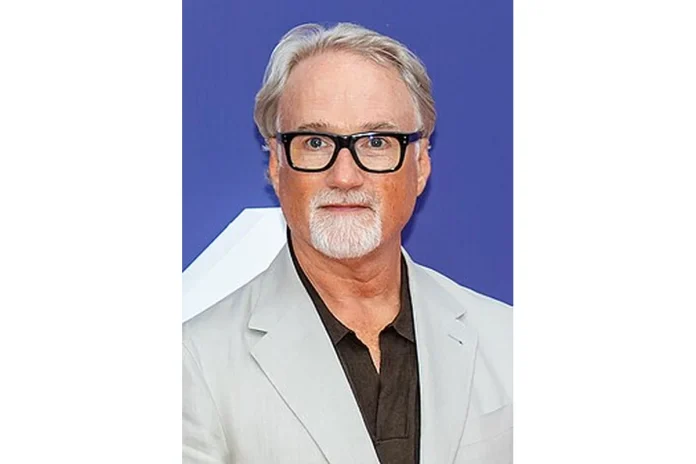
David Fincher Bio
David Andrew Leo Fincher (born August 28, 1962) is an American film director. Often described as one of the preeminent directors of his generation, his films have collectively grossed over $2.1 billion worldwide and received numerous accolades, including three nominations for the Academy Award for Best Director. He has also received four Primetime Emmy Awards, two Grammy Awards, a BAFTA Award, and a Golden Globe.
Early Life and Background
David Fincher was born in Denver, Colorado, on August 28, 1962. His mother, Claire Mae, was a mental health nurse, while his father, Howard Kelly “Jack” Fincher, was an author and a reporter for Life magazine. When Fincher was two years old, his family moved to San Anselmo, California, where he developed an early fascination with filmmaking. At the age of eight, he began making films with an 8mm camera after being inspired by a documentary about the making of Butch Cassidy and the Sundance Kid. This experience ignited his passion for the craft and set him on the path to becoming a filmmaker. Fincher attended Ashland High School in Oregon, where he directed plays and worked as a production assistant at a local news station. During this time, he supported himself with various jobs, including busboy and dishwasher.
Path to Hollywood
Fincher’s journey into the film industry began when he was employed at John Korty’s studio as a production head. He gained valuable experience as a visual effects producer on the animated film Twice Upon a Time (1983) and later worked at Industrial Light & Magic as an assistant cameraman. His first significant directing opportunity came when he co-founded the production company Propaganda Films in 1986, where he directed numerous music videos, including Madonna’s “Express Yourself” and “Vogue.” These projects garnered him recognition and awards, paving the way for his transition into feature films.
David Fincher Career
Early Career (1980–1991)
Fincher made his feature film debut with Alien 3 (1992), but it was his second film, Seven (1995), that marked his breakthrough. Seven, a dark thriller about a serial killer, received critical acclaim and was a box office success, grossing over $320 million worldwide. Following this, Fincher directed The Game (1997) and Fight Club (1999), both of which further established his reputation as a talented director.
Breakthrough (1995–2000)
Seven was a pivotal moment in Fincher’s career, showcasing his unique storytelling style and visual aesthetic. The film’s success led to more ambitious projects, including The Game, which explored themes of reality and perception. Fight Club, based on Chuck Palahniuk’s novel, initially received mixed reviews but later gained a cult following and is now regarded as one of the best films of the 1990s.
Notable Works and Milestones
Fincher’s signature works include The Social Network (2010), which earned him multiple Academy Award nominations, and Gone Girl (2014), a psychological thriller that became his highest-grossing film to date. His meticulous attention to detail and innovative storytelling techniques have made him a standout figure in contemporary cinema.
David Fincher Award Nominations
Throughout his career, David Fincher has received numerous nominations for prestigious awards, including three Academy Award nominations for Best Director for The Curious Case of Benjamin Button (2008), The Social Network (2010), and Mank (2020).
David Fincher Awards Won
David Fincher has won several notable awards, including the BAFTA Award for Best Director and the Golden Globe Award for Best Director for The Social Network (2010). He has also received multiple Primetime Emmy Awards for his work in television.
David Fincher Family
David Fincher was previously married to model Donya Fiorentino, with whom he has one daughter. He is currently married to producer Ceán Chaffin, whom he wed in 1996.
Personal Life
Fincher maintains a relatively private personal life. He has expressed a strong passion for filmmaking and is known for his perfectionism and meticulous approach to directing. His dedication to his craft is evident in the extensive research and preparation he undertakes for each project. Fincher continues to be a significant influence in the film industry with his innovative storytelling and visual style.