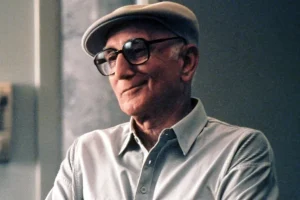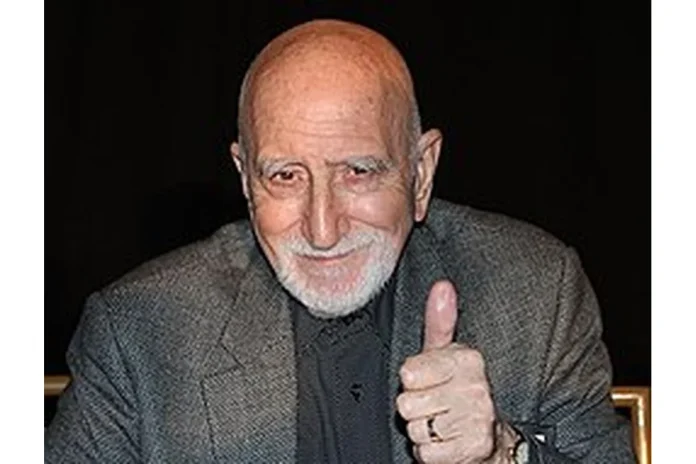
Dominic Chianese Bio
Dominic Chianese (born February 24, 1931) is an American actor, singer, and musician whose career in stage and screen has endured for more than six decades. He is best known for playing Corrado “Junior” Soprano on the HBO series The Sopranos (1999–2007), Johnny Ola in The Godfather Part II (1974), and Leander Whitlock in Boardwalk Empire (2011–2013). Beyond his dramatic work, Chianese has built a parallel career as a tenor, releasing albums of American and Neapolitan songs, and he has continued to perform on Broadway, off Broadway, and in regional theater throughout his life.
Early Life and Background
Dominic Chianese was born in the Bronx borough of New York City on February 24, 1931. He grew up in a working-class household, where his father earned a living as a bricklayer. His paternal grandfather was Italian and had left the town of Afragola for New York in 1904, a family history that helped shape Chianese’s later attachment to Italian music and storytelling traditions.
Chianese graduated from the Bronx High School of Science in 1948, an institution better known for producing scientists than performers. He initially enrolled at Champlain College in Plattsburgh, New York, but the school was forced to close during the early years of the Korean War. After years of part-time study and work, he eventually graduated from Brooklyn College in 1961 with a bachelor’s degree in speech and theater, formalizing the training that had already been pulling him toward the stage.
Path to Acting
After more than a decade of attending college and appearing in off-Broadway productions, Chianese took his first professional acting class at the HB Studio in Manhattan under the renowned teacher Walt Witcover. His Broadway debut came in 1965 with Oliver!, an early marker of his arrival in the professional theater world. To make ends meet during the lean years between roles, he played rhythm guitar and sang in taverns and restaurants, and he hosted open mic nights at Gerdes Folk City in Greenwich Village.
Chianese’s first television role came through an introduction by actor George C. Scott, who recommended him for the series East Side/West Side. Before being cast in The Godfather Part II, he worked for the Drug Commission of New York as a recreational worker in a rehabilitation program, where he gave guitar lessons to women who were serving time for drug crimes. That mixture of stage work, television, and community involvement set the stage for his transition into feature films in the 1970s.
Dominic Chianese Career
Early Career (1952–1973)
Dominic Chianese began his professional career in 1952, building his craft for two decades on the New York theater circuit. His Broadway debut in Oliver! in 1965 marked his first major credit, and he continued to alternate between off-Broadway productions, regional theater, and small television appearances. Throughout the 1960s and early 1970s, he developed a reputation as a dependable supporting player on the East Coast stage scene, even as he supplemented his income with music gigs in Greenwich Village.
His transition to film was catalyzed by director Francis Ford Coppola, who cast him as the mobster Johnny Ola in The Godfather Part II in 1974. The performance placed Chianese on the Hollywood map and led to further collaborations with Al Pacino, including Dog Day Afternoon (1975), …And Justice For All (1979), and Looking for Richard (1996), along with shared stage work with Pacino in the years that followed.
Breakthrough (1974–2007)
The Godfather Part II gave Dominic Chianese his first major screen role, introducing him to wide audiences as one of the henchmen orbiting the young Michael Corleone. The role established a working relationship with Al Pacino that would recur across film and theater for decades. Throughout the late 1970s and into the 1990s, he alternated between supporting parts in major studio films and steady work on the New York stage, gradually building the resume that would soon support a defining television role.
That defining role arrived in 1999 when he was cast as Corrado “Junior” Soprano on HBO’s The Sopranos, the uncle of central character Tony Soprano. Chianese played a central role in the DiMeo crime family across the series’ run, and the performance earned him two Primetime Emmy Award nominations for Outstanding Supporting Actor in a Drama Series in 2000 and 2001.
Parallel to his acting work, Chianese pursued a serious music career as a tenor. He released an album titled Hits in 2000, featuring American and Italian songs, and he performed Salvatore Cardillo’s sentimental classic “Core ‘ngrato” on the third season finale of The Sopranos, “Army of One.” In 2003, working with AOL Music, he released a second album, Ungrateful Heart, a collection of 16 classic Neapolitan songs. In the 2000s, he also played in a mandolin quartet every week at the Hotel Edison in Manhattan.
Notable Works and Milestones
Dominic Chianese’s signature works remain The Godfather Part II and The Sopranos, the two productions most closely identified with his career. His portrayal of Junior Soprano is widely considered one of the show’s standout performances, and his work in The Godfather Part II placed him within one of the most influential American films of the twentieth century. In December 2018, he co-authored the biography Twelve Angels: The Women Who Taught Me How to Act, Live, and Love with writer Matthew Sargent. He most recently starred in the short film Breathe Truth (2024), a comedy directed by Thomas Vallally, with a screenplay by Rebecca Scarpati, about an elderly actor auditioning to perform in a Shakespeare play for the first time.
Dominic Chianese Award Nominations
Dominic Chianese has earned recognition across television, film, and humanitarian work during his six-decade career. His most prominent nominations came from the Television Academy for his performance on The Sopranos. He was nominated for two Primetime Emmy Awards for Outstanding Supporting Actor in a Drama Series, in 2000 and 2001, for his portrayal of Corrado “Junior” Soprano.
Dominic Chianese Awards Won
Dominic Chianese received the Ellis Island Medal of Honor in 2010 in recognition of his humanitarian efforts. The medal is presented to American citizens who have distinguished themselves within their community while preserving the richness of their cultural heritage.
Dominic Chianese Family
Dominic Chianese was raised in the Bronx, where his father worked as a bricklayer. His paternal grandfather was Italian and emigrated from Afragola to New York in 1904, a heritage that has informed both his acting choices and his long association with Italian and Neapolitan music. He has often credited the women in his life as formative influences, a theme that runs through his 2018 memoir.
Personal Life
Outside of acting, Dominic Chianese is an accomplished tenor and guitarist, and he has continued to perform music in New York City venues over many years. His work with the Drug Commission of New York as a recreational worker, where he gave guitar lessons to women in rehabilitation, reflects a long-standing interest in community engagement. That commitment was formally recognized in 2010 when he received the Ellis Island Medal of Honor for his humanitarian efforts.