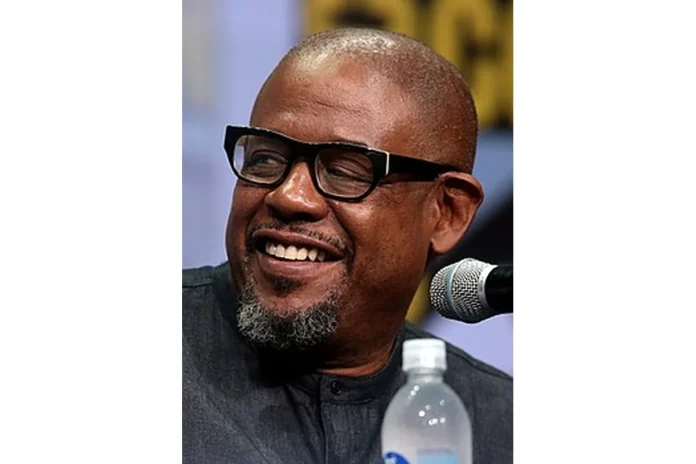
Forest Whitaker Bio
Forest Steven Whitaker (born July 15, 1961) is an American actor, filmmaker, and activist. He has built a decades-long career defined by immersive character study work and a string of critically celebrated performances. His accolades include an Academy Award, a Golden Globe Award, a British Academy Film Award, two Screen Actors Guild Awards, and the Best Actor Award at the 41st Cannes Film Festival. Beyond film, he is widely recognized for his humanitarian work as a UNESCO peace ambassador and as the founder of the Whitaker Peace and Development Initiative.
Early Life and Background
Forest Steven Whitaker was born on July 15, 1961, in Longview, Texas, the son of Laura Francis Smith, a special education teacher, and Forest E. Whitaker Jr., an insurance salesman. When he was in elementary school, his family moved to Carson, California, where he grew up alongside two younger brothers and an older sister. His earliest taste of acting came in childhood, when he played the lead role in a school production of Dylan Thomas’s play Under Milk Wood.
Whitaker attended Palisades High School in Los Angeles, where he played on the football team and sang in the choir, graduating in 1979. He later enrolled at California State Polytechnic University, Pomona on a football scholarship, though a back injury forced him to switch his major to music. He toured England with the Cal Poly Chamber Singers in 1980 before briefly turning to drama coursework. He went on to transfer to the University of Southern California, where he studied opera as a tenor and earned a Bachelor of Fine Arts degree in Acting in 1982. He also took a course at Drama Studio London at its California branch.
Path to Acting
Whitaker’s professional momentum began with a small but memorable screen debut as a high school football player in Amy Heckerling’s coming-of-age comedy Fast Times at Ridgemont High in 1982. He followed that with supporting parts in Martin Scorsese’s The Color of Money and Oliver Stone’s Vietnam War drama Platoon in 1986, establishing himself as a quietly intense screen presence. A year later, he co-starred with Robin Williams in the comedy Good Morning, Vietnam, broadening his visibility with mainstream audiences.
Television also shaped his early profile, with appearances on Diff’rent Strokes, the anthology series Amazing Stories, and the miniseries North and South between 1985 and 1986. Throughout the 1990s, he balanced theatrical work with made-for-cable films for HBO, including Criminal Justice, The Enemy Within, and Witness Protection. These varied projects allowed him to develop the methodical, research-driven approach to character that would later define his most acclaimed performances.
Forest Whitaker Career
Early Career (1982–1987)
Whitaker’s first notable film role came in Fast Times at Ridgemont High (1982), and he quickly accumulated a series of dramatic credits in the years that followed. His work in Platoon (1986), The Color of Money (1986), and Good Morning, Vietnam (1987) introduced him to audiences and to a network of celebrated directors. He also gained valuable early television experience, including a guest role on Diff’rent Strokes in 1985 and appearances in the miniseries North and South.
These formative projects earned Whitaker a reputation for on-screen gravitas and quiet authority. They also laid the groundwork for the more demanding roles that would soon follow, including his breakout portrayal of jazz legend Charlie Parker in Clint Eastwood’s Bird (1988). That performance, which earned him the Best Actor award at the Cannes Film Festival, signaled the arrival of a major new talent.
Breakthrough (1988–2006)
Whitaker’s portrayal of jazz alto saxophonist Charlie “Bird” Parker in Bird (1988) is widely regarded as one of the defining performances of his career. To prepare, he took saxophone lessons, sequestered himself in a loft with only a bed, couch, and instrument, and conducted extensive research with people who knew Parker. The role earned him the Best Actor award at the 1988 Cannes Film Festival and a Golden Globe nomination.
He continued his rise through the 1990s with the role of Jody, a captive British soldier, in the 1992 thriller The Crying Game, a performance Todd McCarthy of Variety called “hugely emotional” and “simply terrific.” Whitaker expanded into producing and directing during this era, making his directorial debut with the HBO film Strapped (1993) and later directing Waiting to Exhale (1995), Hope Floats (1998), and First Daughter (2004). His 1999 turn as a pigeon-raising, bushido-following hit man in Jim Jarmusch’s Ghost Dog: The Way of the Samurai is considered by many a definitive role, and his work on The Shield (2006–2007) earned him a Primetime Emmy Award nomination.
His career peaked in 2006 with the role of Ugandan dictator Idi Amin in The Last King of Scotland. To portray Amin, Whitaker gained 50 pounds, learned to play the accordion, mastered an East African accent, learned Swahili, and traveled to Uganda to meet Amin’s friends, relatives, generals, and victims. The performance earned him the Academy Award for Best Actor, making him the fourth Black actor in history to receive the honor, and it swept nearly every major Best Actor prize of that awards season, including the British Academy Film Award, Golden Globe Award, Screen Actors Guild Award, and National Board of Review Award.
Notable Works and Milestones
Whitaker’s signature performances include Bird (1988), The Crying Game (1992), Ghost Dog: The Way of the Samurai (1999), The Last King of Scotland (2006), The Great Debaters (2007), The Butler (2013), Arrival (2016), Black Panther (2018), and Respect (2021). He has received a star on the Hollywood Walk of Fame and an Honorary Palme d’Or from the Cannes Film Festival, among numerous other honors.
Forest Whitaker Award Nominations
Forest Whitaker has accumulated a wide range of major award nominations across film, television, and humanitarian work. He earned a Golden Globe nomination for Bird (1988), an NAACP Image Award nomination for Phenomenon (1996), and an Image Award nomination for Outstanding Supporting Actor for The Great Debaters (2007). He received a Primetime Emmy Award nomination for his guest arc on ER in 2006, and a Screen Actors Guild Award nomination for Outstanding Performance by a Male Actor in a Leading Role for The Butler (2013).
Forest Whitaker Awards Won
Whitaker has won an Academy Award for Best Actor, a Golden Globe Award, a British Academy Film Award, two Screen Actors Guild Awards, and the Best Actor Award at the 41st Cannes Film Festival. He also won the NAACP Image Award for Outstanding Actor in a Motion Picture for The Butler and shared the Screen Actors Guild Award for Outstanding Performance by a Cast in a Motion Picture for Black Panther (2018).
| Award | Wins | Year |
|---|---|---|
| Academy Award for Best Actor | 1 | 2007 |
| British Academy Film Award for Best Actor in a Leading Role | 1 | 2007 |
| Golden Globe Award for Best Actor in a Motion Picture Drama | 1 | 2007 |
| Best Actor Award, Cannes Film Festival | 1 | 1988 |
| Screen Actors Guild Award for Outstanding Performance by a Cast in a Motion Picture | 1 | 2019 |
| NAACP Image Award for Outstanding Actor in a Motion Picture | 1 | 2014 |
Forest Whitaker Family
Whitaker was born to Forest E. Whitaker Jr., an insurance salesman, and Laura Francis Smith, a special education teacher, and raised in Carson, California, with two younger brothers and an older sister. In 1996, he married actress Keisha Nash, with whom he had two daughters, and he also raised his son and her daughter from previous relationships. Whitaker and Nash divorced in 2018, and the marriage was formally dissolved in 2021.
Personal Life
Whitaker is a devoted student of yoga, holds a black belt in kenpō, and follows a vegetarian diet. He also trains in eskrima, originally under Dan Inosanto and later with Joe Jackson. He is known for a hereditary condition that causes ptosis in his left eye, which he has said affects his vision and which he has considered correcting surgically. In 2009, he was granted an honorary chieftaincy in Nkwerre, Imo State, Nigeria, where his ancestry has been traced.