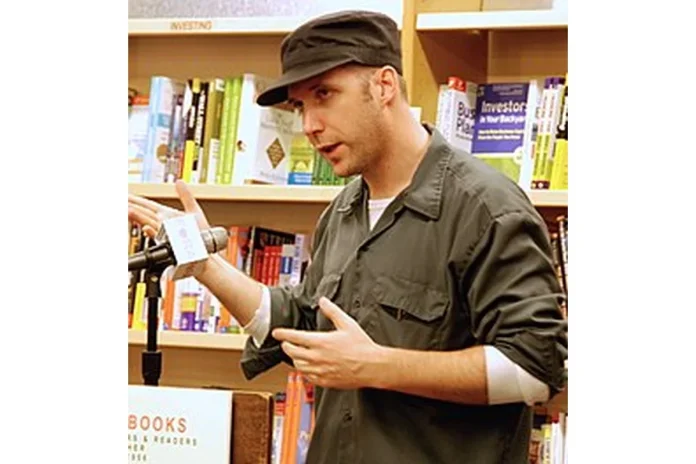
Michael Arndt Bio
Michael Arndt is an American screenwriter whose work has shaped some of the most successful and widely seen films of the twenty-first century. He is best known for writing the independent comedy-drama Little Miss Sunshine, the animated sequel Toy Story 3, the young-adult adaptation The Hunger Games: Catching Fire, and the space-opera revival Star Wars: The Force Awakens. Arndt earned the Academy Award for Best Original Screenplay for Little Miss Sunshine and was later nominated for Best Adapted Screenplay for Toy Story 3. His career began in the late 1990s after years of working as a script reader and as a personal assistant, experiences that helped him develop the discipline and craft behind his later Hollywood success.
Early Life and Background
Michael Arndt was born in McLean, Virginia, where he spent part of his childhood before moving abroad with his family. His father was a member of the United States Foreign Service, and the family lived in several countries during Arndt’s formative years, including Sri Lanka and India. The experience of moving between cultures gave Arndt an early awareness of how stories travel across borders, a sensibility that would later influence the universal themes found in his screenplays. He also lived in Virginia for extended stretches during his youth, grounding him in the rhythms of small-town American life.
For his early education, Arndt attended The Potomac School and later graduated from Langley High School, both located in McLean, Virginia. He went on to attend the Tisch School of the Arts at New York University, one of the country’s most respected training grounds for writers, directors, and performers. At Tisch, Arndt studied storytelling and dramatic structure, and he began to develop the patient approach to character and dialogue that would later define his scripts.
Path to Screenwriting
After finishing his studies, Arndt worked as a script reader, a job that required him to evaluate hundreds of submissions and quickly identify the strengths and weaknesses of a story. He also worked as a personal assistant to actor Matthew Broderick until late 1999, an experience that gave him a firsthand look at the realities of professional film production. These years of close observation convinced him to commit fully to writing original screenplays, a decision that would soon change the course of his career.
Arndt began writing screenplays full-time at the turn of the millennium. He often spoke about his realistic expectations for the craft, noting that he expected to write about fifty screenplays over his lifetime, of which perhaps only one or two might be produced and succeed. His very first produced script, however, exceeded every expectation he had set for himself, winning the highest honors in the film industry and launching a career that would span independent features, animated blockbusters, and major studio franchises.
Michael Arndt Career
Early Career (1997–2005)
Michael Arndt began his professional career in 1997, working behind the scenes in Hollywood as a script reader and assistant. During this period, he built his understanding of story structure and industry expectations, studying the work of more experienced writers while supporting productions in various capacities. He also joined the senior creative team of an entertainment organization, gaining exposure to the collaborative side of film development.
The turning point in his early career came between May 23 and 26, 2000, when Arndt wrote the first draft of Little Miss Sunshine in just three days. Over the following year, he revised the script roughly one hundred times, drawing on feedback from friends and family. He initially considered directing the project himself on a small budget, but the script was later picked up by producers, purchased in December 2001, and set up at Focus Features, where it entered a long development process before finally reaching the screen.
Breakthrough (2006–2015)
Little Miss Sunshine premiered at the Sundance Film Festival on January 20, 2006, and was released theatrically on August 18, 2006, to widespread critical acclaim. The film won multiple prizes, and Arndt received Best Original Screenplay awards from the Academy of Motion Picture Arts and Sciences, the British Academy of Film and Television Arts, and the Writers Guild of America. He was later invited to join the Academy of Motion Picture Arts and Sciences in recognition of his achievement. During production, Arndt was briefly fired when he objected to changes in the story’s focus, only to be rehired a month later after the replacement writer left the project.
In 2006, Arndt began collaborating with director Lee Unkrich and other Pixar personnel on Toy Story 3, working from a treatment by Andrew Stanton, who had co-written the earlier films in the series. The film became a global hit in 2010 and earned Arndt a nomination for Best Adapted Screenplay. With this second nomination, Arndt became the first screenwriter in Academy history to be nominated for both Best Original Screenplay and Best Adapted Screenplay for his first two screenplays. He was also brought on to perform script revisions for Men in Black 3 during this busy period.
Arndt next wrote The Hunger Games: Catching Fire, adapting Suzanne Collins’s best-selling novel for the screen in 2013. In November 2012, he was announced as the screenwriter for Star Wars: The Force Awakens, though by October 2013, director J. J. Abrams and writer Lawrence Kasdan had taken over the rewriting process. Throughout this stretch, Arndt also wrote under the pseudonyms Michael deBruyn and Rick Kerb, names used mainly for uncredited script revisions.
Notable Works and Milestones
Arndt’s signature achievement remains Little Miss Sunshine, the script that established him as one of Hollywood’s most thoughtful writers. His work on Toy Story 3 cemented his reputation across both live-action and animated genres, while his scripts for The Hunger Games: Catching Fire and Star Wars: The Force Awakens placed him at the center of two of the largest film franchises of the 2010s. Years later, he returned to the world of Panem to co-write the prequel The Hunger Games: The Ballad of Songbirds & Snakes, extending his influence on one of the most successful young-adult franchises in film history.
Michael Arndt Award Nominations
Michael Arndt has received recognition from the most respected institutions in the film industry. He was nominated for the Academy Award for Best Adapted Screenplay for Toy Story 3, an honor that highlighted his ability to move between original and adapted material with equal skill. This nomination followed his earlier Academy Award win for Little Miss Sunshine, making him the first screenwriter ever to be nominated in both screenplay categories for his first two screenplays.
Michael Arndt Awards Won
Michael Arndt won the Academy Award for Best Original Screenplay for Little Miss Sunshine in 2006, the crowning achievement of his early career. He also won Best Original Screenplay awards from the British Academy of Film and Television Arts and the Writers Guild of America for the same film. In recognition of his contributions to cinema, the Academy of Motion Picture Arts and Sciences later invited him to join its ranks.
| Award | Wins | Year |
|---|---|---|
| Academy Award for Best Original Screenplay (Little Miss Sunshine) | 1 | 2006 |
| BAFTA Award for Best Original Screenplay (Little Miss Sunshine) | 1 | 2006 |
| Writers Guild of America Award for Best Original Screenplay (Little Miss Sunshine) | 1 | 2006 |
Michael Arndt Family
Michael Arndt’s father served in the United States Foreign Service, a career that took the family to several countries during Michael’s youth. The family lived in Sri Lanka and India, as well as in Virginia, exposing Arndt to a wide range of cultures and communities from an early age. These international experiences shaped the broad perspective that has come through in his screenwriting work.
Personal Life
Michael Arndt has kept much of his personal life private, and few details about his relationships or family outside of his upbringing have been made public. He is known by the professional alias Michael deBruyn, a name he has used for uncredited script revisions throughout his career.