Patricia Velasquez Bio
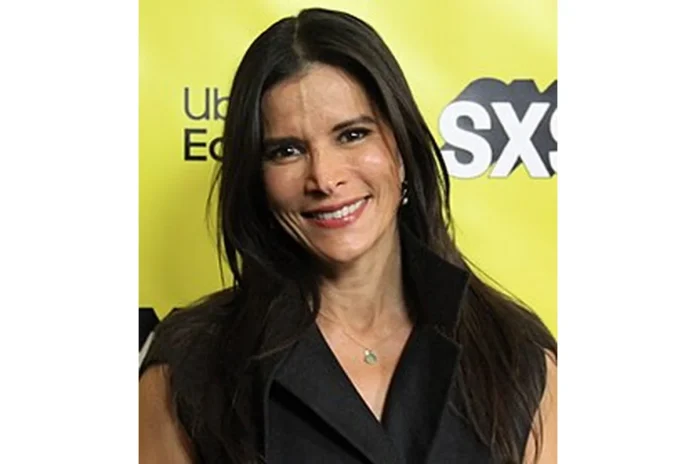
Patricia Carola Velásquez Semprún, born on 31 January 1971 in Maracaibo, Venezuela, is a Venezuelan actress, model, author, and philanthropist. She first drew international attention as a fashion model working with major European houses before transitioning into acting, where she became best known for her role as Anck-Su-Namun in the 1999 adventure film The Mummy and its 2001 sequel The Mummy Returns. Beyond cinema, Velásquez has built a parallel career as a humanitarian, founding the Wayùu Taya Foundation in 2002 to support the indigenous Wayuu people of northwestern Venezuela and northern Colombia. Her work in fashion, film, and advocacy has made her one of the most recognized Venezuelan figures in global entertainment.
Early Life and Background
Patricia Velásquez was born in Maracaibo, Venezuela, and raised as the fifth of six children in a family shaped by two distinct cultural traditions. Her father was of mestizo heritage, while her mother belonged to the indigenous Wayuu people, a connection that would later inspire her humanitarian work. Growing up in a household rooted in Wayuu customs, she absorbed an early appreciation for community responsibility and cultural preservation, values that would define much of her adult life.
As a child, Velásquez showed an early fascination with performance and visual storytelling, but her first formal path into the public eye came through modeling rather than theater. She became fluent in several languages during her formative years, including English, Spanish, French, and Italian, a skill set that would later allow her to move easily between Latin American, European, and American productions. This linguistic range, combined with the discipline she learned at home, prepared her for the international career that began before she turned twenty.
Path to Acting
Velásquez began her professional career in 1989, initially finding her footing in the world of fashion rather than film. She walked runways in ready-to-wear shows for designers such as Chanel, Chloé, John Galliano, Claude Montana, and Dolce & Gabbana, and appeared in print campaigns for Chanel’s Allure, Monsoon, and Roberto Verino’s Verino fragrance. Her striking features and screen presence led to multiple magazine covers, including appearances in Vogue, Harper’s Bazaar, and Marie Claire. She also became the face of Cover Girl for eight years, marking her as the first Latin supermodel to transition into mainstream American media.
Between 1995 and 2000, while continuing her modeling work, Velásquez studied acting in Los Angeles and New York. She also made several on-screen appearances in music videos, including Red Hot Chili Peppers’ “Breaking the Girl,” Rod Stewart’s “Leave Virginia Alone,” Ricardo Montaner’s “Para Llorar,” and George Michael’s “Spinning the Wheel,” gaining valuable set experience. By the late 1990s, she was ready to step into feature films, setting the stage for the role that would define her career.
Patricia Velasquez Career
Early Career (1989–1998)
Velásquez launched her professional career in 1989 and spent much of the following decade building a reputation as a top-tier fashion model. She moved between editorial work, runway shows, and advertising campaigns, working with luxury brands and appearing on covers of leading international magazines. Her visibility in fashion created a natural bridge to entertainment, and she began taking acting classes and securing small on-camera roles in music videos during the mid-1990s.
These early modeling assignments and screen tests gave her the confidence and industry contacts needed to pursue film work in Hollywood. By the end of the 1990s, she had positioned herself as a crossover talent ready for a major cinematic opportunity.
Breakthrough (1999–2001)
In 1999, Velásquez landed the role that would define her career when she was cast as Meela Nais, also known as Anck-Su-Namun, in the adventure film The Mummy, directed by Stephen Sommers. Her performance opposite Brendan Fraser and Rachel Weisz brought her global recognition and made her a recognizable face in mainstream American cinema. The film’s massive commercial success led directly to a sequel, and in 2001 she reprised her role in The Mummy Returns, further cementing her status as an international film star.
Beyond the Mummy franchise, she continued modeling and took on early humanitarian work, laying the groundwork for the advocacy that would become central to her public identity.
Notable Works and Milestones
Velásquez’s most recognizable work remains her portrayal of Anck-Su-Namun in The Mummy and The Mummy Returns, roles that remain signature entries in her filmography. She later starred in films such as The Curse of La Llorona (2019) and took on the lead role in Maya (2024), a film addressing human trafficking directed by Julia Verdin. In 2025, she appeared in No Address, a project spotlighting homelessness, and was featured in Time magazine in 2024. She also lent her voice to video games, including Unuratu in Shadow of the Tomb Raider, and earned an Imagen Award nomination for Best Supporting Actress for her role in List of a Lifetime.
Patricia Velasquez Award Nominations
Throughout her career, Patricia Velasquez has received recognition from advocacy organizations and film festivals for both her on-screen work and her humanitarian efforts. Her most notable nomination came from the 2022 Imagen Awards, where she was nominated for Best Supporting Actress for her performance in the drama List of a Lifetime. This nomination reflected the industry’s appreciation for her continued work in projects that highlight meaningful social themes.
Patricia Velasquez Awards Won
Velásquez has received several awards honoring both her artistic contributions and her humanitarian work. In 2009, she was honored with the Women Together Award at the United Nations, recognizing her dedication to building a more equal society. In 2015, the LA Femme Film Festival presented her with a Humanitarian Award, and in 2018, the Human Rights Campaign honored her with the Visibility Award in New England for her ongoing advocacy on behalf of marginalized communities.
| Award | Wins | Year |
|---|---|---|
| Women Together Award (United Nations) | 1 | 2009 |
| Humanitarian Award (LA Femme Film Festival) | 1 | 2015 |
| Visibility Award (Human Rights Campaign) | 1 | 2018 |
Patricia Velasquez Family
Velásquez was born into a large family as the fifth of six children. Her father was of mestizo heritage, while her mother belonged to the indigenous Wayuu people of northwestern Venezuela and northern Colombia. This dual heritage played a central role in shaping her identity and later inspired her founding of the Wayùu Taya Foundation in 2002, an organization dedicated to improving the living conditions of the Wayuu community. In 2015, she released her memoir Straight Walk, in which she reflected on her family background, her journey from poverty to international recognition, and her path as a member of the Wayuu diaspora.
Personal Life
In February 2015, Velásquez released her memoir Straight Walk, in which she publicly came out as a lesbian, stating that she wanted to set an example of honesty for her daughter. She is known to have a daughter, and her personal experiences have informed her ongoing advocacy for LGBTQ+ visibility and indigenous rights. In June 2003, she was appointed UNESCO Artist for Peace, and in August 2018, the Organization of American States named her Goodwill Ambassador for the Rights of Indigenous Peoples of the Americas. Beyond her creative work, she has also competed on the twelfth season of The Apprentice on behalf of the Wayùu Tayá Foundation and delivered talks at events such as the TED Conference and the Clinton Global Initiative.