Steven Soderbergh Bio
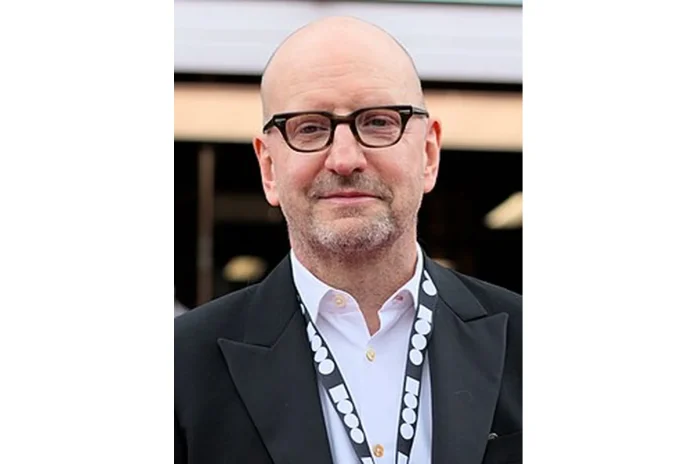
Steven Andrew Soderbergh (born January 14, 1963) is an American film director, producer, screenwriter, cinematographer, and editor. A pioneer of modern independent cinema, Soderbergh later drew acclaim for formally inventive films made within the studio system. His directorial breakthrough, the indie drama Sex, Lies, and Videotape (1989), lifted him into the public spotlight as a notable presence in the film industry. At 26, Soderbergh became the youngest solo director to win the Palme d’Or at the Cannes Film Festival, and the film garnered worldwide commercial success, as well as numerous accolades. His next five films, including the critically lauded King of the Hill (1993), found limited commercial success. He pivoted into more mainstream fare with the crime comedy Out of Sight (1998), the biopic Erin Brockovich (2000), and the crime drama Traffic (2000), for which he won the Academy Award for Best Director. Soderbergh found further popular and critical success with the Ocean’s trilogy and film franchise (2001–2018), Che (2008), The Informant! (2009), Contagion (2011), and the Magic Mike trilogy (2012–2023). His films have grossed over $2.2 billion worldwide and garnered fourteen Academy Award nominations, winning five. Soderbergh’s films often revolve around familiar concepts which are regularly used for big-budget Hollywood movies, but he routinely employs an avant-garde arthouse approach. They center on themes of shifting personal identities, vengeance, sexuality, morality, and the human condition. His feature films are often distinctive in the realm of cinematography as a result of his having been influenced by avant-garde cinema, coupled with his use of unconventional film and camera formats. Many of Soderbergh’s films are anchored by multi-dimensional storylines with plot twists, nonlinear storytelling, experimental sequencing, suspenseful soundscapes, and third-person vantage points.
Early Life and Background
Steven Soderbergh was born on January 14, 1963, in Atlanta, Georgia, to Mary Ann (née Bernard) and Peter Andrew Soderbergh, who was a university administrator and educator. Soderbergh has Swedish, Irish, and Italian roots. His paternal grandfather immigrated to the U.S. from Stockholm. As a child, he moved with his family to Charlottesville, Virginia, where he lived during his adolescence, and then to Baton Rouge, Louisiana, where his father became Dean of Education at Louisiana State University. Soderbergh discovered filmmaking as a teenager and directed short films with a Super 8 and 16 mm cameras. He attended the Louisiana State University Laboratory School for high school before graduating and moving to Hollywood to pursue professional filmmaking. In his first job, he worked as a game show scorekeeper and cue card holder; soon after, he found work as a freelance film editor. During this time, he directed the concert video 9012Live for the rock band Yes in 1985, for which he received a Grammy Award nomination for Best Music Video, Long Form.
Path to Hollywood
After Soderbergh returned to Baton Rouge, he wrote the screenplay for Sex, Lies, and Videotape on a legal pad during an eight-day cross-country drive. The film tells the story of a troubled man who videotapes women discussing their lives and sexuality, and his impact on the relationship of a married couple. Soderbergh submitted Sex, Lies, and Videotape to the 1989 Cannes Film Festival where, at age 26, he became the youngest solo director to win the Palme d’Or, the top prize. Its critical performance led it to become a worldwide commercial success, grossing $36.7 million on a $1.2 million budget. Sex, Lies, and Videotape is considered to be the most influential catalyst of the 1990s Independent Cinema movement. Film critic Roger Ebert called Soderbergh the “poster boy of the Sundance generation.” His relative youth and sudden rise to prominence in the film industry had him referred to as a “sensation” and a prodigy. In 2006, Sex, Lies, and Videotape was selected by the Library of Congress for preservation in the United States National Film Registry, being deemed “culturally, historically, or aesthetically significant” and the American Film Institute nominated it as one of the greatest movies ever made.
Steven Soderbergh Career
Early Career (1981–1989)
Soderbergh’s directorial debut was followed by a series of low-budget box-office disappointments. In 1991, he directed Kafka, a biographical film of Franz Kafka written by Lem Dobbs and starring Jeremy Irons. The film returned one-tenth of its budget and received mixed reviews from critics. Roger Ebert’s review stated: “Soderbergh does demonstrate again here that he’s a gifted director, however unwise in his choice of project.” Two years later, he directed the drama King of the Hill (1993), which again underperformed commercially, but fared well with critics. Based on the memoir of writer A. E. Hotchner, the film is set during the Great Depression and follows a young boy struggling to survive on his own in a hotel in St. Louis after his mother falls ill and his father is away on business trips. Also in 1995, he directed a remake of Robert Siodmak’s 1949 film noir Criss Cross, titled The Underneath, which grossed $536,020 on a $6.5 million budget and was widely panned by critics. Soderbergh has since called the film “dead on arrival” and described the making of it as his bottoming out.
Breakthrough (1989–2000)
Soderbergh’s reemergence began in 1998 with Out of Sight, a stylized adaptation of an Elmore Leonard novel, written by Scott Frank and starring George Clooney and Jennifer Lopez. The film was widely praised, though only a moderate box-office success. The critical reception of the movie began a multi-movie artistic partnership between Clooney and Soderbergh. Soderbergh followed up on the success of Out of Sight by making another crime caper, The Limey (1999), from a screenplay by Lem Dobbs and starring actors Terence Stamp and Peter Fonda. He ventured into his first biographical film since Kafka in 2000 when he directed Erin Brockovich, written by Susannah Grant and starring Julia Roberts in her Oscar-winning role as a single mother taking on industry in a civil action. In late 2000, Soderbergh released Traffic, a social drama written by Stephen Gaghan and featuring an ensemble cast. Time compared him to a baseball player hitting home runs with Erin Brockovich and Traffic. Both films would be nominated at the 2001 Academy Awards, making him the first director to have been nominated in the same year for Best Director for two different films since Michael Curtiz in 1938. He was awarded the Academy Award for Best Director for Traffic and received best director nominations at the year’s Golden Globe and the Directors Guild of America Awards.
Notable Works and Milestones
Soderbergh’s film career spans a multitude of genres but his specialties are psychological, crime, and heist films. His films have grossed over $2.2 billion worldwide and garnered fourteen Academy Award nominations, winning five. His signature work includes Sex, Lies, and Videotape, Erin Brockovich, and Traffic, which have all been pivotal in shaping modern independent cinema.
Steven Soderbergh Award Nominations
Throughout his career, Steven Soderbergh has received numerous nominations for prestigious awards, including the Academy Awards, Golden Globes, and Directors Guild of America Awards. His ability to navigate both independent and mainstream cinema has earned him recognition as a versatile filmmaker.
Steven Soderbergh Awards Won
Soderbergh has won several notable awards, including the Academy Award for Best Director for Traffic in 2001 and the Palme d’Or for Sex, Lies, and Videotape in 1989. His work has been recognized for its impact on the film industry and its innovative storytelling techniques.
Steven Soderbergh Family
Steven Soderbergh was married to actress Betsy Brantley from 1989 to 1994, and they have one daughter together. He has been married to Jules Asner since 2003, and they have one daughter born in 2010. Soderbergh currently resides in New York City.
Personal Life
Soderbergh’s personal life includes his marriage to actress Betsy Brantley and his current marriage to Jules Asner, whom he credits for influencing his female characters. He has a daughter born in 2010 with a woman in Australia, where he was working during a separation from Asner. Soderbergh is known for his strong opinions about the film industry and has expressed a desire to maintain artistic integrity in his work.