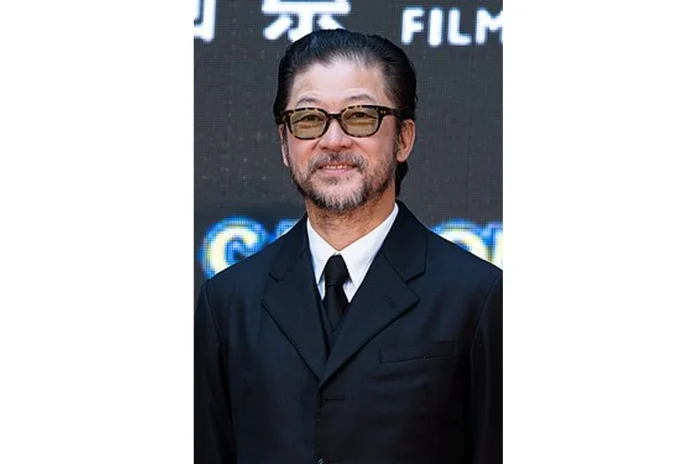
Tadanobu Asano Bio
Tadanobu Satō, better known by his stage name Tadanobu Asano, is a Japanese actor, director, and musician born on November 27, 1973, in Yokohama, Kanagawa, Japan. Over the course of his career, he has built a reputation for taking on intense, unconventional roles across both Japanese and international productions. He first came to widespread attention through his collaborations with acclaimed Japanese filmmakers before transitioning into major Hollywood projects and global television series. Today, he is recognized as one of Japan’s most versatile screen performers, with a body of work that spans art-house cinema, historical epics, comic-book blockbusters, and prestige television.
Early Life and Background
Tadanobu Asano was born in the Honmoku area of Yokohama to artist Yukihisa Satō and his mother Junko. Through his mother’s side, Asano is of one-quarter American ancestry, as his maternal grandfather was Willard Overing, a U.S. citizen of Norwegian and Dutch descent whom he never met. Growing up in a creative household, with a father who worked as an artists’ agent and an older brother, Kujun Satō, who later became a musician, Asano was surrounded by artistic influences from an early age.
His introduction to the entertainment industry came through his father, who ran an actors’ agency and suggested that his son audition for a part in the Japanese television series 3-nen B-gumi Kinpachi Sensei at the age of 16. The role marked the beginning of Asano’s professional career and led him toward acting as a serious pursuit. Although he had no formal training documented in available sources, his natural instincts on camera and his family’s connection to the industry helped him transition quickly into film work.
Path to Celebrity
Asano made his film debut in the 1990 drama Swimming Upstream, known in Japanese as Bataashi Kingyo. His first critical breakthrough came with director Shunji Iwai’s Fried Dragon Fish in 1993, a film that helped establish his reputation among Japanese audiences. The turning point of his early career, however, arrived in 1995 when he starred in director Hirokazu Kore-eda’s Maboroshi no Hikari, playing a man who throws himself in front of a train and leaves behind a grieving wife and infant son. The role earned him widespread acclaim and cemented his standing as a serious dramatic actor.
Following that success, Asano continued to work with some of the most respected directors in Japanese cinema. He collaborated again with Kore-eda on the 2001 film Distance and went on to star in acclaimed works such as Nagisa Ōshima’s Gohatto in 1999 and Takashi Miike’s Ichi the Killer in 2001. These early projects showcased his range across historical drama, psychological thriller, and avant-garde storytelling, preparing him for the international crossover that would follow later in his career.
Tadanobu Asano Career
Early Career (1988–2002)
Asano began his professional acting career in 1988 with a television appearance in Kinpachi Sensei, followed by his film debut in Swimming Upstream in 1990. His first major critical success came with Fried Dragon Fish in 1993, and his international breakthrough followed in 1995 with Maboroshi no Hikari. Throughout the 1990s and early 2000s, he became a regular presence in Japanese art-house cinema, working with directors including Hirokazu Kore-eda, Nagisa Ōshima, and others.
During this formative period, he also won the Most Popular Performer award at the 1997 Japanese Academy Awards for his work in the 1996 drama Acri. The recognition confirmed his rising popularity and set the stage for the wider recognition he would receive in the following decade.
Breakthrough (2003–2014)
Asano’s international profile grew significantly in 2003, the year he appeared in two landmark productions. He played the lead role of Kenji in Thai director Pen-Ek Ratanaruang’s Last Life in the Universe, a performance that earned him the Upstream Prize for Best Actor at the Venice Film Festival. That same year, he starred as the samurai Hattori Genosuke in Takeshi Kitano’s Zatoichi, a film that brought him further international visibility and a Best Supporting Actor nomination at the Japanese Academy Awards in 2004.
He expanded his international filmography with roles in Sergei Bodrov’s Mongol in 2007, in which he played the young Genghis Khan, and Katsuhito Ishii’s The Taste of Tea in 2003. In 2011, Asano entered the Hollywood mainstream when he was cast as the Asgardian warrior Hogun in Marvel Studios’ Thor, a role he reprised in Thor: The Dark World in 2013 and Thor: Ragnarok in 2017. In 2014, he added another major honor to his résumé by winning the Best Actor award at the 36th Moscow International Film Festival for his role in the drama My Man.
Notable Works and Milestones
Among Asano’s signature films are Maboroshi no Hikari (1995), Zatoichi (2003), Thor (2011), and Mortal Kombat (2021), in which he played the thunder god Raiden. He has also drawn acclaim for his portrayal of Lord Kashigi Yabushige in the 2024 FX limited series Shōgun, an adaptation of the James Clavell novel, for which he received a Primetime Emmy Award nomination for Outstanding Supporting Actor in a Drama Series and won the Golden Globe Award for Best Supporting Actor in a Series, Miniseries, or Television Film.
Tadanobu Asano Award Nominations
Tadanobu Asano has earned multiple award nominations across his career, reflecting his sustained presence in both Japanese and international productions. He has been nominated five times at the Japan Academy Film Prizes, including two nominations for Best Actor and three for Best Supporting Actor. He received a Best Supporting Actor nomination in 2004 for Zatoichi. In 2024, he earned his first Primetime Emmy Award nomination for Outstanding Supporting Actor in a Drama Series for his role in Shōgun.
Tadanobu Asano Awards Won
Asano has collected several major awards throughout his career. He won the Most Popular Performer award at the 1997 Japanese Academy Awards for Acri, the Upstream Prize for Best Actor at the 2003 Venice Film Festival for Last Life in the Universe, and the Best Actor award at the 2014 Moscow International Film Festival for My Man. He has also won the Golden Globe Award for Best Supporting Actor in a Series, Miniseries, or Television Film for his work in Shōgun.
Tadanobu Asano Family
Asano was raised in Yokohama by his father, Yukihisa Satō, an artist and actors’ agent, and his mother, Junko. His older brother, Kujun Satō, born in 1971, is a musician and a partner in Anore Inc., the talent agency that Asano and his father co-founded. Asano and his father left the agency in 2022.
Personal Life
Asano met Japanese singer Chara on the set of director Shunji Iwai’s Picnic in 1994. The couple married in March 1995 and had a daughter, Sumire, born on July 4, 1995, followed by a son, Himi, born in 1999. Chara announced their divorce in July 2009, with Chara receiving custody of both children. In August 2022, Asano announced through social media that he had married model and actress Kurumi Nakata, eighteen years his junior, after reportedly being in a relationship with her for more than six years.