
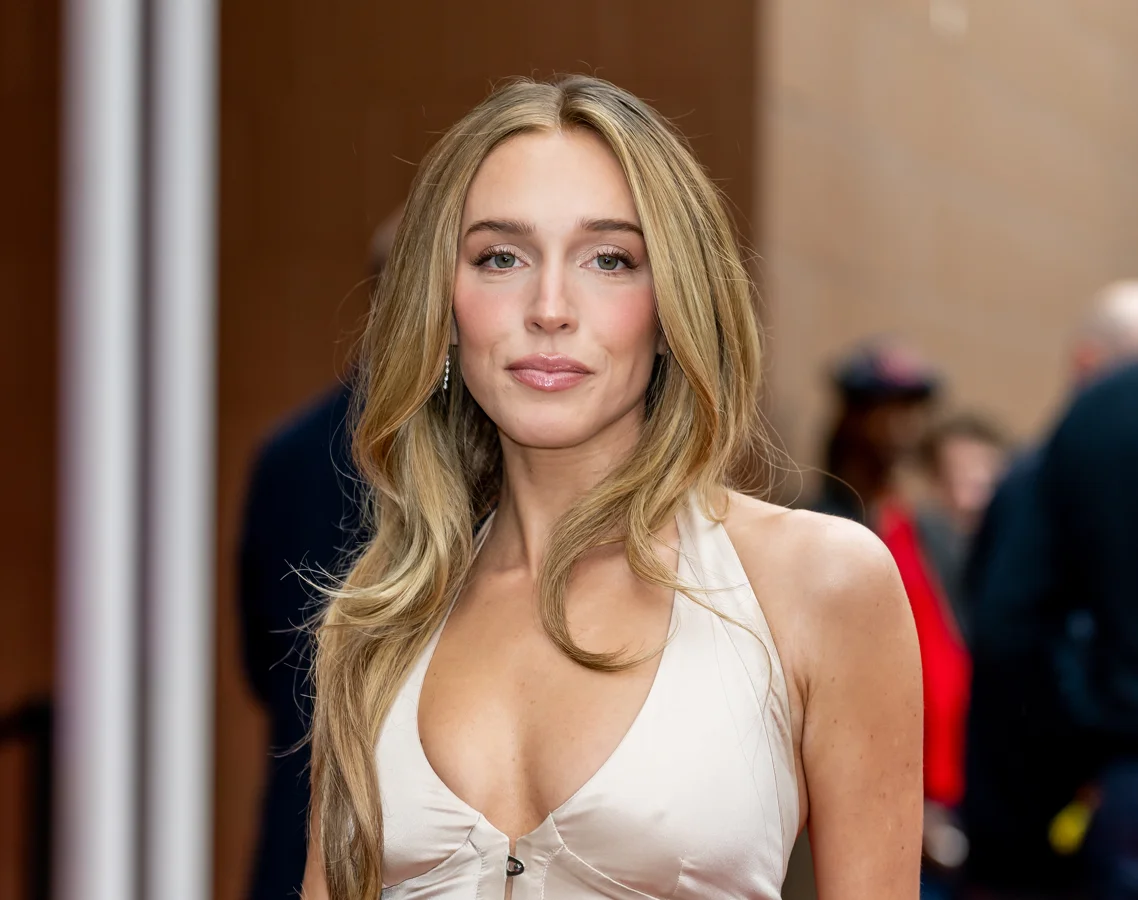
Leila George’s transformative performance in Disclaimer on Apple TV+ has captured the attention of critics and director Alfonso Cuarón alike, establishing her as a breakout talent in the streaming thriller. George was chosen to play a pivotal role alongside renowned actors, delivering a portrayal so convincing that it shifted the series’ creative direction and earned her widespread acclaim.
A Role Offered by Cuarón Without Audition
The opportunity for George arrived in an unanticipated way: Alfonso Cuarón personally reached out, offering her the role of young Catherine Ravenscroft without requiring an audition. This part would see her reflect Cate Blanchett’s character during crucial flashback scenes. Surrounded by a cast that included established talents such as Blanchett, Kevin Kline, Sacha Baron Cohen, and Lesley Manville, George faced the task of embodying a younger version of a complex protagonist and bringing nuance to the thriller’s ongoing mystery.
Initially, George was brought on as a body double, but her performance prompted Cuarón to allow her work to stand on its own within the narrative, a decision that altered the series’ planned approach. Carla Meyer from the San Francisco Chronicle recognized George’s impact:
“Leila George shines as the younger Catherine,”
—Carla Meyer, San Francisco Chronicle critic. She further noted,
“Shown in flashbacks, George nails Blanchett’s signature emotionally distant allure and exhausted yet superior speech patterns.”
—Carla Meyer, San Francisco Chronicle critic.
Behind the Scenes: Preparation and Uncertainty
Disclaimer traces the repercussions of a concealed secret that destabilizes the family of journalist Catherine Ravenscroft, played by Blanchett, as her husband, portrayed by Sacha Baron Cohen, and son, played by Kodi Smit-McPhee, become entangled in a spiral of revenge led by Kevin Kline’s character. George introduces the younger version of Catherine in early flashback scenes, where initial perceptions evolve as the mystery is unveiled.
In recounting her experience, George revealed the intensity and anxiety that accompanied her casting. She recalled being informed about Cuarón’s impending call, the restriction on accessing the script, and her subsequent choice to read the book for preparation. Realizing that casting director involvement was instrumental, she reflected on her initial nervousness and doubts about her suitability for the project, expressing deep gratitude that the opportunity materialized as it did.
Describing the first conversation with Cuarón, George said he detailed the entire narrative on the phone, only to learn she had pre-emptively read the novel—a move he hadn’t intended. Nevertheless, following discussions about challenging scenes, Cuarón requested she join the project, and within days, George relocated for filming. She captured this pivotal moment,
“Would you like to do this?”
—Alfonso Cuarón, Director, with a clear sense that acceptance was her only possible response. He finalized with:
“OK, well, I need you here in three days.”
—Alfonso Cuarón, Director.
Stepping Into Character Under Pressure
Arriving at the studio, George was immediately immersed in the project. She received essential materials and had only about ten days to prepare for her most significant role yet. Admitting to pre-shoot anxiety, George shared how Blanchett’s established characterization of Catherine provided a foundation, enabling her to blend imitation and originality. Much of her work depended on striking the right balance between mimicking Blanchett and interpreting the fictionalized younger Catherine as constructed by other characters in the narrative. This complexity was amplified by production logistics, as shooting both versions of Catherine often fell on the same day depending on filming conditions, requiring her to rapidly shift between psychological states.
To convey the necessary duality—transitioning from the confident seductress seen in early episodes to a traumatized woman in later ones—George turned to music as a tool for emotional modulation. She curated playlists for each persona, helping her adjust quickly on set, describing the necessity of moving between profound emotional extremes with limited time to reflect.
Working With Cuarón and Navigating Challenging Scenes
The atmosphere set by director Cuarón was demanding yet supportive. George explained that Cuarón rarely gave explicit direction, especially in scenes involving the more vulnerable aspects of Catherine’s persona, trusting the actors to interpret their characters. For the seductive early portrayal of Catherine, his guidance involved amplifying the attributes Blanchett had established, particularly her sense of allure and underlying restlessness. He encouraged pushing the flirtatiousness and emotional undertones, while for later episodes, he focused on subtlety and emotional restraint, especially regarding the traumatic shifts in the character’s arc.
The most challenging scenes, particularly those where Catherine’s vulnerability and trauma were at the forefront, required a disciplined emotional separation. George expressed her ability to disengage from the intense emotions once filming ended, finding the experience both draining and therapeutic. She noted that while physical traits or mannerisms occasionally lingered, the powerful emotions were left behind at work, with a significant sense of relief accompanying the completion of the most difficult scenes.
Achieving Authenticity Through Observation
When preparing to channel Blanchett’s performance, George attended studio run-throughs and closely observed Blanchett’s handling of crucial scenes. She also collaborated with the same dialect coach as Blanchett to ensure vocal consistency. Facing the challenge of limited access to Blanchett’s filmed work due to production schedules, George took matters into her own hands: using an iPad supplied by a production assistant, she spent thirty minutes mirroring Blanchett’s actions, recording herself on her phone for later study—despite concerns about studio security and confidentiality.
The Unexpected Decision to Feature George’s Performance
Initially, Cuarón’s plan was to use George as a body double with Blanchett’s face digitally imposed for major flashback sequences. However, as production unfolded, Cuarón reconsidered, increasingly drawn to George’s interpretative depth. He discussed this shift candidly:
“I think we’d like to make it so that in the first four episodes, it’s actually you, and then when we cut to the truth, we’ll put Cate’s face on your body.”
—Alfonso Cuarón, Director. Upon seeing her own performance in a screening, George experienced an emotional response and was deeply moved when Cuarón ultimately decided to forgo digital manipulation, opting to present George’s work unaltered through the series. She remembered his confirmation:
“What do you think? Do you like it?”
—Alfonso Cuarón, Director, and her own gratitude:
“I’m so, so happy I got to see it before you did all of the CGI. Thank you for letting me see that.”
—Leila George, Actress, to which he responded,
“Yeah, we’re not gonna do it. We’re just gonna let it be you.”
—Alfonso Cuarón, Director.
This decision profoundly affected George, who felt an immense sense of honor from the trust and recognition. The experience solidified her belief in her own abilities and marked a turning point in her career.
Growth, Lessons, and Industry Impact
The transformation in George’s own outlook emerged as the lasting impact from this career-defining project. During an early dinner, she recalled Louis Partridge asking Cuarón to name his favorite actors, to which Cuarón singled out the non-actors he had worked with on Roma. Inspired by this, George resolved to approach her role with the authenticity and openness valued by Cuarón, grounding her process in thorough research and self-assurance. She reflected on how Cuarón’s faith encouraged her to embrace her place among established actors, stating that she now possesses greater confidence to participate as an equal in creative environments and social settings within the industry.
The acclaim for Leila George’s transformative performance in Disclaimer on Apple TV+ underlines not only her skill but also the value of bold, risk-taking direction from filmmakers like Alfonso Cuarón. With the powerful ensemble cast and intricate narrative centered on secrets, revenge, and personal evolution, George’s contribution is recognized as a vital element in the series’ success. As critics, viewers, and collaborators continue to reflect on Disclaimer, George’s work stands as a testament to the impact that a single, bravely authentic performance can have on both a project and an actor’s career trajectory.
