Rian Johnson's Star Wars defense: "Killing Snoke elevated Kylo Ren, giving the narrative a compelling, complex villain."
In the 2017 film Star Wars: The Last Jedi, writer-director Rian Johnson made a bold choice by eliminating Supreme Leader Snoke, the imposing antagonist introduced in 2015’s The Force Awakens. This unexpected turn challenged fans’ theories about Snoke’s identity and the overall trajectory of the sequel saga. Johnson’s decision has since sparked intense debate, prompting him to offer a detailed defense of Snoke’s death and its importance within the broader story.
The Last Jedi’s pivotal moment occurs when Kylo Ren, played by Adam Driver, violently kills Snoke, portrayed by Andy Serkis. Snoke’s sudden demise disrupted the assumption that he was the trilogy’s main villain, making Kylo Ren the central antagonist instead. This move effectively reshaped the narrative focus of the Star Wars sequel trilogy, a fact that is central to Johnson’s explanation.
Collaboration and Creative Direction in the Skywalker Saga
Despite some fan criticism, Johnson revealed in a recent Rolling Stone interview that communication and collaboration with Episode VII director J.J. Abrams were integral to the process of making The Last Jedi. He emphasized that the creative decisions were not intended to overturn the groundwork laid by Abrams but to advance the story and characters he introduced.
“We communicated. We met and I spent days with him and was able to get into his head and all the choices he had made,”
Johnson remarked.
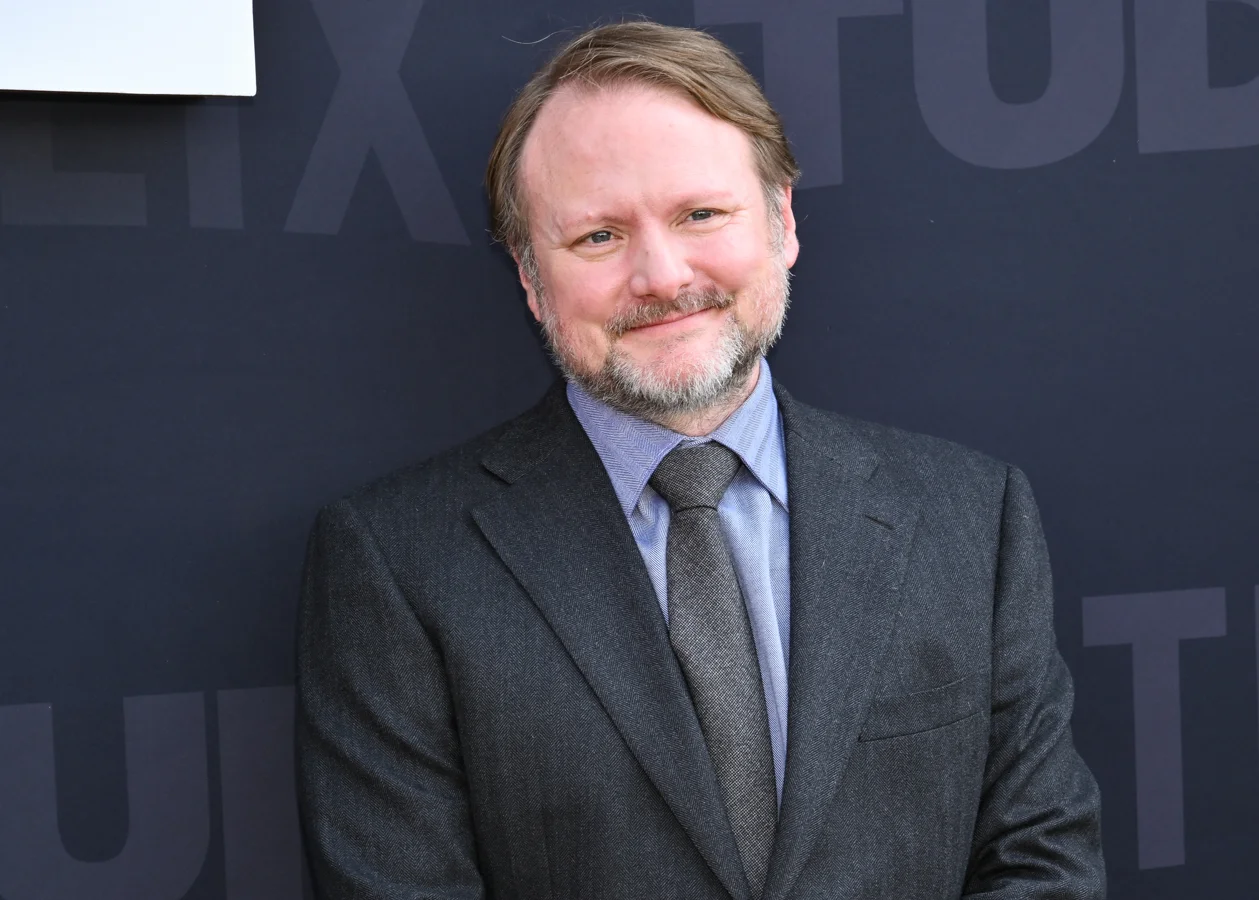
Image of: Rian Johnson
“That having been said, I communicated and I went and made the movie. And he was in the middle of Force Awakens. Ultimately, I feel like the choices in it, none of them were born out of an intent to ‘undo’ anything. They were all borne out of the opposite intent of, how do I take this story that J.J. wrote, that I really loved, and these characters he created that I really loved, and take them to the next step?”
—Rian Johnson, Writer-Director
Johnson also discussed how Lucasfilm president Kathleen Kennedy framed his role as crafting the “Empire Strikes Back” of the new series. He took this seriously, aspiring not to merely mimic the original but to capture the essence of what made that middle chapter so impactful.
“Kathy [Kennedy, the president of Lucasfilm] said, ‘We’re looking at someone to do the Empire [Strikes Back] of this series.’ I took that assignment very seriously. Maybe more seriously than someone would have liked. I guess to me that didn’t mean making something that just had nods to Empire — that meant trying to genuinely do what Empire did.”
—Rian Johnson, Writer-Director
The Narrative Shift: From Snoke to Kylo Ren
The Last Jedi marked the end of several major characters, including Luke Skywalker (Mark Hamill), Snoke, and Captain Phasma (Gwendoline Christie), all of whom were significant figures in the story’s first act. The film also dispelled popular theories about Rey’s lineage, revealing that her parents were unnamed junk traders who sold her off, rather than linking her to the established Skywalker or Solo families.
When questioned by Rolling Stone about Snoke’s unexpected death, Johnson pointed to Kylo Ren’s increasing prominence as a motivator. He saw potential in expanding Kylo Ren’s role as the primary villain after witnessing Adam Driver’s compelling performance and the character’s complex dynamics in the first film.
“That was, in reading J.J.’s script [for Force Awakens], and watching the dailies, and seeing the power of Adam Driver’s character,”
Johnson said.
“The interrogation scene in the first movie, between Rey and Kylo, was so incredibly powerful. Seeing this complicated villain that’s been created, I was just so compelled by that. This is all a matter of perspective and phrasing, but to me, I didn’t easily dispense with Snoke.”
—Rian Johnson, Writer-Director
He took deliberate steps to ensure Snoke’s role was impactful, aiming to elevate Kylo Ren’s character development by removing Snoke from the equation in a dramatic fashion.
“I took great pains to use him in the most dramatically impactful way, which was to then take Kylo’s character to the next level and set him up as well as I possibly could.”
“I guess it all comes down to your point of view,”
Johnson added.
“I thought, ‘This is such a compelling and complicated villain. This is who it makes sense going forward to build around.”
—Rian Johnson, Writer-Director
The Aftermath and Continuation of the Saga
Despite Johnson’s reasoning, J.J. Abrams later revived Emperor Palpatine in 2019’s The Rise of Skywalker, a move that altered the villain hierarchy yet again. Palpatine, a looming figure from both the original and prequel trilogies, reemerged as the overarching villain, while Kylo Ren maintained his complexity until the film’s final redemption arc.
Additionally, Rey’s heritage was reframed in the conclusion of the trilogy, revealing her as a descendant of Palpatine. These changes demonstrate how different directors handled the story’s progression, offering new angles on the characters and overarching conflict.
Johnson’s defense highlights the creative challenges and evolving decisions intrinsic to such a monumental franchise. His approach to Snoke’s death was a deliberate choice to refocus the narrative and deepen character arcs, impacting the sequel saga’s tone and direction. As the Star Wars universe continues to expand across films and series, the lasting influence of these choices remains a subject of discussion among fans and creators alike.
Our Reader’s Queries
Q. Why did Rian Johnson direct Star Wars episode 8?
A. After finishing his third movie, Looper, Rian Johnson met with Lucasfilm’s new president, Kathleen Kennedy. At a follow-up meeting, Johnson was invited to direct Episode VIII of the Star Wars sequel series.