
At the Sarajevo Film Festival, Willem Dafoe received the Honorary Heart of Sarajevo award while supporting Miguel Ángel Jiménez’s film The Birthday Party. During the event, Dafoe shared insights on his extensive acting career and touched briefly on American politics, offering reflections tied closely to his own experiences and roles.
Dafoe’s Thoughts on America’s Political Direction
<pDiscussing his Oscar-nominated part in Sean Baker’s 2017 drama The Florida Project, Dafoe recalled a Larry King interview conducted as the first Trump administration began. He expressed a clear sense of concern about the country’s path at that time, stating America was
not going in the right direction.
When asked if he still felt that the nation remained headed the wrong way, Dafoe’s reaction was immediate and pointed:
You gotta be kidding me with this question, right?
He further emphasized the clarity of his stance by adding,
If you know anything about me and you do, that’s not a real question,
before steering the conversation onward.
Revisiting a Controversial Role: Jesus in ‘The Last Temptation of Christ’
Reflecting on his portrayal in Martin Scorsese’s The Last Temptation of Christ, Dafoe described the role as deeply meaningful and artistically demanding. He valued it as an exploration of Jesus‘s human side—as a man who
rejects the responsibility given to him.
He elaborated,
It’s one of my favourite roles because it was so demanding. You’re in every shot. We had very little resources, we shot very fast, no money, but that was the way to shoot it because we didn’t get distracted by the spectacle. We could only do what we do. There was a beauty, a grace, and simplicity to it.
Addressing the Film’s Controversy and Antisemitic Reactions
Dafoe acknowledged the intense backlash that followed the film’s release, especially from certain religious groups. He attributed much of the uproar to what he described as
the religious right who needed something to energize their cause.
He pointed out that critics often attacked the movie’s concept without actually viewing it.
Dafoe further explained the controversy’s troubling development:
Then it morphed into a strange thing about Jews in Hollywood and became an antisemitic thing. It snowballed. The perception is that it was the Catholic Church, and it wasn’t the Catholic Church; it was the fundamental right in America that started [it]. I was shocked because in an age of super-violent movies and porn, this is a movie that was trying to address the nature of faith. It was a sincere attempt.
Reflecting on the Experience of Filming Crucifixion Scenes
When asked about the physical and emotional challenges of his role, particularly the crucifixion scenes, Dafoe responded with wry humor, calling it an experience. He said,
I put any of you up on a cross and you’ll have an experience. In fact, if all of this goes to hell, I can find a patch of land and make it an experience.
Balancing Dramatic and Action Roles in His Career
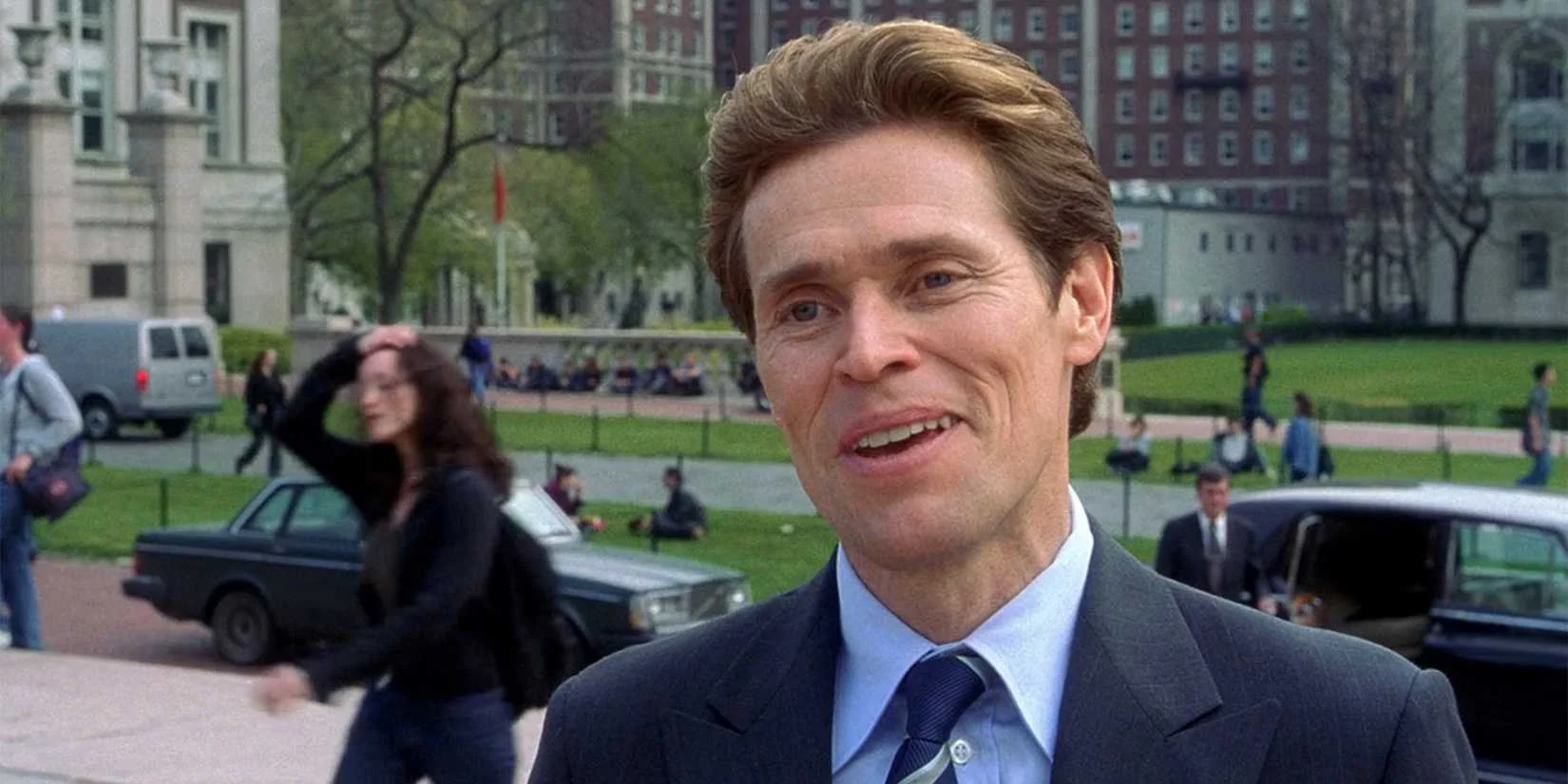
Dafoe reflected on his time playing opposite Spider-Man as the Green Goblin, appreciating the blend of drama and humor within those films. He noted,
The original ‘Spider-Man’ was a lot of fun because within a scene it could switch from very dramatic to very comic, which is very difficult to do. It’s got a great sense of humor, but it’s not light. And I like doing the action stuff. When the first ‘Spider-Man’ was made, you were still using wires. There was less CGI, and it was fun because it’s athletic. It’s very concrete, very tangible. Everything in your body and your mind goes towards that, and that’s what you look for as an actor.
On performing his own stunts, Dafoe explained the importance of maintaining a seamless portrayal:
You want to take responsibility for everything so all the dots connect. When you’re working on a role you don’t know whether it’s going to function or not, but the best you can do is be there for every action.
Collaborations with Directors and Upcoming Projects
Dafoe described his working relationships with notable filmmakers, illustrating how personal and fluid these partnerships can be. Of Abel Ferrara, he said,
The collaboration is very personal, and sometimes we go back and forth I don’t know who the director is. It’s very fluid.
Regarding Paul Schrader, he noted,
He’s always got lots of ideas, but he doesn’t work conventionally with actors. He expects you to know your job.
Looking ahead, Dafoe shared enthusiasm for his upcoming work with Robert Eggers on the film Werwulf. He praised Eggers’s dedication to historical accuracy and detailed storytelling:
He’s giving them material that excites me; it turns me on. Who knew I had an interest in the 1300s in England? He seduces you into being in that world. He’s a passionate, smart guy. I like his aesthetic sensibility, and he’s very kind. He’s a whole package.
Willem Dafoe’s Enduring Artistic Commitment
Throughout his career, Willem Dafoe has consistently engaged with complex and challenging roles, from deeply controversial parts to blockbuster action films. His reflections reveal not only a dedication to his craft but also resilience amid public and political controversies. His defense of The Last Temptation of Christ highlights how art can confront difficult subjects and invite dialogue, even when it provokes disagreement.
As Dafoe continues collaborating with visionary directors and exploring diverse characters, his career remains a testament to thoughtful, fearless acting that embraces both intensity and nuance. His presence at the Sarajevo Film Festival offers audiences a chance to appreciate both the actor’s legacy and the evolving dialogue around faith, politics, and performance in cinema.
