Willem Dafoe Bio
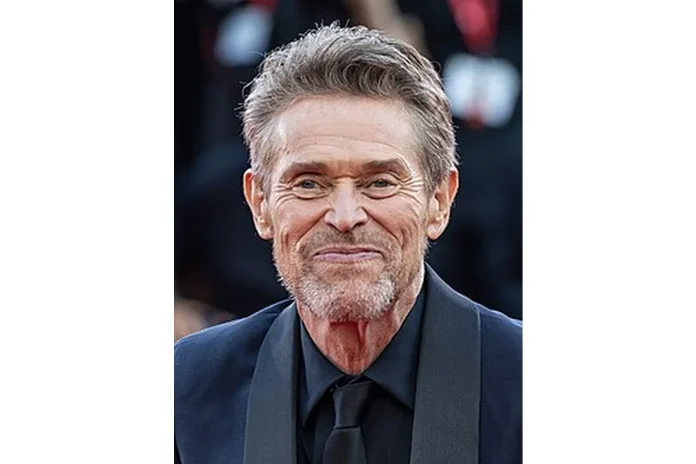
William James “Willem” Dafoe is an American actor born on July 22, 1955, in Appleton, Wisconsin. Renowned for portraying a striking range of roles across mainstream blockbusters and arthouse cinema, he has built a career spanning more than four decades. Willem Dafoe is the recipient of numerous accolades, including a Volpi Cup Award for Best Actor, four Academy Award nominations, a BAFTA Award nomination, and several Golden Globe nominations. In 2018, he received an Honorary Golden Bear, and in 2024, he was honored with a star on the Hollywood Walk of Fame.
Early Life and Background
Willem Dafoe was born on July 22, 1955, in Appleton, Wisconsin, to Muriel Isabel Sprissler, a nurse, and Dr. William Alfred Dafoe, a surgeon. He has five sisters and a brother, Donald, who followed their parents into medicine and works as a surgeon and research scientist. Dafoe later recalled that his sisters largely raised him because his parents were consumed by their demanding medical careers.
The Dafoe family name is the anglicized form of the Swiss-French surname Thévou. Within his own family, half pronounced “Dafoe” as DAY-foh and half as də-FOH; Willem Dafoe initially used the first pronunciation before ultimately adopting the second for his public career. During his years at Appleton East High School, from which he graduated in 1973, he acquired the nickname “Willem,” the Dutch form of William, and gradually grew more accustomed to it than to his birth name.
After high school, Willem Dafoe enrolled at the University of Wisconsin–Milwaukee to study drama but left after only 18 months to pursue hands-on stage work. He joined the experimental theater company Theatre X in Milwaukee, and in 1976 relocated to New York City, where he apprenticed under the influential avant-garde director Richard Schechner at The Performance Group.
Path to Acting
While working with The Performance Group, Willem Dafoe met director Elizabeth LeCompte, and the two became romantically involved. After tensions arose between Schechner and other members staging their own productions, Schechner departed and the remaining players, including LeCompte and Spalding Gray, renamed themselves The Wooster Group. Dafoe is credited as a co-founder of the company and remained an active member well into the 2000s, long after he had become a mainstream film star.
The discipline of experimental theater shaped Willem Dafoe’s instinct for risk-taking and transformation. His first screen appearance came with an uncredited supporting role in Michael Cimino’s 1980 epic Western film Heaven’s Gate. The role was largely cut from the final edit, but Dafoe was present for the first three months of the eight-month shoot, an early immersion in large-scale film production that hinted at his future range.
In 1982, Willem Dafoe took his first leading role in The Loveless, co-directed by Kathryn Bigelow and Monty Montgomery, playing the leader of an outlaw motorcycle club in a film that paid homage to The Wild One. The performance caught the attention of Hollywood, and Dafoe soon began cycling between independent projects and studio releases, building a reputation for fearlessness and versatility.
Willem Dafoe Career
Early Career (1980–1985)
Willem Dafoe’s first credited leading screen role was in The Loveless (1982), where he played a Marlon Brando-inspired biker gang leader. Janet Maslin of The New York Times praised his “perfectly villainous” face following his supporting turn in Walter Hill’s 1984 action film Streets of Fire, in which he served as the main antagonist opposite Diane Lane and Michael Paré.
In 1985, Willem Dafoe starred with William Petersen and John Pankow in William Friedkin’s thriller To Live and Die in L.A., portraying counterfeiter Rick Masters, who is hunted by two Secret Service agents. Roger Ebert commended Dafoe’s “strong” performance, helping cement his standing as a compelling screen presence. That same year, he starred alongside Judge Reinhold in Roadhouse 66.
Breakthrough (1986–1996)
Willem Dafoe’s breakthrough arrived with Oliver Stone’s war drama Platoon (1986), in which he played the compassionate Sergeant Elias. The performance earned him his first Academy Award nomination for Best Supporting Actor and instantly elevated his profile in Hollywood.
Throughout the late 1980s and 1990s, Willem Dafoe collaborated repeatedly with auteur filmmakers, including Martin Scorsese’s The Last Temptation of Christ (1988), Oliver Stone’s Born on the Fourth of July (1989), and David Lynch’s Wild at Heart (1990). His portrayal of a weary, moral figure in the wartime jungle of Platoon established his signature blend of menace and vulnerability, a combination that would define his career.
Notable Works and Milestones
Among Willem Dafoe’s most celebrated later performances are his portrayal of Max Schreck in Shadow of the Vampire (2000), earning his second Academy Award nomination; his kindly motel manager in The Florida Project (2017), which brought his third Oscar nomination; and his painter Vincent van Gogh in At Eternity’s Gate (2018), for which he won the Volpi Cup for Best Actor at the Venice Film Festival and earned his fourth Academy Award nomination. Across these roles, Dafoe has become known for immersing himself deeply in complex, often troubled characters.
Willem Dafoe Award Nominations
Willem Dafoe has received four Academy Award nominations across his career, the most of any actor without a competitive win during that span. His nominations include Best Supporting Actor for Platoon (1986) and Shadow of the Vampire (2000), Best Supporting Actor for The Florida Project (2017), and Best Actor for At Eternity’s Gate (2018). Beyond the Oscars, he has earned nominations for a BAFTA Award, four Golden Globe Awards, five Screen Actors Guild Awards, and four Critics’ Choice Movie Awards, alongside five Independent Spirit Award nominations.
Willem Dafoe Awards Won
Willem Dafoe has won two Independent Spirit Awards for Best Supporting Male, for Shadow of the Vampire (2000) and The Florida Project (2017). He received the Volpi Cup for Best Actor at the Venice Film Festival for At Eternity’s Gate (2018) and an Honorary Golden Bear in 2018. In 2024, he was awarded a star on the Hollywood Walk of Fame in recognition of his contributions to cinema.
| Award | Wins | Year |
|---|---|---|
| Independent Spirit Award for Best Supporting Male (Shadow of the Vampire) | 1 | 2001 |
| Independent Spirit Award for Best Supporting Male (The Florida Project) | 1 | 2018 |
| Volpi Cup for Best Actor (At Eternity’s Gate) | 1 | 2018 |
Willem Dafoe Family
Willem Dafoe is the son of Dr. William Alfred Dafoe, a surgeon, and Muriel Isabel Dafoe, a nurse. He grew up with five sisters and a brother, Donald Dafoe, who became a surgeon and research scientist. In 2022, Willem Dafoe returned to his alma mater, the University of Wisconsin–Milwaukee, to deliver the university’s commencement address and receive an honorary Doctor of Arts degree.
Personal Life
Willem Dafoe began a long-term relationship with director Elizabeth LeCompte in 1977, and the couple had a son, Jack Dafoe, born in 1982. The relationship ended in 2004; the two were never married. Willem Dafoe later explained that he respected LeCompte’s view of marriage as a form of ownership.
Willem Dafoe met Italian actress Giada Colagrande on the set of Wes Anderson’s The Life Aquatic with Steve Zissou. The couple married on March 25, 2005, in a small ceremony with two friends as witnesses. They have collaborated on her films Before It Had a Name and A Woman and split their time between Rome, where they keep a farm, and the West Village in Manhattan. Willem Dafoe is a pescetarian, practices ashtanga yoga daily, and has been an advocate for action on climate change and biodiversity loss.