
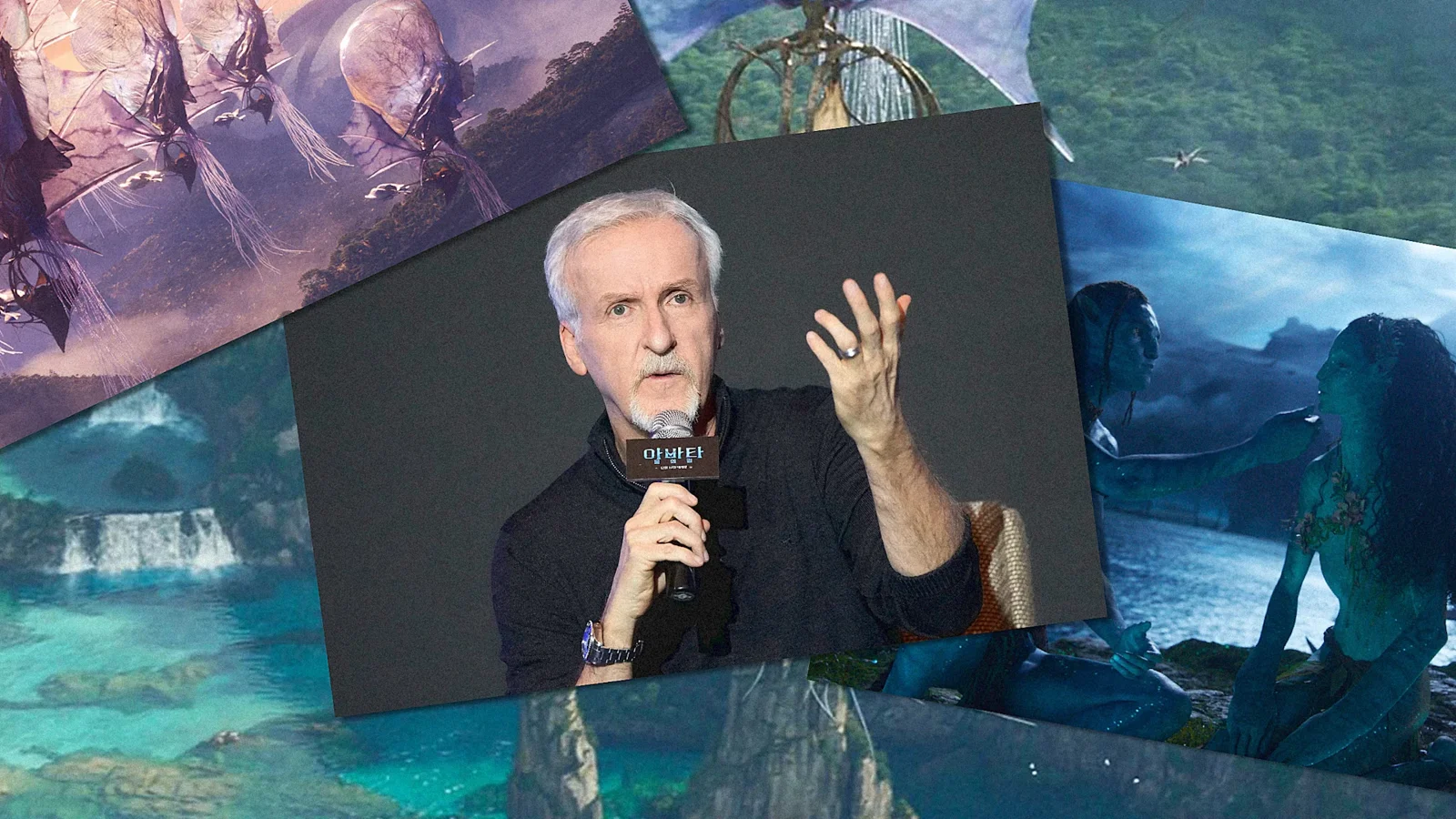
James Cameron, the filmmaker behind the upcoming release Avatar: Fire and Ash, has voiced serious concerns about the rising visual effects (VFX) costs threatening the future of blockbuster movies. Speaking ahead of the December release, Cameron emphasized the need to address these soaring expenses amid shrinking theatrical revenues and studios‘ reluctance to fund ambitious projects.
Cameron Stresses Urgency in Reducing Visual Effects Costs
In an interview with the Associated Press, the 71-year-old director pointed out that theatrical box office returns remain about 30% below pre-pandemic levels from 2019, placing pressure on large-scale productions. Cameron specifically called on the industry to lower VFX costs as a critical step in sustaining spectacle-driven films.
I’d like to see the cost of VFX artists come down,
he said, noting that fears among VFX professionals about job security could be misplaced.
VFX artists get scared and say, ‘Oh, I’m going to be out of a job.’ I’m like, ‘No, the way you’re going to be out of a job is if trends continue and we just don’t make these kinds of movies anymore.’
—James Cameron, Director
He further explained that by mastering new tools and improving workflow efficiency, VFX costs could decrease, encouraging studios to finance more spectacle films.
If you develop these tools or learn these tools, then your throughput will be quicker and that will bring the cost of productions down, and studios will be encouraged to make more and more of these types of films. To me, that’s a virtuous cycle that we need to manifest. We need to make that happen, or I think theatrical might never return.
—James Cameron, Director
Industry Struggles Highlight Challenges for Visual Effects Workers
Cameron’s warnings resonate deeply within the visual effects community, where workers often deal with long hours, unstable employment, and low pay despite the escalating budgets of blockbuster movies. Many in the industry argue that the issue is not excessive compensation for VFX artists but the high demands studios place on them while treating them as expendable labor.
When VFX workers on the Avatar series attempted to unionize in 2023, one participant described the hardships faced by the crew, saying,
Every one of my coworkers has dedicated so much time, creativity, and passion to make these films a reality. So, when you see them struggling to cover their health premiums, or being overworked because they took on multiple roles, or are just scraping by on their wages… you cannot keep silent.
—Avatar VFX Worker
Cameron Critiques Streaming’s Impact on Theatrical Film Business
The director also criticized streaming services for unsettling the traditional film industry. He explained that streaming platforms initially attracted filmmakers with large budgets but later scaled back investments, undermining theaters and leaving many projects underfunded. Cameron expressed concern that the current trends could compromise the quality of films being produced.
Everything is starting to look like it’s driving toward a mediocrity,
he told the Associated Press.
New Technologies Might Reshape Future Filmmaking and Cameron’s Role
Looking ahead, Cameron acknowledged uncertainty about his involvement in future Avatar installments, which may depend on how emerging technologies affect production. As a member of Stability AI’s board of directors, he is considering how generative artificial intelligence could transform filmmaking workflows by making production faster and more cost-effective.
Generative AI is upon us. It’s going to transform the film business. Does that make our workflow easier? Can I make Avatar movies more quickly? That would be a big factor for me.
—James Cameron, Director
Balancing Technology Advances With Fair Treatment of Artists
While new tools offer hope for reducing expenses and improving efficiency, uncertainty remains whether these advances will benefit all parties fairly. The financial strain on blockbuster productions is disproportionately borne by the many artists contributing to the creation of immersive worlds like Pandora, who often face precarious working conditions.
Cameron suggests that technological innovation could be essential for the survival of theatrical spectacles. However, a key challenge moving forward will be ensuring that the artists behind these films receive recognition and support equal to the scale of their creative contributions.
