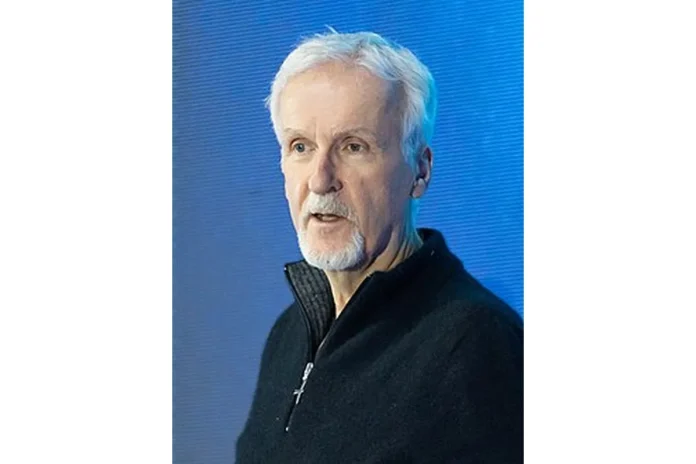
James Francis Cameron Bio
James Francis Cameron is a Canadian and New Zealand filmmaker and deep-sea explorer widely regarded as one of the most influential directors in modern cinema. A major figure in the post-New Hollywood era, his films fuse cutting-edge film technology with classical filmmaking techniques and have grossed over eight billion dollars worldwide, making him the second-highest-grossing film director of all time. Cameron has earned three Academy Awards, two Primetime Emmy Awards, and four Golden Globe Awards, along with nominations for six British Academy Film Awards, and Time magazine named him one of the 100 most influential people in the world in 2010.
Three of Cameron’s films rank among the top four highest-grossing films of all time. Avatar (2009) held the top spot until briefly surpassed by Avengers: Endgame in 2019, then reclaimed first place in 2021. Avatar: The Way of Water (2022) and Titanic (1997) also rank among the highest-grossing films ever made. He directed the first film to gross over one billion dollars, the first two films to gross over two billion dollars each, and remains the only director to have three films surpass the two billion dollar mark. The Terminator, Terminator 2: Judgment Day, and Titanic have all been selected for preservation in the National Film Registry by the Library of Congress. Cameron co-founded Lightstorm Entertainment, Digital Domain, and Earthship Productions, and in 2019 was appointed a Companion of the Order of Canada.
Early Life and Background
James Francis Cameron was born on August 16, 1954, in Kapuskasing, Ontario, to Philip Cameron, an electrical engineer, and Shirley Cameron, an artist and nurse. He is the oldest of five children, with two brothers and two sisters, and his paternal great-great-great-grandfather emigrated from Balquhidder, Scotland, in 1825. Cameron spent his childhood summers on his grandfather’s farm in southern Ontario before attending Stamford Collegiate in Niagara Falls. At age 17, he and his family moved to Brea, California, where he attended Sonora High School and later Brea Olinda High School, where classmates recalled that he was more interested in building devices that went into the air or deep underwater than in sports.
After high school, Cameron enrolled at Fullerton College in 1973 to study physics but switched to English before leaving the college at the end of 1974. He worked a series of odd jobs as a truck driver and a high school janitor, and during this period he taught himself the fundamentals of filmmaking by reading film technology books at the University of Southern California library, learning about optical printing, front screen projection, and dye transfers. The 1977 release of Star Wars proved to be a pivotal moment for Cameron, convincing him to leave his job as a truck driver and pursue filmmaking as a full-time career.
Path to Director
Cameron’s directing career began in 1978 when he borrowed money from a consortium of dentists to produce his first short film, Xenogenesis, learning to direct, write, and produce on the job. He then worked as a production assistant on Rock ‘n’ Roll High School before joining Roger Corman Studios as a miniature model maker, quickly advancing to art director for Battle Beyond the Stars (1980). He contributed special effects to John Carpenter’s Escape from New York (1981), served as production designer for Galaxy of Terror (1981), and consulted on Android (1982), building a comprehensive skill set across multiple filmmaking disciplines.
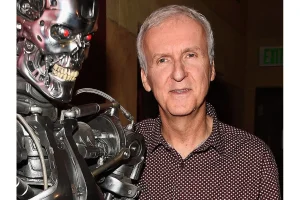
In 1982, Cameron received his first opportunity to direct a major film when the original director left Piranha II: The Spawning during production in Rome, Italy, and on Grand Cayman Island. He later described the experience as not feeling like a true first film due to significant power struggles with producer Ovidio Assonitis, and upon release the film was poorly received by critics. That same year, inspired by John Carpenter’s Halloween and a vivid nightmare about an invincible cyborg sent from the future, Cameron wrote the script for The Terminator (1984). Studios were reluctant to entrust the project to an unknown director, until producer Gale Anne Hurd bought the script for one dollar on the condition that Cameron direct. He convinced the president of Hemdale Pictures to greenlight the film with Cameron directing and Hurd producing, casting Arnold Schwarzenegger as the cyborg villain alongside Michael Biehn and Linda Hamilton.
James Francis Cameron Career
Early Career (1978-1989)
The Terminator exceeded all box office expectations set by Orion Pictures, grossing over seventy-eight million dollars worldwide, with critics praising Cameron’s ability to sustain tension while layering in dark humor. George Perry of the BBC wrote that Cameron “laces the action with ironic jokes, but never lets up on hinting that the terror may strike at any moment.” The film was selected for preservation in the United States National Film Registry in 2008 as culturally, historically, and aesthetically significant. Cameron then wrote Rambo: First Blood Part II (1985) and was hired to write and direct Aliens (1986), a sequel to Ridley Scott’s Alien, reuniting Sigourney Weaver as Ellen Ripley alongside a cast of marines battling extraterrestrials.
Aliens was a major commercial success, grossing over one hundred thirty million dollars worldwide and receiving seven Academy Award nominations, winning Best Sound Editing and Best Visual Effects. Weaver and the film made the cover of Time magazine in July 1986. Cameron followed with The Abyss in 1989, a story originally conceived during his high school years about oil-rig workers who discover strange intelligent life in the deep ocean. Filming took place in the Cayman Islands and South Carolina in two enormous water tanks reclaimed from an unfinished nuclear power plant, with Ed Harris, Mary Elizabeth Mastrantonio, and Michael Biehn in the lead roles. The production was mentally and physically demanding, but the film earned ninety million dollars worldwide and won the Academy Award for Best Visual Effects.
Breakthrough (1991-2009)
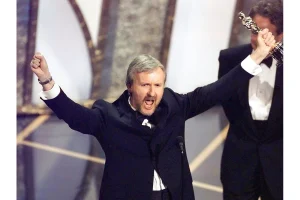
Cameron released Terminator 2: Judgment Day in 1991, the sequel to The Terminator and the first film to gross over two billion dollars worldwide. He followed with True Lies in 1994 before directing, writing, co-producing, and co-editing Titanic in 1997. The epic historical romance starred Leonardo DiCaprio and Kate Winslet as star-crossed lovers aboard the doomed ocean liner, and Cameron won three Academy Awards in a single year for the film: Best Picture, Best Director, and Best Film Editing, placing him among only a handful of directors to achieve that feat.
Cameron spent over a decade developing Avatar after Titanic, and the film was released in 2009 to record-breaking box office success. Set on the alien moon Pandora, Avatar employed groundbreaking performance capture and 3D filmmaking technology that Cameron had helped develop. The film earned three Academy Award nominations for Best Picture, Best Director, and Best Film Editing, and became the highest-grossing film of all time. Building on the technology and world of Avatar, Cameron released Avatar: The Way of Water in 2022, which became the highest-grossing film released that year and currently stands as the third-highest-grossing film in history.
Notable Works and Milestones
Cameron’s filmography includes The Terminator (1984), Aliens (1986), The Abyss (1989), Terminator 2: Judgment Day (1991), True Lies (1994), Titanic (1997), Avatar (2009), and Avatar: The Way of Water (2022). He co-founded the production companies Lightstorm Entertainment, Digital Domain, and Earthship Productions, and served as a creative consultant on Pandora – The World of Avatar, a themed land at Disney’s Animal Kingdom in Florida that opened in 2017. In addition to filmmaking, Cameron has served as a National Geographic explorer-in-residence since 2011, produced multiple documentaries on deep-ocean exploration, and contributed to underwater filming and remotely operated vehicle technologies. In 2012, he became the first person to complete a solo descent to the Challenger Deep in the Mariana Trench, the deepest point in Earth’s oceans, spending more than three hours exploring the seafloor and discovering new species of sea cucumber, squid worm, and a giant single-celled amoeba.
James Francis Cameron Award Nominations
Throughout his career, James Francis Cameron has received nominations across major film and television awards, reflecting the breadth of his work as a filmmaker and documentarian. His films have been nominated for seven Academy Awards for Aliens (1987), three Academy Awards for Avatar (2009), and two Primetime Emmy Awards for his documentaries. Cameron has also been nominated for six British Academy Film Awards across his body of work. His documentary James Cameron’s Story of Science Fiction (2018) contributed to his Primetime Emmy Award recognition, and his television documentary Titanic: The Final Word with James Cameron (2012) further demonstrated his range beyond feature filmmaking.
James Francis Cameron Awards Won
James Francis Cameron has earned three Academy Awards for Titanic (1997) in a single year: Best Picture, Best Director, and Best Film Editing. He has won four Golden Globe Awards, including Best Director for Titanic and Avatar. He has also won two Primetime Emmy Awards for his documentary work, Best Sound Editing and Best Visual Effects for Aliens (1987), the inaugural Ray Bradbury Award from the Science Fiction and Fantasy Writers of America for Terminator 2: Judgment Day (1992), and a Visual Effects Society Lifetime Achievement Award in 2010. In 2012, he was inducted into the Science Fiction Hall of Fame, and in 2019 he was appointed a Companion of the Order of Canada. In February 2025, Cameron was appointed an Officer of the Legion of Honour, the highest order of merit in France, and was formally granted New Zealand citizenship in August 2025.
| Award | Wins | Year |
|---|---|---|
| Academy Award for Best Picture (Titanic) | 1 | 1998 |
| Academy Award for Best Director (Titanic) | 1 | 1998 |
| Academy Award for Best Film Editing (Titanic) | 1 | 1998 |
| Golden Globe Award for Best Director (Titanic) | 1 | 1998 |
| Golden Globe Award for Best Director (Avatar) | 1 | 2010 |
| Academy Award for Best Visual Effects (Aliens) | 1 | 1987 |
| Academy Award for Best Sound Editing (Aliens) | 1 | 1987 |
| Primetime Emmy Award | 2 | Career |
| Visual Effects Society Lifetime Achievement Award | 1 | 2010 |
| Ray Bradbury Award (Terminator 2: Judgment Day) | 1 | 1992 |
James Francis Cameron Family
James Francis Cameron was born to Philip Cameron, an electrical engineer, and Shirley Cameron (née Lowe), an artist and nurse. He is the oldest of five children, with two brothers and two sisters. His paternal great-great-great-grandfather emigrated from Balquhidder, Scotland, in 1825, and Cameron spent his childhood summers on his grandfather’s farm in southern Ontario.
Personal Life
Cameron has been married five times. He was married to Sharon Williams from 1978 to 1984. He then married film producer Gale Anne Hurd in 1985, a close collaborator on his films from the 1980s, and they divorced in 1989. He was briefly married to director Kathryn Bigelow from 1989 to 1991. Cameron had a daughter with actress Linda Hamilton, the lead actress in The Terminator series, born in 1993, and they married in 1997 before separating and divorcing in 1999, with Hamilton receiving a fifty million dollar settlement. He married his fifth wife, actress Suzy Amis, in 2000, with whom he has one son and two daughters. Cameron applied for American citizenship in 2004 but withdrew his application. He resided in the United States until 2020, when he sold his home in Malibu, California, and decided to live permanently in New Zealand, where he had purchased a home and a farm after filming Avatar there. He was formally granted New Zealand citizenship in August 2025.