
The psychological thriller The Man in My Basement, adapted from Walter Mosley’s 2004 novel, takes place in Sag Harbor, a historically African American village on Long Island. The film follows Charles Blakey, a young Black man who inherits his late mother’s house, which becomes the site of a bizarre experiment involving a wealthy white businessman. Despite its themes of trauma, racial tension, and guilt, the movie struggles to develop these ideas into a gripping psychological thriller.
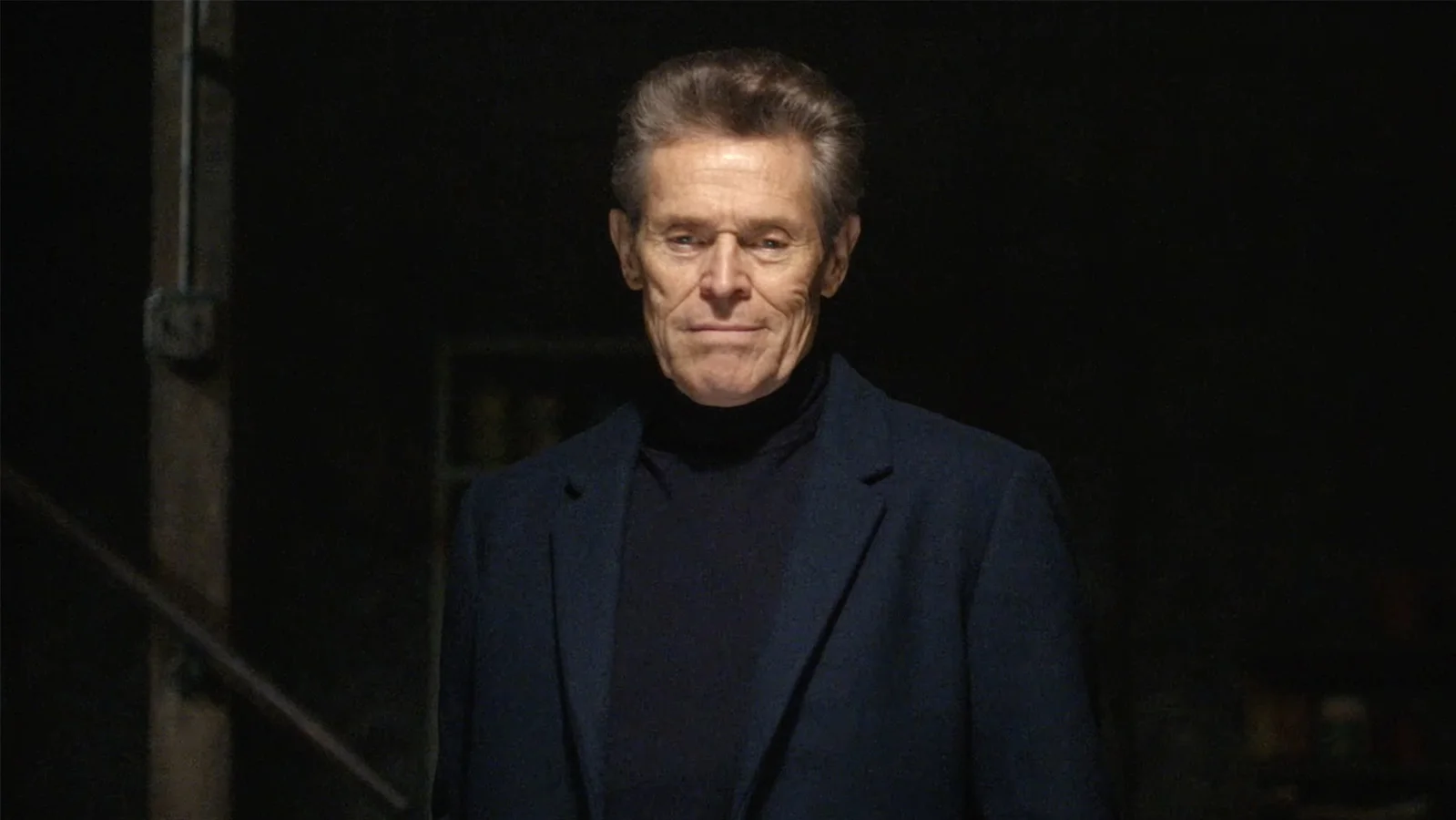
Willem Dafoe stars as Anniston Bennet, the enigmatic businessman whose unusual decision to imprison himself in Blakey’s basement forms the core of the story, a setup that raises questions about control and power but ultimately fails to engage fully.
Early Direction and Character Introduction Show Initial Potential
Walter Mosley co-wrote the screenplay with first-time director Nadia Latif, who opens with energy by portraying Charles Blakey (Corey Hawkins) as a restless, self-destructive figure. His palpable anger and uncertainty are matched by Latif’s use of erratic camera work that reflects Blakey’s mental state. However, the film’s early momentum dissipates quickly, and much of its runtime is spent wandering without clear narrative direction or emotional payoff.
Blakey’s inheritance includes mounting debts and his mother’s belongings stored in the basement, including West African ceremonial masks with ancestral significance. The arrival of Bennet, proposing an unexplained but lucrative basement rental, provides a narrative pivot but leads the film into abstraction rather than suspense.
Plot Developments and the Unfolding of Strange Power Dynamics
Bennet’s offer allows Blakey financial relief just as foreclosure looms, yet Bennet’s behavior quickly turns perplexing. Prior to moving in, Bennet ships in mysterious items reminiscent of a “Transylvanian Count,” and soon constructs a prison cell to confine himself in the basement. This self-imposed captivity reverses the expected roles of captor and captive, sparking a tense relationship that is explored mostly through dialogue rather than action.
The setting, established as the mid-1990s, gradually becomes clearer, but the film delays delivering any tangible thriller elements until late. Conversations between Blakey and Bennet probe the reasons behind the imprisonment, yet explanations feel vague and disconnected, leaving viewers with few concrete answers or narrative cohesion.
Symbolism and Themes Fail to Reach Full Impact
According to Mosley, the source novel was intended to represent
“a meeting between evil and innocence.”
Although the film touches on these concepts, it rarely builds the symbolic weight needed to elevate the story. For instance, the ceremonial masks prompt visions for Blakey, but their dream sequences are too clearly separated from reality, stripping them of suspense or emotional tension.
Much of the film’s thematic substance is delivered through Dafoe’s extended monologues, performed with conviction but circling ideas that never gain visual or narrative clarity. Scenes set in Bennet’s dim basement surroundings come across as awkward, with shots alternating between realism and disorientation, failing to solidify a distinct mood or tone.
Character Portrayals and Missed Opportunities for Psychological Depth
Corey Hawkins brings vitality and unpredictability to the role of Blakey, striving to unify the film’s disparate elements. However, his character never quite develops into a compelling psychological case study, and the script provides few insights into his inner world beyond moodiness and frustration.
The film attempts to address complex topics such as personal trauma and the history of Black Americans, but these themes remain underexplored and disconnected from the movie’s uneven storytelling. Instead, the storyline feels fragmented, with numerous loose ends and moments that rarely lead to meaningful suspense or engagement.
The Film’s Struggles and What Lies Ahead for Its Creators
The Man in My Basement shows flashes of ambition from both Mosley and Latif, especially in the movie’s early sequences and visual experimentation. Nevertheless, this psychological thriller ultimately fails to live up to its potential, leaving viewers with a narrative that lacks clarity and emotional depth.
As Willem Dafoe and Corey Hawkins carry the story forward with committed performances, the film’s unresolved narrative and awkward pacing limit its impact. While the film gestures toward important cultural and psychological issues, it barely touches on them by the end.
Future projects from debut director Nadia Latif may benefit from a tighter focus and clearer narrative goals to fully realize her evident creative promise, and Walter Mosley’s adaptation efforts may inspire renewed attempts at capturing his novel’s complexities more effectively on screen.
