
Tatiana Maslany in Keeper stands out as the highlight of Osgood Perkins‘ newest horror release, which arrives in theaters on November 14 and follows a young woman’s unnerving experience at a secluded cabin. While Maslany’s committed performance anchors the film, Keeper struggles with pacing and ideas, diverging from the critically acclaimed style of Perkins’ recent projects.
Perkins Explores a New Psychological Horror Approach
Osgood Perkins, known for horror titles like The Blackcoat’s Daughter and Gretel & Hansel, rose to new acclaim in 2024 with Longlegs, an independent horror film that became the year’s highest-grossing indie and garnered widespread praise. Afterward, he shifted to comedy-horror with The Monkey, an adaptation of a Stephen King story, further cementing anticipation for what he would tackle next. As a surprise for fans, a post-credits trailer for Keeper was included at the end of The Monkey, signaling Perkins’ continued creative output and growth as a genre director.
Perkins’ recent trio of horror films each bear distinct atmospheres and tonal choices. While Longlegs delves into demonic forces with echoes of classic thrillers, The Monkey offers macabre, over-the-top elements reflective of King’s style. In contrast, Keeper employs a deliberate sense of restraint, blending psychological horror and romance, set against the claustrophobic backdrop of a remote cabin. This time, Perkins leans into a moody, ambiguous narrative, challenging the audience to question what is real and pushing the limits of the haunted love story format.
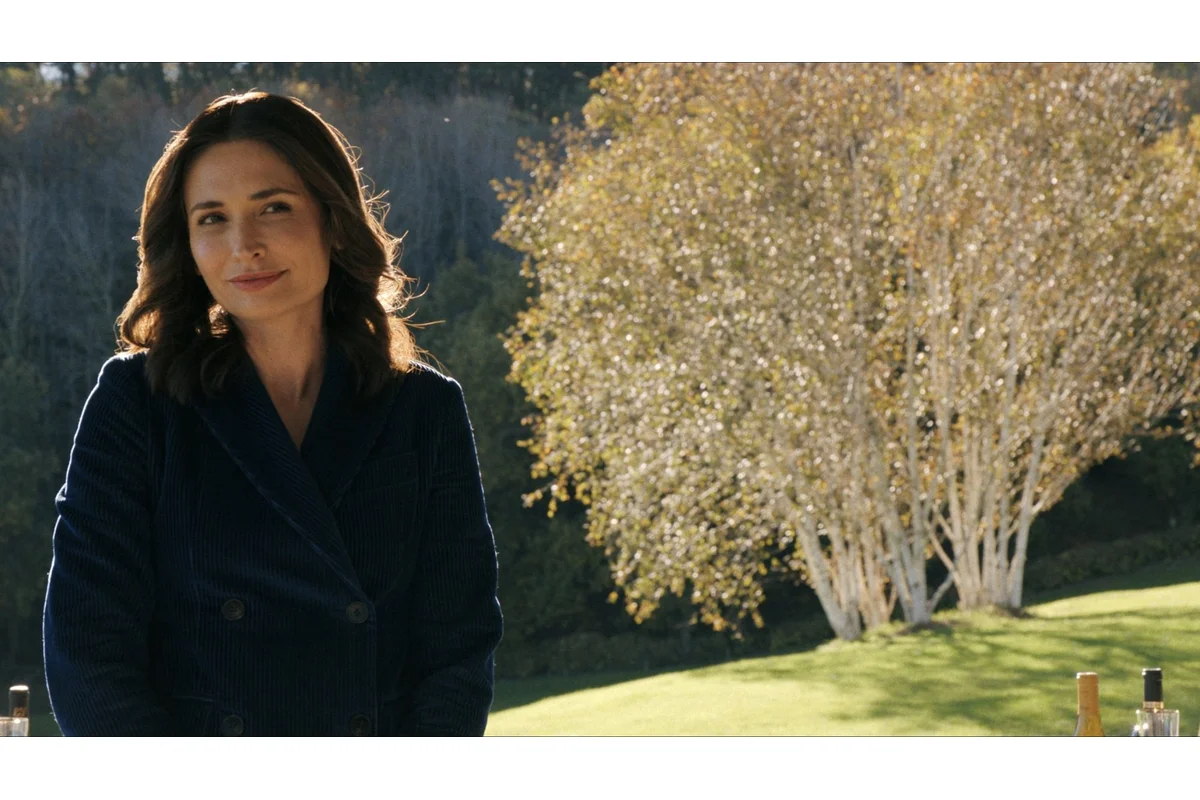
Despite the director’s willingness to experiment within horror, Keeper’s pacing and narrative depth fall short. The film lingers on atmosphere but often struggles to fill its runtime with sufficiently engaging developments, making it apparent that Perkins may be stretching himself thin after a prolific streak of releases.
A Remote Retreat Becomes the Center of Mystery
Liz, played by Tatiana Maslany, is celebrating a one-year anniversary with her boyfriend Malcolm, portrayed by Rossif Sutherland, at his cabin hidden deep in the woods. What begins as a weekend of romance soon drifts into suspense. Early in their stay, an awkward moment arises when Malcolm asks Liz to try a cake, supposedly prepared by an unseen housekeeper, even admitting it is terrible. The couple’s isolation is unexpectedly interrupted by Malcolm’s cousin Darren, played by Birkett Turton, and Darren’s girlfriend, Minka, performed by Eden Weiss, who appear without warning and bring tension to the gathering.
The suspense escalates abruptly when Malcolm announces he must return to the city. Left alone, Liz grows suspicious of his motives, fearing secrets and a double life. However, her isolation at the cabin soon leads to even stranger occurrences. She eats the dreadful cake with surprising frenzy and begins glimpsing unexplainable apparitions both out of the corner of her eye and directly in her surroundings. As the environment becomes increasingly threatening, Liz realizes the cabin may harbor far darker secrets than she or Malcolm anticipated.
Tatiana Maslany Commands the Screen in an Isolated Role
The greatest strength of Keeper lies in the performance of Tatiana Maslany, who delivers a captivating portrayal of Liz as she unravels emotionally and psychologically. Much of the film features her alone, tasked with reflecting the uncertainty and terror of her environment. As previously showcased in The Monkey, Maslany brings depth and authenticity to her character, sustaining viewers’ attention even when the plot loses momentum. Her role further substantiates why she is often described as an underrated talent, and Osgood Perkins’ direction continues to offer her opportunities to shine.
From a technical perspective, the film is notable for Perkins’ commitment to experimenting with visual storytelling. The director exploits the cabin’s architecture, its sharp angles and confined spaces, to amplify the sense of dread without resorting to traditional horror tropes. In one unsettling sequence, Maslany is filmed from a low angle with the ceiling hovering ominously above her, allowing viewers only vague glimpses of potential dangers while keeping the full truth elusive. This visual tactic, reminiscent of Longlegs’ shadowy suspense, highlights Perkins’ ongoing efforts to find new ways to unsettle his audience through subtle camera work and staging.
Keeper Stumbles with Its Screenplay and Pacing
Keeper’s main weakness emerges from its script, originally written by Nick Lepard instead of Perkins. The story, at its core, feels like a short film idea awkwardly expanded to feature length, resulting in a sluggish middle act with little narrative propulsion. While slow-burning tension can create effective horror—evidenced by Longlegs—the approach in Keeper falls flat, with the film appearing to only have material for its opening and closing segments, leaving a substantial stretch of the runtime feeling directionless. Maslany remains engaging throughout these lulls, but there is little else to latch onto as the film drifts toward its ending.
The climax is foreshadowed as potentially shocking, yet it underwhelms, lacking the emotional or narrative impact that might have rewarded the slow build-up. The revelation at the film’s conclusion ultimately feels predictable, sapping the ending of surprise or catharsis. Instead of a dramatic payoff, Keeper ends on a muted note that reflects the overly cautious tone permeating the film.
As the second time Perkins has directed a film without also writing the script—the first being Gretel & Hansel—Keeper marks a significant departure from the filmmaker’s usual creative process. Lepard, having written the flamboyant shark thriller Dangerous Animals earlier in the year, crafts Keeper with a surprisingly subdued approach. The result is a horror film that is often too quiet for its own good, lacking the forward momentum or thematic depth that could have elevated its intriguing premise. There is the continual sense that the film might have fared better with Perkins at the helm of its script, or if he had embraced a concept allowing for more audacious storytelling.
Despite these script shortcomings, both Perkins and Maslany endeavor to deliver a watchable and often discomforting experience. Maslany’s skill in reacting to psychological stimuli—shadows, sounds, fleeting glimpses—remains a highlight, and Perkins’ navigation of the cabin space maximizes what dread he can. Still, without a strong narrative backbone, the film feels like a stylistic exercise lacking narrative clarity or cohesion.
Cast and Characters Anchor the Tense Setting
The film’s focus remains tightly on Liz, who is joined by a limited, but pivotal, supporting cast. Malcolm, portrayed by Rossif Sutherland, serves as the catalyst for Liz’s journey into isolation and self-doubt. Darren (Birkett Turton) and Minka (Eden Weiss) introduce chaos and uncertainty during their unexpected visit, but the central dynamic that drives the story is the mounting unease and suspicion Liz faces in Malcolm’s absence. As she attempts to navigate her solitude, she is confronted by malevolent forces and the eerie secrets the cabin hides.
Key elements of the plot revolve around this psychological tension between the characters and their environment. Liz’s breakdown and subsequent encounters with supernatural phenomena further distance her from reality, while the physical space of the cabin transforms from a romantic retreat into a vessel for her greatest fears.
What Keeper Reveals About Contemporary Horror
Keeper stands out for giving Tatiana Maslany a platform to demonstrate her acting abilities, solidifying her reputation for versatility and subtlety. Osgood Perkins continues to push boundaries within horror, experimenting with how architectural space and psychological ambiguity can foster dread. However, Nick Lepard’s screenplay ultimately restrains the film, yielding a final product that feels unsatisfying, particularly in its underdeveloped second act and foreseeable conclusion. While not every risk pays off, Perkins’ willingness to challenge conventional horror formulas remains an important contribution to the genre.
Keeper is set for its theatrical release on November 14, allowing audiences to experience firsthand the uneasy atmosphere crafted by Perkins and brought to life by Maslany’s engrossing performance. Whether the film represents a misstep or simply a creative detour for Perkins, it will likely prompt discussion about the balance between style and substance in modern horror storytelling, and further cement Tatiana Maslany’s place as a compelling screen presence in suspenseful cinema.
