
Jack Nicholson Best Picture movies are a select group within his extensive career, and while his influence on cinema is undeniable, only three films with Nicholson have claimed the Academy Award for Best Picture. This ranked review examines those three titles based on their artistic merit, cultural resonance, and standing among all Best Picture winners in Oscar history, showcasing the reasons each continues to captivate audiences and critics alike.
As one of the most iconic figures in Hollywood, Jack Nicholson’s work has spanned generations and genres. The 88-year-old has retired since his final screen appearance in 2010, but his roles in films such as Easy Rider, The Shining, and A Few Good Men, along with his Oscar and Golden Globe wins, ensure his legacy as one of the greatest actors in history. Yet, out of his extensive filmography, only three titles hold the distinction of winning Best Picture at the Academy Awards—making their influence particularly significant among the ninety-seven films to have achieved this recognition over the decades.
#3: ‘Terms of Endearment’ (1983) – A Powerful Support Turn Amidst Heartache
Based on Larry McMurtry’s 1975 novel, Terms of Endearment brings together a remarkable ensemble, including Shirley MacLaine, Debra Winger, Danny DeVito, and John Lithgow, under the direction and screenplay of James L. Brooks. The film, centered on the evolving relationship between a widow, Aurora Greenway (MacLaine), and her daughter, blends humor and sorrow as it explores themes of love, loss, and resilience. Jack Nicholson plays Garrett Breedlove, Aurora’s neighbor and eventual romantic partner, contributing a nuanced performance that, while not the film’s focal point, adds crucial depth.
The film is best remembered for the emotional weight carried by MacLaine and Winger. Nicholson’s portrayal of Garrett earned him the Best Supporting Actor Oscar, with John Lithgow also nominated in the same category. Its emotional power is exemplified in the film’s final moments, which have become some of the most memorable finales in cinematic history. Reflecting on the film’s impact, Roger Ebert remarked,
“This is a wonderful film. There isn’t a thing that I would change, and I was exhilarated by the freedom it gives itself to move from the high comedy of Nicholson’s best moments to the acting of Debra Winger in the closing scenes.”
– Roger Ebert, Film Critic
Terms of Endearment was an awards juggernaut, taking home five Oscars—Best Picture, Best Director for Brooks, Best Actress for MacLaine, Best Supporting Actor for Nicholson, and Best Adapted Screenplay—toppling competitors such as The Big Chill and The Right Stuff. Its emotional resonance, combined with broad critical and commercial appeal (amassing over $108 million against a modest budget), have solidified its reputation as not just one of Jack Nicholson’s Important Best Picture movies but a landmark tearjerker in cinema history.
#2: ‘One Flew Over the Cuckoo’s Nest’ (1975) – Defining Performance and Oscar Triumph
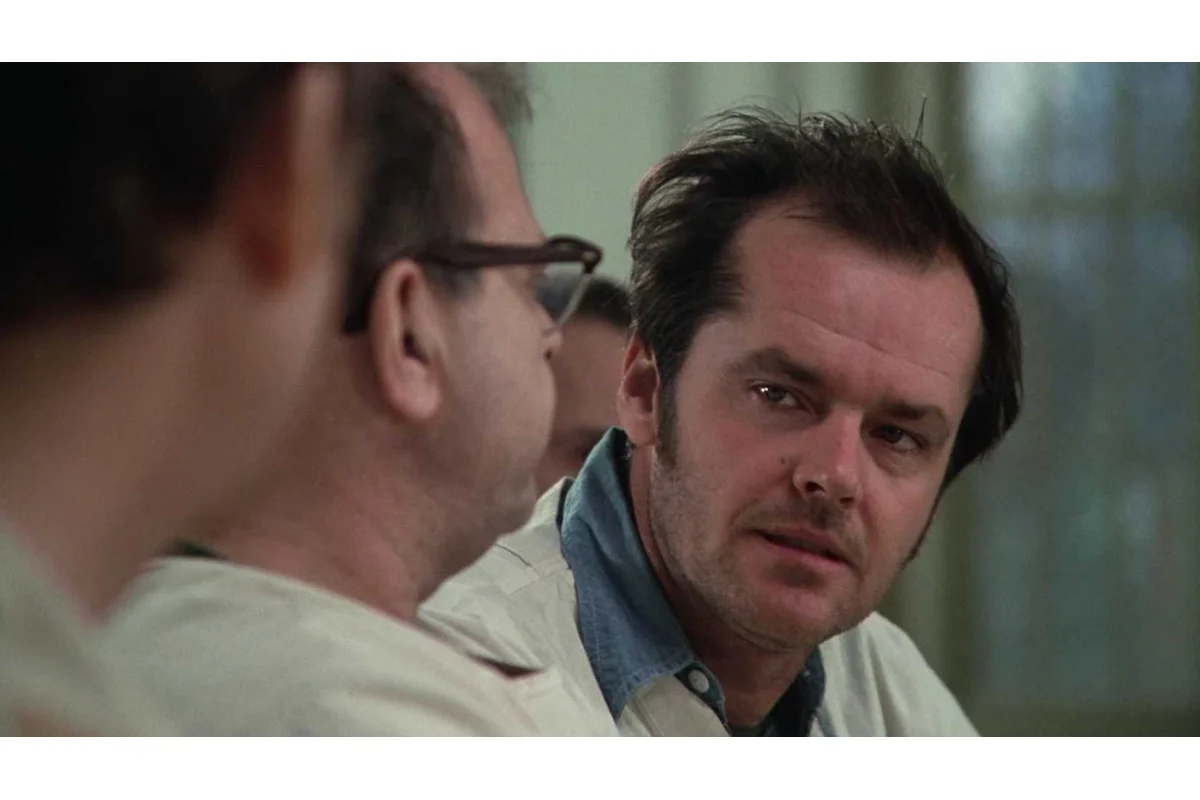
Adapting Ken Kesey’s 1962 novel, One Flew Over the Cuckoo’s Nest is brought to the screen under the direction of Miloš Forman, with a script by Lawrence Hauben and Bo Goldman. This story immerses viewers in a mental institution through the eyes of Randle McMurphy, embodied by Jack Nicholson in one of his most celebrated performances. With a cast featuring Louise Fletcher as the notorious Nurse Ratched, Brad Dourif, Christopher Lloyd, and Danny DeVito, the film delves into themes of rebellion, conformity, and the nature of institutional power.
Nicholson’s disturbing yet charismatic turn as McMurphy earned him his first Best Actor Oscar. His performance has been widely regarded as a career-defining moment—his portrayal capturing both the humor and tragedy of the character’s plight. Newsweek described his work as follows:
“In a way McMurphy is the ultimate Jack Nicholson performance—the last angry crazy profane wise-guy rebel, blowing himself up in the schrapnel of his own bleeding laughter.”
– Newsweek
One Flew Over the Cuckoo’s Nest made Oscar history, winning the elusive “Big Five”: Best Picture, Best Director, Best Actor, Best Actress (Louise Fletcher), and Best Adapted Screenplay. This achievement placed it in the company of only two other films—It Happened One Night and The Silence of the Lambs. Overcoming extraordinary competition including Dog Day Afternoon and Jaws, Forman’s film grossed $109 million on a $3 million investment, further cementing its place in cinematic lore. The performances of Nicholson and Fletcher, along with the ensemble cast, continue to influence how mental health and institutional life are depicted on screen.
#1: ‘The Departed’ (2006) – Nicholson Powers Scorsese’s Modern Masterpiece
While each Jack Nicholson Best Picture movie could claim the top spot, The Departed stands out for its electrifying energy and pivotal place in recent film history. Unlike the previous entries, The Departed is adapted from the 2002 Hong Kong crime thriller Internal Affairs, with a screenplay by William Monahan and direction by Martin Scorsese—renowned master of violent crime cinema. The movie’s all-star cast includes Leonardo DiCaprio, Matt Damon, Mark Wahlberg, Martin Sheen, and Alec Baldwin, but Nicholson dominates the narrative as Frank Costello, the ruthless Boston mob boss who orchestrates a complex game of betrayal and infiltration with the police and his criminal outfit.
Nicholson’s performance in The Departed is both menacing and magnetic, widely considered among his finest. Although he did not receive an Oscar nomination for this role, his portrayal of Costello is one of the film’s greatest assets. Mark Wahlberg received a nod for Best Supporting Actor, while Roger Ebert captured the standout nature of Nicholson’s presence, observing,
“He has a moment and a line in this movie that stands beside Joe Pesci’s work at a similar moment in Goodfellas.”
– Roger Ebert, Film Critic
The Departed resonated with both audiences and critics, achieving box office success of nearly $300 million worldwide—a remarkable feat for a film outside of major franchise or family fare. At the 2007 Academy Awards, The Departed won Best Picture, along with honors for Best Director (finally earning Scorsese his long-overdue Oscar), Best Film Editing, and Best Adapted Screenplay. Outperforming contenders like Babel, Letters From Iwo Jima, and The Queen, its triumph marked a career milestone for Scorsese and reaffirmed Nicholson’s extraordinary ability to command the screen in new cinematic eras.
Jack Nicholson Best Picture movies are essential viewing for any lover of film, not just for Nicholson’s transformative performances but also for their substantial impact on Hollywood history. Each movie reflects a different era and genre, allowing Nicholson to showcase a remarkable range—from heartbreaking support, to rebellious antihero, to chilling crime lord. Their ongoing popularity among moviegoers and accolades from critics and major institutions remain a testament to the enduring power of Nicholson’s craft and the significance of these films in American cinema. As contemporary filmmakers and performers continue to draw inspiration from his work, the legacy of these Oscar-winning classics is certain to persist across future generations.
