
Christopher Nolan’s long-awaited “The Odyssey” has revealed its first trailer, sparking excitement among fans eager for its July 17 release. The much-anticipated film marks Nolan’s first major venture into the realm of fantasy, and the trailer hints at a striking adaptation centered on Homer’s legendary epic, making “Christopher Nolan Odyssey fantasy film” a focal point in discussions around the movie’s debut.
The trailer introduces viewers to Odysseus, played by Matt Damon, who delivers a somber voiceover across visually arresting scenes—graves scattered across dunes, Odysseus and his men in a bleak forest, and a crew battling punishing waves at sea. As anticipation mounts, Odysseus states,
no one could stand between my men and home. Not even me.
—Matt Damon, Odysseus. This moment encapsulates the struggle and emotional core of the story, immediately drawing audiences into the mythic world of ancient Greece.
Nolan’s Shift Toward Epic Fantasy Storytelling
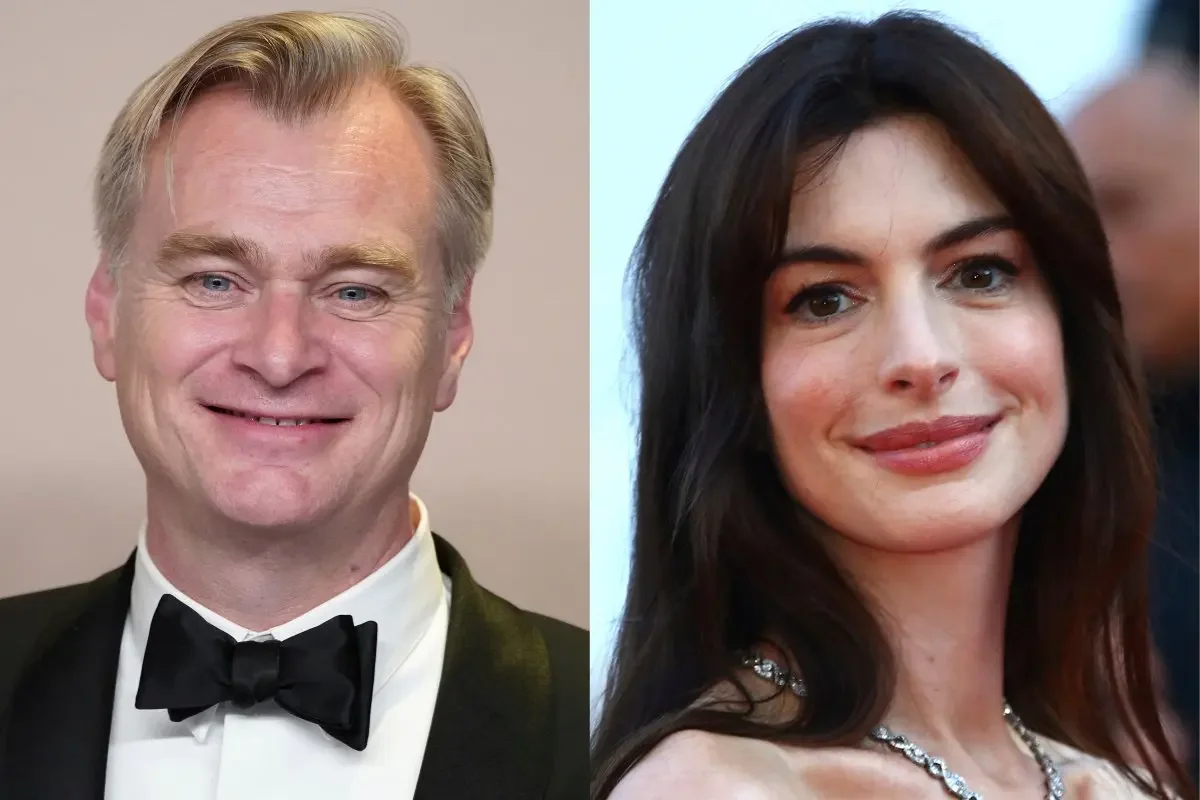
“The Odyssey” arises from Homer’s ancient Greek poem, composed around the 8th century BCE, setting stories of war, love, and longing against a backdrop that continues to resonate nearly 3,000 years later. Nolan’s adaptation stays true to its origin, weaving a tale where Odysseus journeys home to his wife, Penelope—portrayed by Anne Hathaway—and their son, Telemachus, played by Tom Holland. The ensemble cast includes Robert Pattinson as one of Penelope’s persistent suitors, Zendaya and Charlize Theron as powerful goddesses, Benny Safdie as King Agamemnon, and notable appearances by Jon Bernthal, Mia Goth, Lupita Nyong’o, John Leguizamo, and Himesh Patel among others.
At its heart, Homer’s original narrative is rich with supernatural elements. Gods, goddesses, and other divine beings routinely intervene in mortal affairs, while Odysseus faces an array of mystical dangers: enchanting Sirens, monstrous giants, and more. With such a foundation, audiences and critics alike have speculated whether Nolan’s directorial approach would favor grounded realism or fully immerse in the mythological aspects integral to the poem’s legacy.
Trailer Reveals Embrace of Myth and Magic
Scenes from the newly released trailer provide definitive answers. An imposing figure, Polyphemus the Cyclops—son of Poseidon—lurks within a cavern as Odysseus and his party cautiously enter. The Cyclops, infamous for devouring Odysseus’ men and being outwitted by Odysseus identifying himself as “Nobody,” evokes one of the poem’s most iconic encounters and signals a commitment to authentic mythological storytelling.
In another haunting visual, hands of the dead emerge from the sand, presenting Odysseus with spectral, undead figures—likely inspired by the “shades” summoned from the Underworld in Homer’s work. These spirits in the original tale include the prophet Tiresias, Odysseus’ mother, and legendary warriors such as Achilles, all influencing his fateful journey toward home.
Distinct from his prior films, Nolan’s approach in “The Odyssey” leaves little doubt that he is leaning into fantasy in a way not seen in his earlier projects. While the 2006 film “The Prestige” centered around illusionists, it dealt primarily with tricks rather than genuine supernatural elements. Prior ventures like “Tenet,” with its complex take on time manipulation, and “Inception,” featuring dreamlike layers recalling mythic enchantments, merely brushed the edge of fantasy without crossing into the realm of overt magic or monsters.
Now, audiences are presented with Nolan’s first on-screen adaptation of true magical creatures and actively divine presences, marking an unprecedented and passionate foray into fantasy cinema by the director. For devotees of the genre, especially those who lament its infrequent spotlight on the big screen, Nolan’s decision signals a bold and refreshing direction.
A Unique Blend of Myth and Realism
While the film’s visuals pulse with dark, brooding intensity, the tone of the trailer assures viewers that some of Nolan’s hallmark realism remains intact. However, the undeniable emphasis on gods, monsters, and the supernatural makes it evident that he is not shying away from the poem’s most evocative elements.
For viewers who might have hoped for a strictly historical interpretation—perhaps one where Odysseus’s experiences are explained as ancient misunderstandings or hallucinatory folklore—the trailer underscores that this adaptation is committed to the full breadth of the ancient mythos. Nolan’s decision serves the spirit of Homer’s original tale—where myth remains inseparable from human truth.
“The Odyssey” will also stand out technologically, being the first feature film ever shot entirely on IMAX 70mm. This commitment to spectacle matches both the scale of the source material and the grandeur Nolan brings to this new chapter in his illustrious career. Fans and newcomers alike can expect “The Odyssey” to chart new territory when it premieres in theaters on July 17.
Stellar Cast Brings Homer’s World to Life
“The Odyssey” boasts an ensemble of celebrated actors, each taking on a pivotal role in bringing Homer’s characters into vivid focus. Matt Damon leads as Odysseus, conveying the hardships and determination of a man striving against impossible odds. Tom Holland portrays Telemachus, the hopeful and resilient son. Zendaya steps into the divine role of Athena, guiding and challenging Odysseus at every turn. Anne Hathaway brings depth to Penelope, whose enduring faith anchors the narrative amidst chaos and uncertainty.
In addition to these leads, Robert Pattinson, Charlize Theron, Benny Safdie, Jon Bernthal, Mia Goth, Lupita Nyong’o, John Leguizamo, and Himesh Patel round out a cast that promises to embody one of literature’s most storied epics for a contemporary audience.
As anticipation heightens ahead of the theatrical release, Christopher Nolan’s bold pivot toward fantasy is set to redefine genre cinema and transport audiences to a world where myth and magic intertwine with timeless human emotion.
