
Kristen Stewart has revealed that respect in the film industry came only after she transitioned into directing, highlighting the challenging treatment actresses often face. Speaking about her feature directorial debut with The Chronology of Water, Stewart expressed frustration that actresses are frequently undervalued, but when she began directing, people started engaging with her differently.
Stewart Reflects on the Challenges Faced by Actresses
Kristen Stewart shared blunt observations on how female actors are often disrespected in Hollywood.
“Actresses get treated like shit, I’ve got to tell you,”
she said, pointing out that many perceive acting as a role anyone can fill. She noted the stark contrast in response when she spoke about her film from a director’s perspective:
“People think anyone could be an actress, but the first time I sat down to talk about my movie as a director, I thought, wow, this is a different experience, they are talking to me like I’m somebody with a brain.”
She criticized the myth that directors possess supernatural talents, calling it a perception often reinforced by men in the industry. Stewart further remarked on the tougher conditions female actors endure compared to their male counterparts, explaining that women are often treated like puppets despite investing themselves fully in their work. She singled out Imogen Poots, the lead actress in her film, for her deep commitment:
“Imogen [Poots] put her whole body and soul into this movie.”
From Acting Success to Directing Debut
Kristen Stewart first gained widespread attention through her role in the Twilight saga, before carving a niche in independent cinema with films such as Seberg, Underwater, Spencer, and Love Lies Bleeding. Her recent move into directing marks a new phase, with The Chronology of Water premiering at Cannes in 2025 before its wide theatrical release in January.
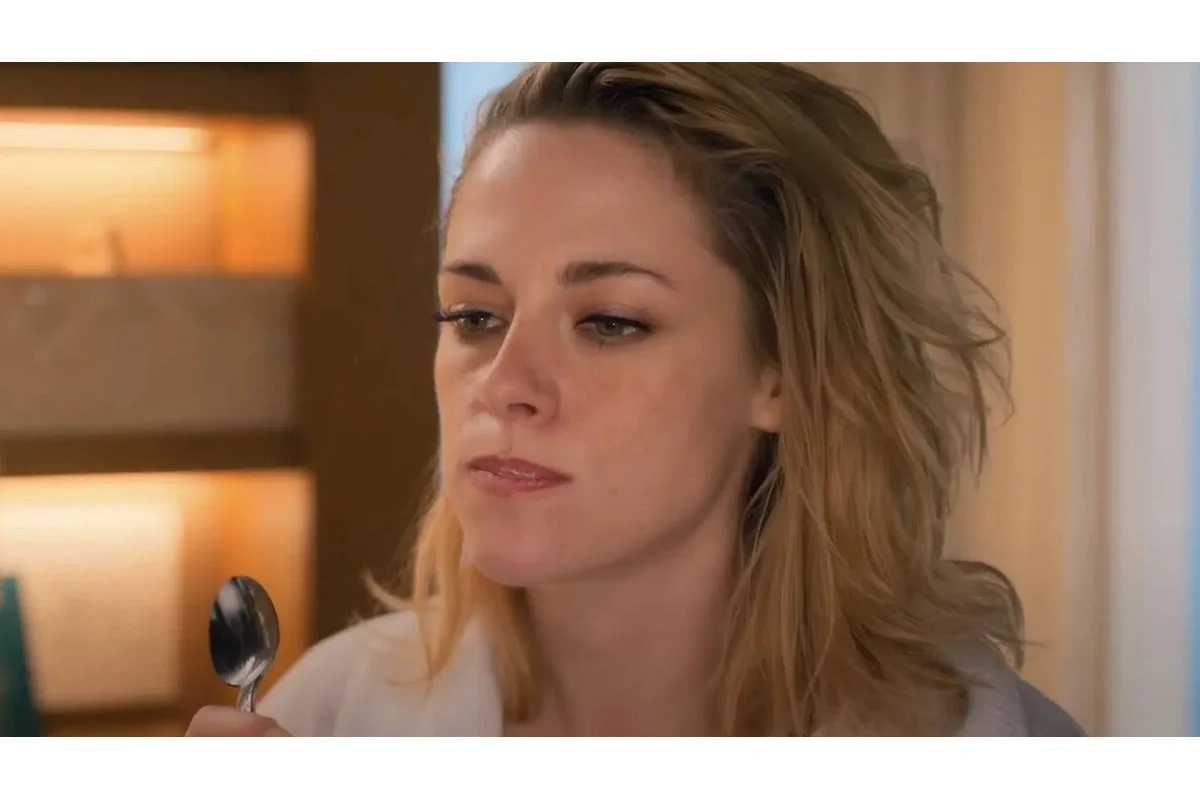
The film tells the story of Lidia, played by Imogen Poots, who confronts her painful history by channeling her experiences into competitive swimming and writing. Stewart’s extensive background as an actress informs her direction, particularly in portraying complex female characters.
Comments on Gender Inequality in Hollywood
Stewart has long been outspoken about gender dynamics in the entertainment industry. She highlighted how male actors tend to receive praise for maintaining control and self-possession in their performances, a privilege not equally extended to female performers.
Speaking about male actors’ pre-performance behaviors, Stewart said,
“There’s a common act that happens before the acting happens on set: If [male actors] can protrude out of the vulnerability and feel like a gorilla pounding their chest before they cry on camera, it’s a little less embarrassing.”
She added further:
“It also makes it seem like a magic trick, like it is so impossible to do what you’re doing that nobody else could do it.”
The Broader Impact of Stewart’s Transition to Directing
Kristen Stewart’s shift from actress to director reflects a broader quest for respect and authority within an industry that often marginalizes women. Her experience underscores the persistence of gender biases and the essential need for female voices behind the camera. As she continues to break ground with her work, Stewart serves as a compelling example of how taking creative control can change perceptions and open new professional doors for women in film.
