
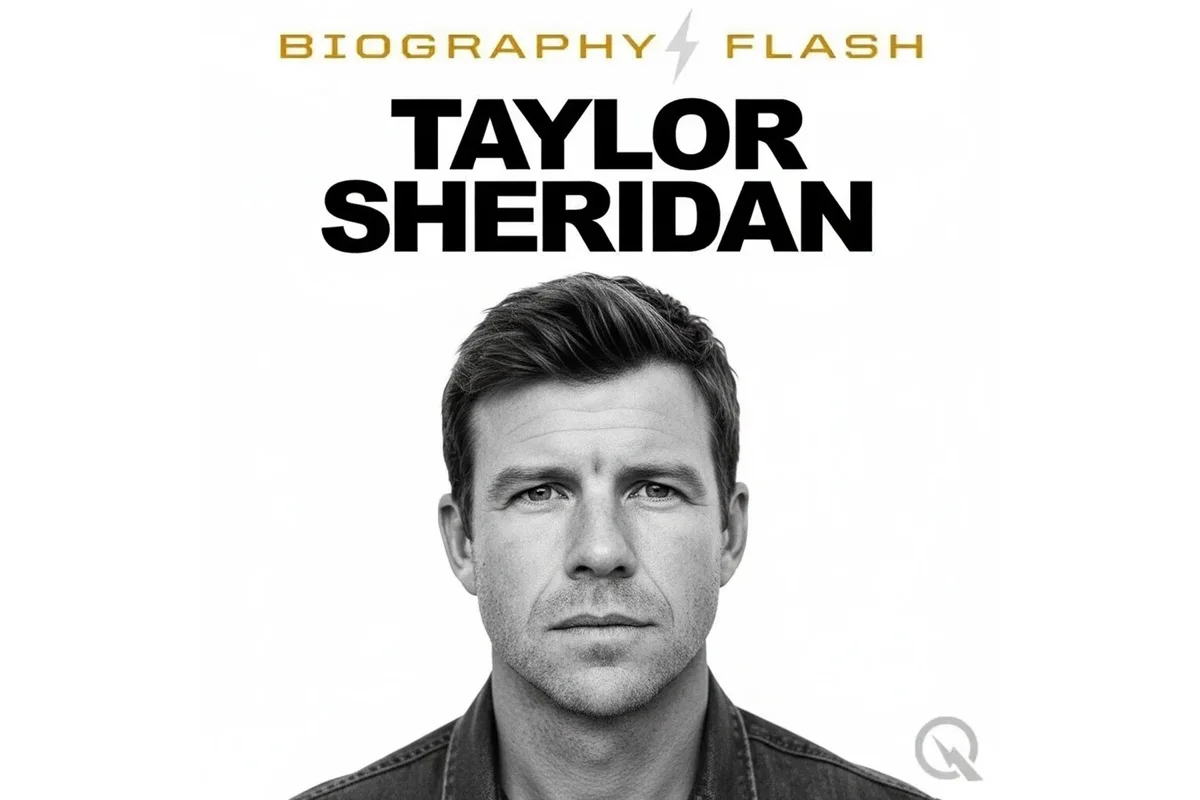
Taylor Sheridan, known as one of the most prolific TV writers of today, is experiencing a notable decline in his show‘s quality, a trend exemplified by the recent dip in popularity and critical reception of Paramount+’s Neo-Western drama Landman. Despite strong premieres and initial seasons, Sheridan’s series are increasingly showing signs of creative fatigue and diminishing returns, raising questions about the sustainability of the Taylor Sheridan show decline.
Landman’s Promising Start Crumbles After Season One Success
Landman premiered on Paramount+ in January 2024 to high acclaim, securing its position among the platform’s most-watched original dramas. Central to its appeal was Billy Bob Thornton’s portrayal of Tommy Doyle, a hardened oilman managing the complexities of M-Tex Oil as President of Operations. Season 1 revolved around Tommy’s efforts to navigate a dangerous incident involving Mexican drug cartels on his oilfield, triggering an investigation led by lawyer Rebecca Falcone, played by Kayla Wallace.
Tommy’s professional troubles intersected with his personal life, involving his ex-wife Angela (Ali Larter), son Cooper (Jacob Lofland), and daughter Ainsley (Michelle Randolph). The company’s leadership also became a central plot point when longtime owner Monty Miller (Jon Hamm) fell ill, passing control to Tommy, who then had to contend with Monty’s manipulative wife, Cami (Demi Moore). Throughout its first 10 episodes, Landman demonstrated Sheridan’s talent for immersive world-building and nuanced characters.
However, Landman followed a familiar pattern seen in Sheridan’s other shows, where early momentum deteriorated over time. While the first season captivated with layered storytelling, the second season lost direction and momentum rapidly. This decline echoes similar trajectories in Sheridan’s other works like 1923 and Tulsa King, which also failed to maintain their initial quality despite high viewership numbers.
Season Two of Landman Falters Dramatically with Episode Seven
Landman’s first season scored impressively on IMDb, with the pilot receiving an 8.1 rating. It maintained strong episodes, including a midseason high of 8.6 for Episode 6, Beware the Second Beating, and an 8.4 rating for the cliffhanger finale, The Crumbs of Hope. These ratings reflected a compelling, well-crafted drama that had found its footing.
Season 2’s launch, however, was significantly weaker, with the debut episode falling to a 7.5 IMDb rating—the lowest for any episode in Season 1. Despite adding veteran actor Sam Elliott as Tommy’s father, T.L., his presence felt underutilized, overshadowed by increasingly shallow portrayals of Angela and Ainsley. Sheridan’s writing choices veered into controversial territory when certain characters expressed openly transphobic remarks, which alienated some viewers.
After a temporary bounce back with Episode 4, Dancing Rainbows, rated 8.2, the show slid again. Episodes 5 and 6 were criticized as melodramatic filler lacking narrative significance. Notably, Episode 6 featured Andy Garcia’s cartel runner Gallino spouting 16th-century poetry, an element many found jarringly out of place in West Texas’s gritty context.
The nadir came with Season 2’s Episode 7, Forever Is an Instant, which received a lowly 6.7 IMDb rating. Regarded by many reviewers as the worst episode to date, it offered no significant plot advancement and centered on superficial character development for Angela and Ainsley. Fans quickly dubbed this episode The Housewives of Permian Basin for its soap opera-like quality, intensifying criticism against the series.
Harsh reactions and a flood of one-star reviews reflect a broader concern that Landman, once a promising Neo-Western drama, has become a shadow of its former self. This slump adds to a growing pattern seen across Sheridan’s projects, suggesting that his heavy artistic output may be spreading his creative resources too thin.
Lessons from Taylor Sheridan’s Other Series Highlight the Costs of Overextension
Landman’s decline underscores a recurring theme within Sheridan’s body of work: prolonged storytelling sometimes damages the original narrative’s strength. Shows like 1923 and Tulsa King reflect similar trajectories, starting strong but faltering in their follow-up seasons due to increasingly soap operatic elements and inconsistent writing.
Tulsa King’s first season began favorably, with an 8.1 IMDb rating, finishing at 8.2, but Season 2 ratings slipped, starting at 7.5 and closing at 7.8. Given Sheridan’s role in writing every episode, the pattern of overextended storylines and excessive melodrama evident in Landman also impacted Tulsa King. Both series struggled to maintain the gritty realism and compelling tension that initially attracted audiences.
Intriguingly, some shows associated with Sheridan improve when he steps back from full creative control. The example of Mayor of Kingstown is telling: its first season, written by Sheridan, scored an 8.0 at the start and 8.9 at the end. When Sheridan handed over writing duties after two episodes of Season 2, the quality improved further, with Season 4 debuting at 8.4 and concluding with a 9.0 rating. Writer Dave Erickson’s involvement behind the scenes appears to have positively influenced the show’s progress.
1883 Stands Out as Sheridan’s Most Effective and Concise Work
By contrast, 1883 is often praised as Sheridan’s most cohesive and well-managed series. Its status as a 10-episode limited miniseries prevented the narrative from overstaying its welcome or sagging under unnecessary plot stretching. The series premiered with an 8.5 IMDb rating and steadily climbed in acclaim, ending with a strong 9.0 for the finale.
1883’s success suggests that Sheridan’s creative strengths shine brightest in tightly controlled storytelling formats. It also hints that the persistent Taylor Sheridan show decline in his other projects may be mitigated by adopting a more restrained production approach. The longer Sheridan’s shows run, the more they seem vulnerable to losing the qualities that made them engaging at first.
For Sheridan, this may mean reassessing the pace and volume of his output to preserve the integrity and impact of his stories. Until then, fans and critics alike watch with growing concern as some of television’s most hyped dramas struggle to meet expectations beyond their initial seasons.
