
Yahya Abdul-Mateen II stars as Simon Williams in Marvel’s Wonder Man, a Disney+ series that explores the life of a struggling actor grappling with secret superpowers. Toward the end of the show’s first season, Simon faces a challenge unlike any villain or government agency: a New York Times journalist determined to expose his hidden abilities. This tension underscores the broader narrative, highlighting Abdul-Mateen’s portrayal of a character caught between the worlds of Hollywood ambition and supernatural power.
Abdul-Mateen II’s Journey Before Taking on Wonder Man
Before stepping into the role of Simon Williams, Yahya Abdul-Mateen II almost missed the path to acting altogether. Once an architect and city planner in San Francisco, he contemplated a different career entirely. Six years prior, after playing Cal Abar—later unveiled as Doctor Manhattan—in Damon Lindelof’s Watchmen, Abdul-Mateen had expressed a desire to embrace more relatable, grounded roles rather than larger-than-life characters. Contrary to expectations, he did not anticipate joining the Marvel Cinematic Universe at that time.
“I didn’t expect it to come from the MCU at all — at all, at all,”
Abdul-Mateen shared, reflecting on the surprising opportunity that Wonder Man presented. During the period Marvel came calling, he was immersed in theater, making his Broadway debut in a 2022 revival of Suzan-Lori Parks’ Topdog/Underdog. The production, which revisited a classic role previously inhabited by another Marvel lead, Don Cheadle, earned Tony nominations for both Abdul-Mateen and co-star Corey Hawkins, ultimately winning Best Revival of a Play. The decision to return to the stage was a deliberate one, driven by a need for patience and selectivity in his screen roles.
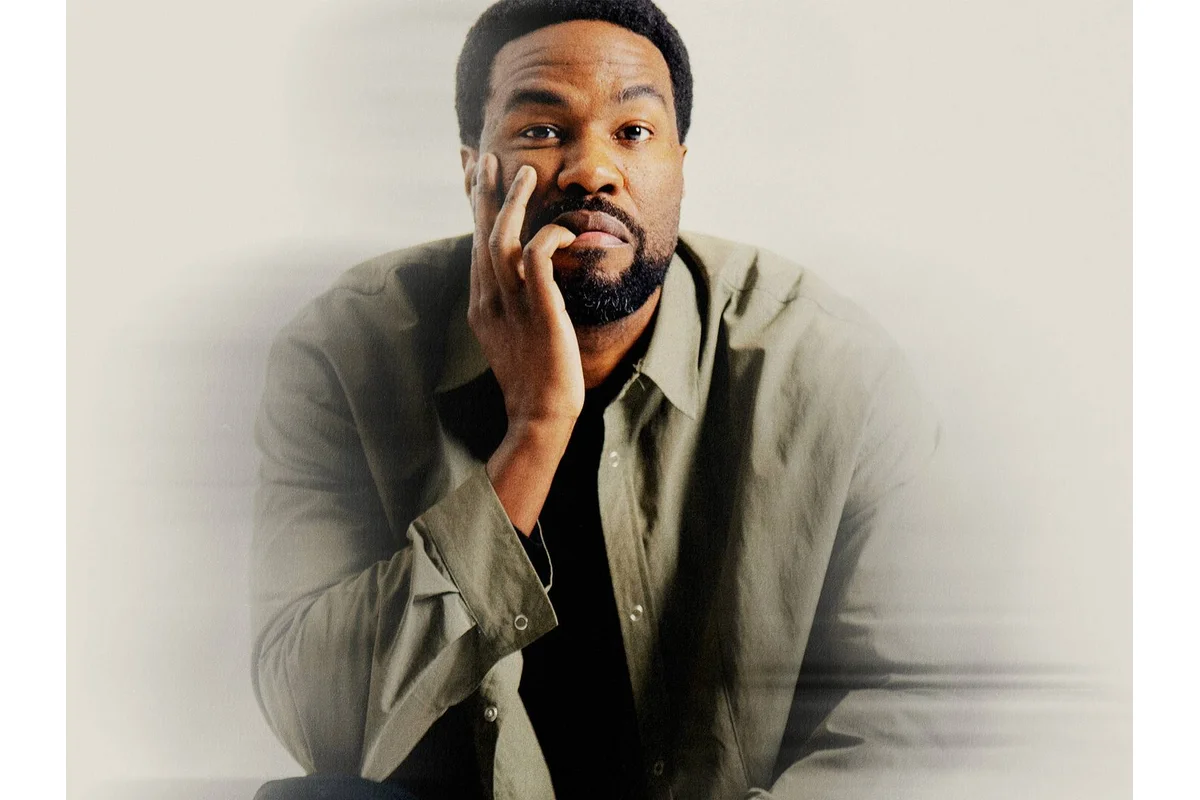
“The reason why I was doing a play was because I was saying no to everything else that was coming my way, and I said, ‘I’m going to say yes once I find something that absolutely makes sense,’ in terms of what it was that I had advertised for, and the play turned out to be the thing.”
This experience reshaped his artistic goals, inspiring a commitment to roles that allowed authentic emotional expression.
“I knew that I wanted to be able to do the same, to experience and to portray the same type of honesty as I was on stage, in my next film opportunity,”
Abdul-Mateen explained.
When the Wonder Man role emerged, Abdul-Mateen approached it with a specific vision for a more human portrayal. He sought a character who displayed everyday realism, humorously noting to director Destin Daniel Cretton:
“I told him that I wanted to play a character who could drink a cup of water.”
This was a lighthearted way to express his wish for a role where normal human gestures—and imperfections—could be seen, contrasting sharply with his previous superhero parts.
“Because my last superhero endeavors, for two movies straight, I was playing the only human, really the only main human in the entire universe, the world, in the entire film, and I never got a drink of water. I’m just chasing Aquaman for two movies.”
Referring to his time as Black Manta, the merciless antagonist to Jason Momoa’s Aquaman, Abdul-Mateen acknowledged that those roles served a purpose but left him hungry for greater complexity.
“That was that character’s function. But I really had an appetite for something more, something more human and well-rounded.”
Ultimately, he found that with Simon Williams.
“I wanted to be a guy on a Tuesday with a problem, and I got that and some with Simon Williams.”
Despite the surreal nature of some previous roles, including his Emmy-winning portrayal of Doctor Manhattan—which he accepted remotely due to the COVID-19 lockdown—the actor has sought balance between headline-grabbing parts and grounded, soulful characters. His career spans collaborations with acclaimed filmmakers like Jordan Peele, Lana Wachowski, and Nia DaCosta, yet Abdul-Mateen remains committed to pursuing projects that resonate personally and artistically.
The Unique Tone and Themes of Wonder Man
Wonder Man distinguishes itself from other MCU entries by focusing on the actor’s journey rather than cosmic battles or multiversal crises. Simon Williams, overwhelmed and insecure, is portrayed at a low point—just dismissed from a TV series for overacting in a quick death scene, dealing with a breakup, and wrestling with the prospect of his secret exposed.
The show captures Simon’s tendency to overthink and emotionally withdraw, a trait that resonates with Abdul-Mateen’s own reflections on his acting past. In a past interview, he admitted to applying rigorous drama techniques to roles that sometimes demanded a lighter touch.
“applying a lot of drama school shit to something that was really about going out and playing.”
He confessed that learning to embrace the fun and flow of a role, and to let go of overanalyzing, was a critical realization. This struggle with nerves and self-doubt is central to Wonder Man’s depiction of the acting life.
“Nerves are a part of the job,”
Abdul-Mateen explained.
“The best of us, the actors who I really admire, I don’t admire them because they don’t get nervous. One of the things that I do admire about them is that when they get nervous, they have technique, and they have the confidence and the courage to continue to push through and to work through that.”
Over time, he has found a calm exterior that masks internal anxiety.
“There’s been times when I’m working, and the camera’s right here, and on the inside it’s like, ba-bump, ba-bump, ba-bump, but the thing that I’ve come to find really fascinating is that I found comfort in that moment, knowing that the audience cannot tell that that’s going on on the inside. That’s what makes me an actor.”
With Simon, the actor acknowledges the character’s growth in navigating anxiety to deliver a competent performance despite internal turmoil.
“You see Simon breathe and get it together enough to deliver some type of performance that, in the show, we’re saying is solid to decent, and he’s still experiencing the thing on the inside. He just has the courage to work through it.”
This portrayal aims to resonate broadly with anyone who faces pressure to perform while managing private fears and insecurities.
The Formation of the Character Blend Behind Wonder Man
Marvel’s Wonder Man came to life by merging two seemingly different projects: one centered on Ben Kingsley’s reprisal of Trevor Slattery, and another focused on the superhero Wonder Man himself. Marvel Television chief Brad Winderbaum recognized that both narratives revolved around the actor’s personal journey, leading to the decision to intertwine them into a single series.
The series pairs Abdul-Mateen’s Simon Williams and Kingsley’s Trevor Slattery in an unusual but compelling partnership. When Simon encounters Trevor during a screening of Midnight Cowboy early in the show, their dynamic appears casual, but grows into a nuanced friendship complicated by secrets and personal agendas. Trevor’s history as the ill-fated Mandarin and his unexpected alliance with Simon adds layers of intrigue.
Abdul-Mateen credits their on-screen chemistry to a respectful off-camera understanding.
“We didn’t talk much in between takes. At the top of the day, I would ask, ‘What’s the story?’ That was my way of inviting him to a collaborative space so that we at least knew that we were on the same page. But I respected his process as an actor, he respected my process as an actor, and we really discovered each other in between the takes.”
This mutual foundation gave authenticity to their portrayal of a friendship unfolding in real time.
“What you’re watching is real. It’s actually happening in real time,”
Abdul-Mateen explained.
“It wasn’t intentional; that was just the way that he and I were both confident in working. Once it was ‘action,’ we went there with no preconceived ideas of what should happen, and we discovered.”
The show balances humor and emotional depth, sending these two unconventional allies on chaotic escapades—from wild auditions to confrontations with drug dealers—while gradually revealing Simon’s struggle to conceal his powers. The “Doorman Clause” subplot highlights an industry crackdown on superpowered individuals, raising the stakes for Simon’s secret life.
Despite minimal displays of Simon’s powers throughout most of the season, action bursts forth in moments of desperation. In one such scene, Simon defends Trevor from danger, revealing the extent of his strength yet lack of full control. Abdul-Mateen described the role as a blend of heartfelt performance and superhero excitement.
“I get the best of both worlds-type of experience with this. I get to do some earnest, heartfelt work, and I get to have some of the superhero fun. I was looking forward to seeing what Simon could do, but I was also reminded that Simon is not in control of his powers. He’s super strong, but in terms of what it is that he can actually do, we see the magnitude of his potential when he’s out of control.”
Emotion Drives the Marvel Finale Over Explosive Battles
Warning: spoilers for the Wonder Man finale ahead.
Throughout the season, Simon anxiously tries to keep his superpowered identity under wraps, including efforts to suppress video evidence of his outburst in an alley fight. The buildup leads to a climactic explosion that devastates the Wonder Man film set itself. This rare moment of loss of control serves as a physical and emotional release for Simon, who has been besieged by betrayal and pressure.
The immediate cause of Simon’s breakdown is the revelation that Trevor, his on-screen co-star and new-found friend, has been collaborating with the Department of Damage Control to monitor him. This betrayal cuts deeply, especially since Trevor represents a rare connection Simon has allowed himself.
Yet Abdul-Mateen points out that both characters initially approached their relationship opportunistically.
“In the beginning, Simon isn’t looking for a friend; Simon finds Trevor as an opportunity. Simon is being opportunistic when he’s eavesdropping on that phone call and when he’s asking Trevor about the audition. Simon is looking for an opportunity to get to somewhere else, and Trevor sees Simon as an opportunity to have his freedom.”
Trevor’s guilt causes him to sabotage the DODC’s mission subtly at first, withholding key information. However, the finale reveals his ultimate sacrifice: dressed as his Mandarin persona, he records a confession claiming responsibility for the set explosion and sends it to a news outlet, diverting the authorities’ attention from Simon.
This act forces a recasting of Trevor’s role as Barnaby in the Wonder Man film, with Joe Pantoliano stepping in, reflecting real-life meta-commentary within the series. Simon’s filmed scenes with the absent co-star are digitally altered to accommodate the replacement, emphasizing the bittersweet cost of Trevor’s choice.
“I’m interested to see who Simon is now that he’s gotten a taste of what he wanted.”
Despite the dramatic set explosion, the finale’s quieter moments reveal deeper intent. Abdul-Mateen recalled initial confusion reading the script, feeling that the story reached the premiere prematurely.
“I thought, ‘We’ve gotten to the premiere too soon, because we still have more TV to make. What’s on the other side of this?’”
The final scenes confirm that the show prioritizes the friendship at its core. Simon visits Yucca Valley, ostensibly to prepare for a role shadowing a DODC prison guard, but in fact plans to rescue Trevor from custody. Their escape, powered by Simon’s ionic energy, closes the season on a cliffhanger, hinting at his growing mastery over his abilities and potential future in the Marvel universe.
In light of these developments, Abdul-Mateen remains tight-lipped about potential appearances in upcoming Avengers films but expresses openness to continuing the Wonder Man story.
“Yeah, if I get the phone call.”
He’s intrigued by exploring who Simon becomes once he attains his ambitions and the personal costs that come with success.
Abdul-Mateen II Reflects on His Career and Upcoming Projects
Though his character Simon deals with a tumultuous career in Hollywood, Yahya Abdul-Mateen II’s own trajectory contrasts sharply—marked by steady progress and thoughtful choices. He admits to never taking his achievements for granted.
“I never want to get so used to the blessing that I’m not thankful,”
he revealed.
Recently, a nostalgic moment struck him while reviewing his original acting resume and headshot, an act charged with the weight of all he has accomplished over the past decade. The actor stresses the importance of appreciation amidst the demanding grind of the profession.
“It’s important to stop and be appreciative, because it is a grind. It is hard work, and it is work, as the show will reveal. But at the same time,”
he added,
“I’ve also learned that it’s important to have a life.”
He references a line from Trevor Slattery in Wonder Man—that acting might be the most consequential thing a person does—but counters that his real priority is life beyond the craft.
“I do love to be able to express myself through this art form, but what’s always been important to me is to just get a life, to get a life and to live. That gives me things to go put back into my art and into my acting.”
Having started out yearning for roles in Shakespeare in the Park, his idea of success has matured.
“To me, success means being a part of projects that bring me joy. Not to say that they won’t be challenging, because the rigor is a part of the love and the attraction, too — and working with people, working on material that brings me some type of joy. At the same time, being outside of work and having the ability to turn my phone off, and to do that comfortably and without any type of anxiety for what I’m missing? That’s success.”
Outside acting, Abdul-Mateen has found solace in quieter routines, including caring for his six-month-old puppy, which allows him to unplug and recharge.
“I have quiet days. I’ll walk my dog. I’m not checking my email for jobs every day, and not because I have all the jobs. I think I’ve learned to just really appreciate my own life. To me, that’s a win right there, to not be chasing success,”
he explained.
“and I’m still working on that.”
His future includes promising ventures, such as an undisclosed role in David Fincher and Quentin Tarantino‘s collaboration on a Cliff Booth sequel to Once Upon a Time in Hollywood, as well as a Netflix adaptation of Man on Fire. Although constrained from discussing certain project details, Abdul-Mateen is open about how occupying iconic roles shaped his craft.
“I’m Daredevil. Not even God can stop that now.”
He acknowledges past intimidation when stepping into established characters but embraces newfound confidence and grounding.
“In the past, I would have been intimidated, and I probably would have involved what someone else did a lot in the work that I do, even if it was trying to avoid doing what someone else did. These days, I’m much more grounded, thankfully, and much more confident in myself. I find my own things to be intrigued by, and I really pursue those in a way that lets my interpretation shine.”
His theatrical background instilled a healthy respect for classic roles, comparing Morpheus to Hamlet as iconic parts open to varied interpretations.
“It’s like Hamlet. Hamlet is an iconic role in the same way that Morpheus is an iconic role. You can see 20 productions of Hamlet being done in the world at any given time, and it’s because people respect the role.”
Despite revering actors like Denzel Washington—whose portrayal of John Creasy he ranks among Washington’s top performances—Abdul-Mateen strives to carve his own artistic path.
“It does me no service to put that ghost on my back. While I respect his work in that, what I have to focus on is the character of John Creasy. That helps me give my own interpretation to it, and not be bogged down by any type of internal or external comparisons.”
Ultimately, playing Wonder Man has been enlightening for Abdul-Mateen, who recognizes echoes of his former self in Simon Williams but appreciates how far he has come.
“I might have been Simon at some point,”
he laughs,
“but I’m also thankful that those days are in the past.”
