David Fincher Bio
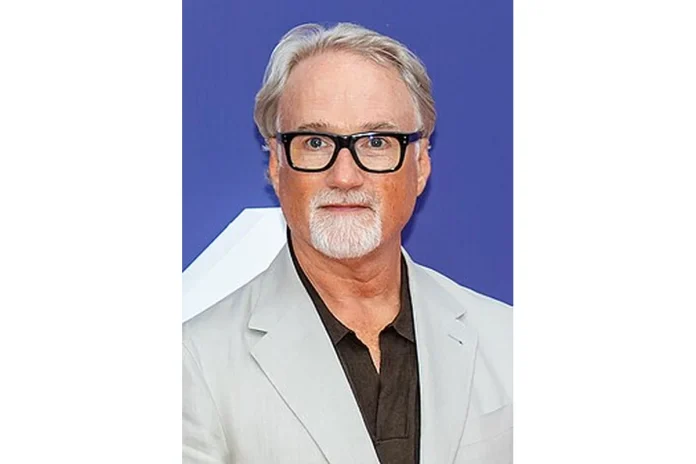
David Andrew Leo Fincher (born August 28, 1962) is an American film director often described as one of the preeminent directors of his generation. His films have collectively grossed over $2.1 billion worldwide and received numerous accolades, including three nominations for the Academy Award for Best Director. He has also received four Primetime Emmy Awards, two Grammy Awards, a BAFTA Award, and a Golden Globe Award.
Known for his perfectionism, meticulous eye for detail, and signature dark visual style, Fincher has built a career spanning music videos, feature films, and television. He first gained attention directing music videos in the 1980s before transitioning to feature films with Alien 3 in 1992. He went on to deliver some of the most influential works of modern cinema, including Seven, Fight Club, Zodiac, The Social Network, and Gone Girl.
Early Life and Background
David Andrew Leo Fincher was born in Denver, Colorado, on August 28, 1962. His mother, Claire Mae (née Boettcher), was a mental health nurse from South Dakota who worked in drug addiction programs. His father, Howard Kelly “Jack” Fincher (1930–2003), was an author from Oklahoma who worked as a reporter and bureau chief for Life magazine. When Fincher was two years old, the family moved to San Anselmo, California, where filmmaker George Lucas was among his neighbors.
Fincher became fascinated with filmmaking at the age of eight and began making films on an 8mm camera. He has recalled being inspired by a behind-the-scenes documentary about Butch Cassidy and the Sundance Kid, which revealed the time and craft required to make a movie. The experience ignited a lifelong obsession with the art of moviemaking, which he described as “the ultimate magic trick.”
As a teenager, Fincher moved to Ashland, Oregon, where he attended Ashland High School. He directed plays and designed sets and lighting after school, worked as a non-union projectionist at Varsity Theatre, and served as a production assistant at the KOBI news station in Medford. He supported himself by working as a busboy, dishwasher, and fry cook.
Path to Filmmaking
While establishing himself in the film industry, Fincher was employed at John Korty’s studio as a production head. He then became a visual effects producer, working on the animated feature Twice Upon a Time (1983) with George Lucas. In 1983, he was hired by Industrial Light & Magic as an assistant cameraman and matte photographer, contributing to Return of the Jedi (1983) and Indiana Jones and the Temple of Doom (1984). In 1984, he left ILM to direct a television commercial for the American Cancer Society that depicted a fetus smoking a cigarette.
The commercial brought Fincher to the attention of producers in Los Angeles. He co-founded the production company Propaganda Films in 1986 and began directing commercials and music videos. He directed advertisements for major brands including Levi’s, Converse, Nike, Pepsi, Revlon, Sony, Coca-Cola, and Chanel, although he reportedly loathed doing them. He later referred to the production of music videos as his own “film school,” where he learned to work efficiently within tight budgets and schedules.
Starting in 1984, Fincher built an impressive music video portfolio, working with artists such as Rick Springfield, Don Henley, Paula Abdul, Madonna, Michael Jackson, Aerosmith, and Billy Idol. He directed Madonna’s iconic videos for “Express Yourself” (1989) and “Vogue” (1990), both of which won him the MTV Video Music Award for Best Direction. The black-and-white video for “Vogue,” inspired by 1920s and 1930s cinema, has been frequently cited as one of the best videos of all time.
David Fincher Career
Early Career (1983–1991)
During the 1980s, Fincher established himself as a top music video and commercial director. Between 1984 and 1993, he was credited as a director on 53 music videos, collaborating repeatedly with artists such as Paula Abdul, Madonna, and Rick Springfield. He also won two Grammy Awards for Best Music Video for “Love Is Strong” (1994) by the Rolling Stones and “Suit & Tie” (2013) by Justin Timberlake featuring Jay-Z.
His early advertising and music video work earned him industry recognition and paved the way for his move into feature films. The visual precision and technical control he honed in these formats became defining traits of his later cinematic work.
Breakthrough (1992–2000)
In 1990, 20th Century Fox hired Fincher to replace Vincent Ward as the director for the science-fiction horror Alien 3 (1992), his feature film directorial debut. Starring Sigourney Weaver, the film was the third installment in the Alien franchise. Released in May 1992 to a mixed critical reception, Alien 3 was hampered by studio intervention and several abandoned scripts. Although the film received an Academy Award nomination for Best Visual Effects, Fincher publicly expressed his dismay and later disowned the picture.
Following the disappointment of Alien 3, Fincher briefly returned to directing commercials and music videos before reading Andrew Kevin Walker’s original screenplay for Seven (1995). Starring Brad Pitt, Morgan Freeman, Gwyneth Paltrow, and Kevin Spacey, the film followed two detectives pursuing a serial killer whose murders were based on the seven deadly sins. New Line Cinema agreed to keep Walker’s original ending, and the film became a major success, grossing more than $320 million worldwide. Critics such as Roger Ebert called Seven “one of the darkest and most merciless films ever made in the Hollywood mainstream.”
Fincher continued his ascent with The Game (1997), a mystery thriller starring Michael Douglas and Sean Penn, which was later included in the Criterion Collection. In 1999, he released Fight Club, based on Chuck Palahniuk’s novel and starring Brad Pitt and Edward Norton. Although initially polarizing and only a modest box-office success, Fight Club became a cult classic and has been the subject of extensive critical analysis.
Notable Works and Milestones
Fincher’s signature works include Seven, Fight Club, and The Social Network, the last of which earned him the BAFTA Award for Best Direction and the Golden Globe Award for Best Director. His films are known for their dark themes, precision camera work, and atmospheric lighting. He has consistently delivered both critical acclaim and commercial success, with several of his films appearing on prestigious best-of lists and earning major award nominations.
David Fincher Award Nominations
Fincher has received three Academy Award nominations for Best Director for The Curious Case of Benjamin Button (2008), The Social Network (2010), and Mank (2020). He has also received four Directors Guild of America Award nominations for Outstanding Directing – Feature Film, along with a nomination for Outstanding Directing – Drama Series for House of Cards. His films have earned numerous additional nominations across the Golden Globes, BAFTAs, and Primetime Emmy Awards, cementing his reputation as one of the most decorated filmmakers of his era.
David Fincher Awards Won
Fincher has won a BAFTA Award for Best Direction and a Golden Globe Award for Best Director, both for The Social Network (2010). He has also received four Primetime Emmy Awards, two Grammy Awards for Best Music Video, and a Peabody Award for his work on House of Cards. Additionally, his animated series Love, Death & Robots earned three Primetime Emmy Awards for Outstanding Short Form Animated Program.
| Award | Wins | Year |
|---|---|---|
| BAFTA Award for Best Direction (The Social Network) | 1 | 2010 |
| Golden Globe Award for Best Director (The Social Network) | 1 | 2010 |
| Grammy Award for Best Music Video (Love Is Strong – The Rolling Stones) | 1 | 1995 |
| Grammy Award for Best Music Video (Suit & Tie – Justin Timberlake & Jay-Z) | 1 | 2013 |
David Fincher Family
Fincher’s mother, Claire Mae (née Boettcher), was a mental health nurse from South Dakota who worked in drug addiction programs. His father, Howard Kelly “Jack” Fincher (1930–2003), was an author from Oklahoma who worked as a reporter and bureau chief for Life magazine. His father was also a screenwriter who penned the screenplay for Mank, a film completed and released posthumously.
Personal Life
Fincher married model Donya Fiorentino, the sister of actress Linda Fiorentino, and they had one daughter together before divorcing in 1995. He married producer Ceán Chaffin in 1996, and the two have since collaborated on many of his projects. He is known for being intensely private, with his professional reputation built on his meticulous filmmaking style rather than his personal life.