
Ethan Hawke has voiced sharp criticism of superhero films, questioning their artistic value despite their widespread popularity. Known for his serious acting roles and recent nomination for his fifth Oscar, Hawke’s perspective on comic book movies adds a notable voice to the ongoing debate surrounding the genre’s place in cinema.
Examining Ethan Hawke’s Critique of Comic Book Movies
Superhero and comic book films have become a dominant force in cinema, especially since the release of 1978’s Superman, which introduced spectacular effects and a compelling origin story. Over time, iconic characters like Batman and Spider-Man gained blockbuster adaptations, and franchises like Christopher Nolan’s The Dark Knight Trilogy and the Marvel Cinematic Universe (MCU) elevated the genre by respecting source materials and winning critical acclaim. Despite this progress, several acclaimed filmmakers, including Martin Scorsese and Ridley Scott, have voiced skepticism about the genre’s artistic worth, a sentiment Ethan Hawke has echoed.
Hawke’s reservations surfaced notably in 2018 when he discussed the 2017 film Logan, widely praised and regarded as a groundbreaking superhero movie due to its muscular narrative and emotional depth. He remarked,
“It’s a great superhero movie. It still involves people in tights with metal coming out of their hands.”
Ethan Hawke’s comment pointed to a divide between the film’s praise and its genre roots. He elaborated,
“There’s a difference, but big business doesn’t think there’s a difference. Big business wants you to think that this is a great film because they wanna make money off of it.”
This expressed concern about the influence of commerce on the perceived quality of superhero films.
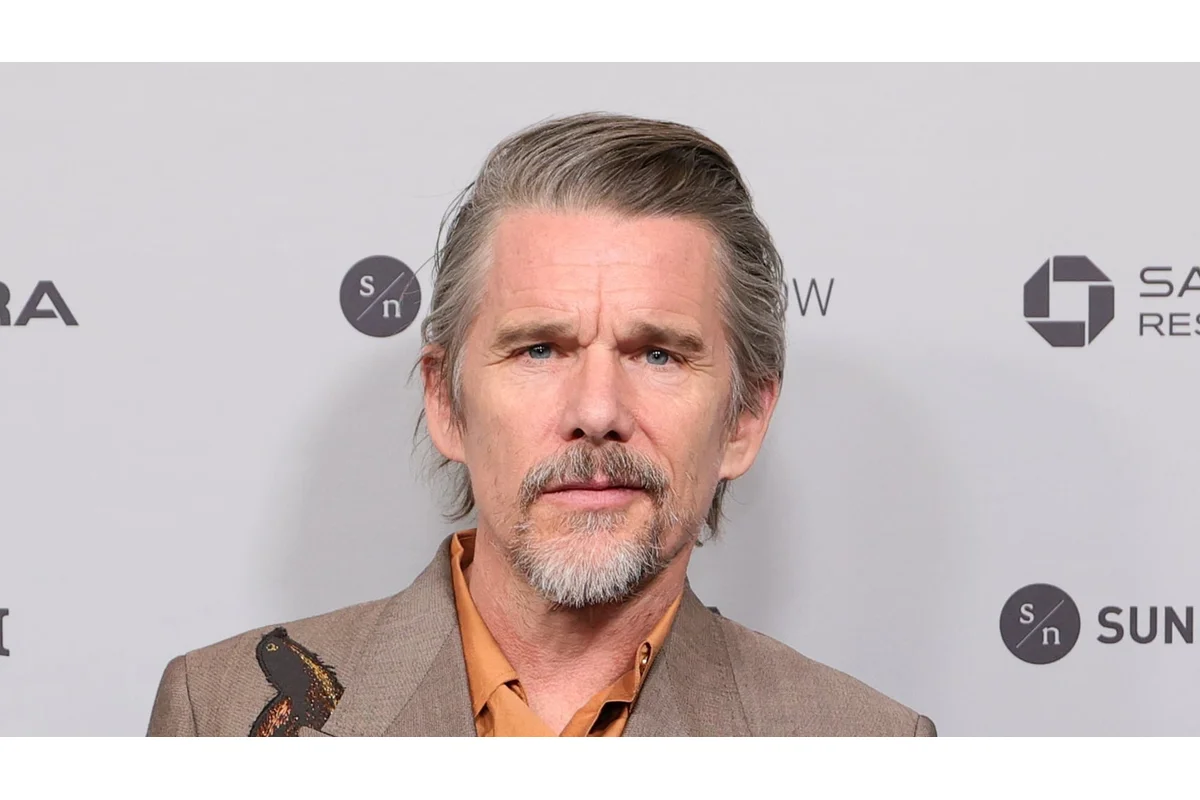
While Logan was celebrated for its intimate storytelling and lower budget compared to other sprawling comic book blockbusters, Hawke’s comments suggested a belief that commercial interests may overshadow genuine artistry in such projects. He later clarified his stance by admitting his own fondness for comics, explaining,
“much more nuanced point about money and America and what our obsession with the accumulation of wealth is.”
What Led Ethan Hawke to Join the Marvel Cinematic Universe?
Despite his critical remarks, Ethan Hawke ultimately took on a role within the MCU, portraying villain Arthur Harrow in the Disney+ series Moon Knight. While this performance didn’t become a standout in the franchise, Hawke’s involvement was a significant addition, marking a key moment where a traditionally skeptical actor engaged with a major superhero project.
Hawke found appeal in Moon Knight partly because the character was relatively obscure, offering room for original interpretation rather than following well-trodden superhero paths. He also cited the creative team behind the show, including director Mohammed Diab and star Oscar Isaac, as critical reasons for joining.
The entrance of actors like Hawke into comic book adaptations highlights shifting attitudes in Hollywood, where superhero narratives are evolving beyond familiar formulas. This change opens possibilities for projects such as the upcoming Wonder Man series, which promises to diverge from typical genre conventions. As the genre grows more complex, filmmakers and performers who have been wary of superhero movies may increasingly embrace these stories as fertile ground for innovation.
The Enduring Controversy Over Comic Book Movies
The divide over the artistic legitimacy of superhero movies remains clear, with figures like Hawke, Scorsese, Coppola, and Foster representing a critical perspective that questions the genre’s depth and sincerity. Yet the financial success and audience enthusiasm for these films cannot be denied, nor can the improvements in storytelling and cinematic craftsmanship seen in projects like Logan and The Dark Knight Trilogy.
As superhero films continue to evolve, the genre’s future may see more nuanced and varied approaches that challenge previous stereotypes. Hawke’s journey from critic to participant underscores this dynamic tension, illustrating how changing creative opportunities and stories may alter the perceptions of even the most skeptical artists.
