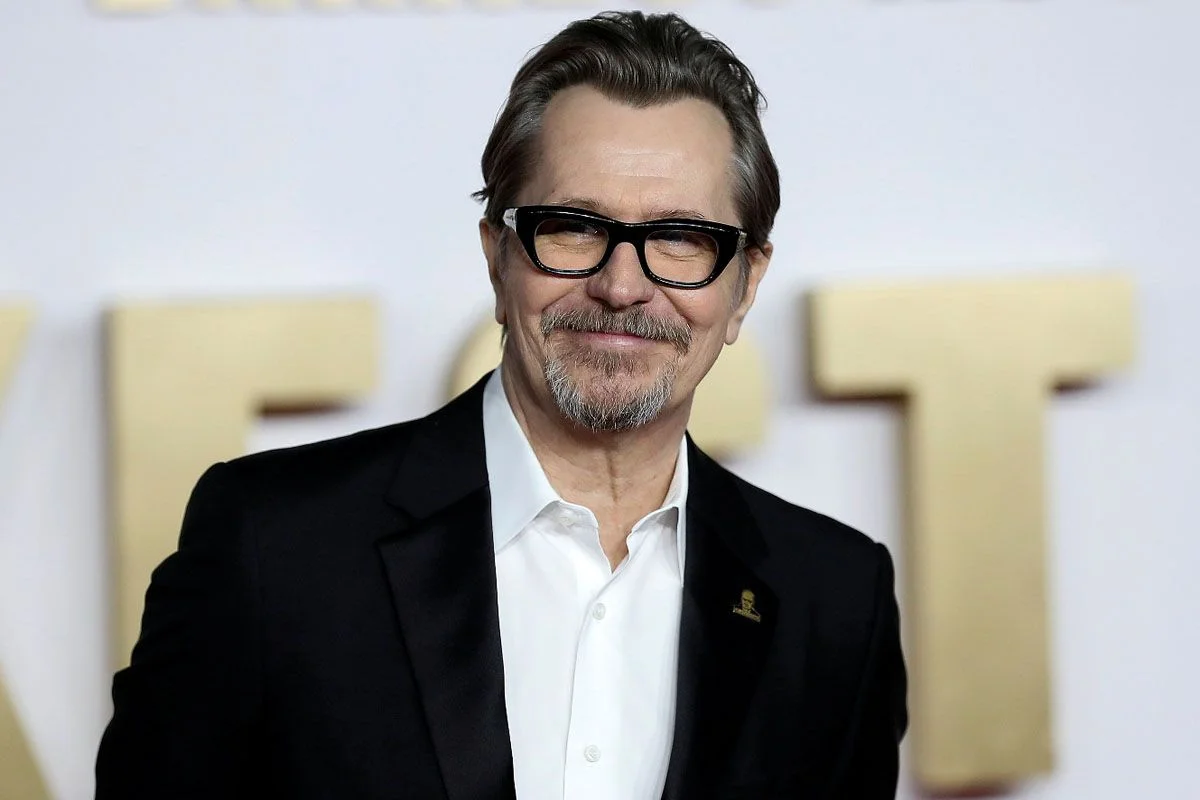
Gary Oldman Oscar controversy: Churchill win sparks merit debate. [Image Source: INQUIRER]
Gary Oldman has voiced doubts about the legitimacy of some Best Picture wins at the Oscars, raising questions that touch on the ongoing Gary Oldman Oscar controversy. During his third nomination for Best Actor in 2018, Oldman was widely expected to win the award, largely due to his portrayal of Winston Churchill in a biographical film. However, many critics and viewers felt that Daniel Kaluuya’s remarkable performance in the indie hit Get Out was overshadowed, stirring debate about merit versus career recognition at the ceremony.
Oldman’s role in the Churchill biopic was seen as a classic Oscar contender, benefiting from the actor’s distinguished career history. He was competing against notable nominees such as Timothée Chalamet for Call Me by Your Name, Daniel Day-Lewis for Phantom Thread, Denzel Washington for Roman J. Israel, and Daniel Kaluuya. Despite Kaluuya’s breakthrough performance which brought critical acclaim and a cult following to Get Out, the Academy chose Oldman as the winner. This decision sparked criticism that the Oscars favored a safe, familiar choice over a more deserving newcomer, thus calling into question the fairness of the awards process.
Oldman’s Candid Reflections on Oscar Winners and Ceremony Choices
Oldman himself has openly challenged the Academy’s choices and highlighted the inconsistencies in what wins the Best Picture and Best Actor awards. Reflecting on his own work and on other films honored by the Oscars, he shared thoughts that reveal his uneasy relationship with the institution. Referring to his role in Tinker Tailor Soldier Spy, he remarked,
Image of: Gary Oldman
“There’s a sort of pedigree that [Tinker Tailor Soldier Spy] had, I’d like to think, worthy of such an honour,”
demonstrating his belief in the quality of his performances beyond the awards.
He went further in addressing the Best Picture category, underscoring the contrast between classic winners and more recent selections. Regarding Tom McCarthy’s Spotlight, which won Best Picture in 2016, Oldman said,
“If you think of some of the movies that have been nominated over the years for ‘Best Picture’ – Gone With the Wind, Lawrence of Arabia – and then you look at Spotlight, and you kind of go, ‘Best Picture?’ I enjoyed it but, you know, sometimes it gets a little. I just scratch my head in wonder.”
His comments showcase a perception that certain wins do not always align with public or critical expectations.
The Larger Implications of Oldman’s Critique on the Academy Awards
Oldman’s critique highlights the complex dynamics at play within the Academy Awards, where career recognition sometimes takes precedence over singular performance merit. His own Best Actor win came after years of acclaimed work, reflecting this tilt towards honoring legacy rather than breakthrough achievement. Yet, his statement acknowledges that the system’s imperfections made his success possible, even if his portrayal of Churchill wasn’t universally viewed as flawless.
The debate sparked by Oldman’s comments and the resulting Gary Oldman Oscar controversy remains significant because it shines a light on how the Academy balances tradition, popularity, and artistic merit. Kaluuya’s performance in Get Out has been widely regarded as exceptional, and many see the lack of an Oscar win for him that year as a missed opportunity to advance recognition for emerging talent. Moving forward, this tension may encourage viewers, actors, and industry insiders alike to scrutinize award choices more closely and advocate for a process more grounded in artistic excellence.