
James Cameron’s third installment in the Avatar franchise, Avatar: Fire and Ash, is winding down its global box office run after earning $1.4 billion worldwide. Although this is impressive for a 2025 release and ranks as the year’s second-biggest movie, it still falls short compared to 2009’s original Avatar and 2022’s Avatar: The Way of Water, both of which surpassed the $2 billion mark. This performance raises questions about the future of the series, especially with the franchise’s next two films set for release in 2029 and 2031.
Financial Stakes and Challenges for Disney’s Investment
Crossing the $1 billion threshold is a rare achievement in today’s movie market, benefiting theater operators who rely on sustained audience interest. For Disney, the stakes are even higher. The studio reportedly spent around $500 million to make and market Fire and Ash, meaning that while the film has drawn large crowds, it may struggle to be highly profitable. Any decline in excitement toward Pandora’s world could threaten the viability of the upcoming sequels Disney has already committed to.
Cameron has openly voiced doubts about the franchise’s long-term success. Last December, he mentioned the possibility of holding a press conference to decide the future of the series after evaluating Fire and Ash’s financial outcomes, signaling an awareness that falling box office receipts could challenge the justification for the huge production budgets.
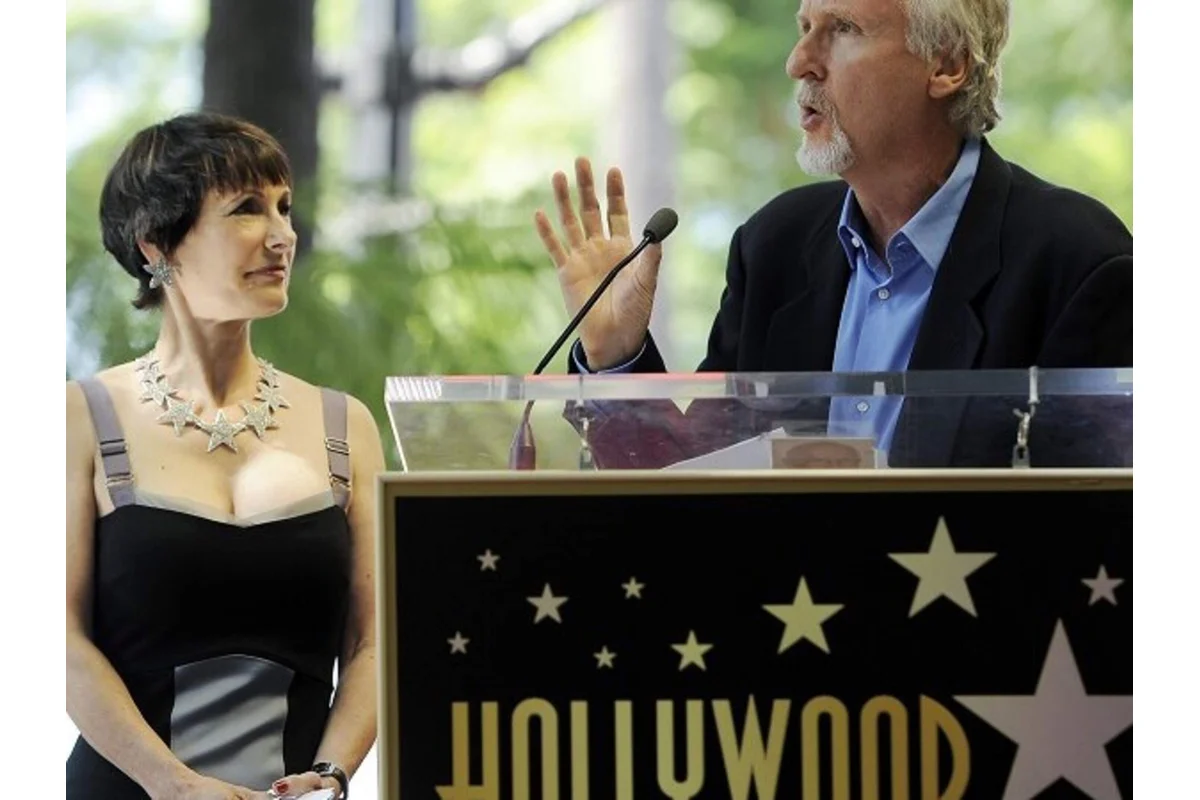
Breaking Even: High Costs Cast a Shadow
Though it seems unusual to question a property generating over a billion dollars, Cameron described his Avatar films to GQ in 2022 as
“the worst business case in movie history,”
due to their break-even points hovering around $1.5 billion. While Fire and Ash is close to this benchmark, it may rely on additional revenue streams like Disney+ and theme park visits to recoup costs. The Pandora experience at Walt Disney World in Florida is a key part of Disney’s strategy to capitalize on the franchise beyond theaters.
“It’s one thing to say, ‘This was profitable, not massively so, but the property benefits us in other ways, especially theme parks,”
says Stephen Galloway, dean of Chapman University’s film school.
“It’s another to say, ‘We’re going to invest another $500 million twice,’ if you’re on this downward trajectory.”
The Cost Factor: Can Disney Afford More James Cameron Extravagance?
Reducing production expenses appears to be the most obvious solution to sustain the series. Galloway added,
“I imagine Disney is doing a lot to put the brakes on budgets — and that may eventually lead to a breaking point.”
Cameron’s reputation for costly filmmaking is well known; all of his projects, from Terminator and Titanic to every Avatar film, set new records for expense when they were made.
Despite those overruns, Cameron has become a recognized brand in Hollywood, the only director with four consecutive billion-dollar hits, including three surpassing $2 billion. While delays and budget excesses are common in his work, his deep understanding of cinematic spectacle keeps audiences coming to theaters, fostering the view that betting against Cameron is risky in the film exhibition world.
Audience Fatigue and Storyline Concerns Weighing on Third Installment
One reason cited for the sharp decline in box office momentum for Fire and Ash is that viewers tend to be attracted more by the films’ visual effects than their narratives. The third film lost the number one spot after its fifth weekend, whereas the first two movies remained atop for seven consecutive weekends each, accumulating $2.9 billion and $2.3 billion respectively. Criticism has focused on the 3-hour 17-minute runtime feeling repetitive and too similar to the second movie, without fresh technological innovations to elevate the experience further.
Additionally, analysts point to the short three-year gap between the second and third films as a factor in the diminishing enthusiasm. The long wait—over a decade—between the original Avatar and its sequel helped build anticipation that Fire and Ash lacked.
Alicia Reese, an analyst at Wedbush Securities, acknowledged the franchise’s strong fanbase but noted,
“However, there wasn’t anything spectacularly different from the technology or storyline. If you saw the second and were pleased, you may have gone to see the third. But you might have heard from others that it wasn’t as necessary.”
Comparison to Other Disney Franchises Highlights Profitability Challenges
In 2025, Disney also released two other billion-dollar hits, Lilo & Stitch and Zootopia 2, which outperformed Fire and Ash in profitability due to much lower production costs of $100 million and $150 million respectively. These family-friendly franchises also generate significant revenue through consumer products, enhancing their overall financial success. For example, the Lilo & Stitch franchise had retail sales exceeding $2.4 billion in 2024 alone, just before its theatrical remake.
Reese remarked on the differences, stating,
“’Avatar’ is not a children’s property, so Disney isn’t going to have quite as much in the way of consumer products,”
adding,
“And it doesn’t need the franchise to continue to benefit from the experiences side.”
Future Outlook: Creative Innovation Essential to Revive Franchise Appeal
Given Cameron’s track record and influence, Hollywood is unlikely to refuse further Avatar projects. However, cost-cutting may be unrealistic because the extensive visual effects process is inherently expensive. Industry experts suggest that revitalizing the franchise will depend on Cameron finding a new creative direction for the Na’vi people and their world to reverse declining commercial interest.
Reese expressed optimism about the potential, saying,
“If Cameron can build upon the story, the fourth is going to be spectacular,”
and reminded,
“And he is certainly capable of this. Look at ‘Titanic.’ Look at ‘Terminator.’”
