
The landscape of DC films and television has shifted dramatically in recent years. Following the end of the DCEU timeline, many projects developed before James Gunn’s tenure at DC Studios were shelved. Among them was a Zatanna movie, for which Emerald Fennell was hired to write the screenplay prior to the official start of DC Studios’ new chapter. Discussing this on the Happy, Sad, Confused podcast, Fennell described the script as “demented,” linking its tone to her personal state at the time.
“I think it was demented because I was probably going through it at the time. [laughs]” – Emerald Fennell, Filmmaker
A Deeply Personal and Unconventional Take on a Superhero Story
Fennell, known for her work on Promising Young Woman and Wuthering Heights, explained that the Zatanna screenplay represented her attempt to connect emotionally with the superhero genre. She framed the character as a woman undergoing a nervous breakdown, aiming for a version of a superhero story rooted in personal turmoil rather than traditional genre conventions.
“I think the thing I’ve learned now and then, I [had] just finished Promising Young Woman, and there was this huge thing in this world that I’d never operated in.”
“It was a kind of superhero movie, and I was like, ‘Okay, how do I make the version of a superhero movie that I would connect to emotionally,’ which is sort of the woman in the middle of a nervous breakdown.”
Fennell acknowledged that this approach perhaps distanced the script from typical superhero fare, noting it might have been
“too far away from the genre”
for what was expected.
“A script reflective of a woman in the middle of a nervous breakdown, I would say. And in terms of what that means, well, I suppose it just meant that it was probably too far away from maybe a little too far away from the genre.”
Struggles with Meeting Expectations and Moving On
When asked if her personal connection to the material might have complicated the project, Fennell admitted uncertainty. She also revealed her hesitation to revisit the script, as well as the pressure she felt from working with J.J. Abrams, who was executive producing the project.
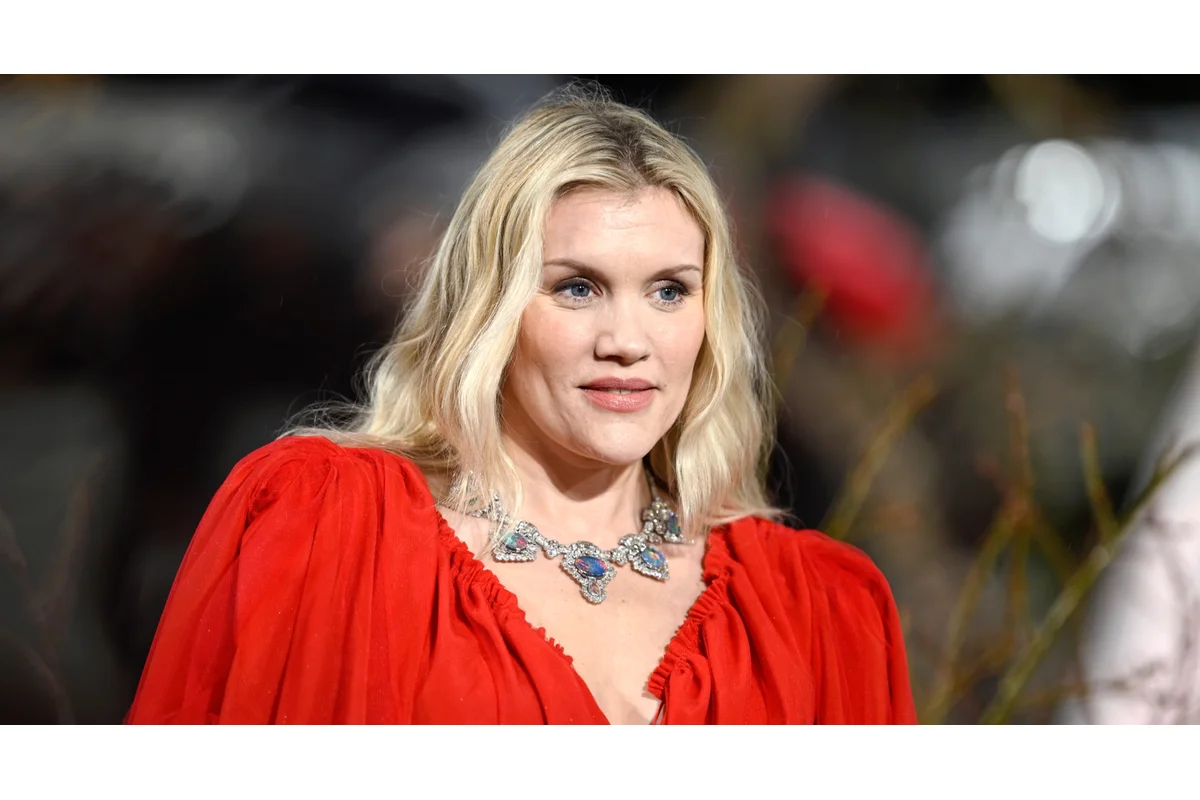
“Maybe. I haven’t read it for a really long time because I found it really difficult because also, the thing [is], I love J.J. [Abrams who was executive producing] and he took a chance on offering me to do it and I really wanted to deliver something amazing for them and I always felt like I hadn’t quite maybe delivered the thing that they wanted.”
Reflecting on her feelings about the screenplay now, Fennell expressed a hope she might be kinder to herself upon rereading it, though she maintained a level of self-critical distance about its reception and viability.
“I haven’t read it since, and I wonder if I read it now, I’d be more generous towards myself, but I felt like I wish I’d been able to deliver the thing that they wanted and I think they were really lovely about it. It’s just you’re making me remember scenes I’m like, ‘Oh nobody would have made that! Nobody would have made it.'”
Background on the Zatanna Project and DC’s Changing Vision
The Zatanna film was announced in 2021 under J.J. Abrams’ development of a Justice League Dark universe focused on the supernatural elements within DC Comics. This universe was envisioned to include properties like Constantine, with an HBO Max reboot of the latter also planned at the time. These projects aimed to expand DC’s presence into darker, mystical territories often unexplored in their mainstream superhero films.
Despite these intentions, the Zatanna film failed to progress into production, reportedly due to HBO Max’s decision to halt its distribution plans. However, the character remains a candidate to appear within James Gunn’s restructured DC Universe (DCU), which is embarking on Chapter 1: Gods and Monsters. This slate includes various films and television shows poised to reshape the brand, highlighted by the upcoming Supergirl movie due for release on June 26.
Context on the DC Universe and Its Evolution
The DC Universe, created by Malcolm Wheeler-Nicholson in 1935 as National Allied Publications, has long been a titan in comic book culture and entertainment. Competing heavily with Marvel, DC has built a sprawling multimedia empire including comic books, films, TV series, and video games. The most recent phase started in 2013 with Zack Snyder’s introduction of Henry Cavill’s Superman.
While early films in the DCEU experienced mixed critical and commercial results, the brand has recently undergone a soft reboot led by James Gunn and Peter Safran to unify and refresh its storytelling approach. This transition aims to offer new directions for legacy characters and introduce fresh narratives, including supernatural and mystical storylines linked to properties like Zatanna and Constantine.
Who Is Zatanna and What Does Her Story Entail?
Zatanna is a unique character within the DC Comics canon, known as a sorceress and former stage magician who is also a member of Justice League Dark. Initially promoted by J.J. Abrams, a live-action adaptation of the character was anticipated to bring her mix of magic and heroism to the screen. However, the film’s current status remains uncertain and stalled indefinitely.
The Future of Supernatural Elements in the New DC Universe
Despite the cancellation of Emerald Fennell’s Zatanna script, the character and the mystical realm she inhabits may still find a role in the future phases of the DCU. James Gunn’s vision for the upcoming Chapter 1 includes a broad slate of movies and shows aiming to expand the DC mythos and appeal to diverse fanbases. The evolution of DC’s approach to genre and character development will continue to unfold over the coming years, potentially revisiting supernatural narratives under new creative leadership.
