
Emerald Fennell’s new film adaptation, “Wuthering Heights,” premiered recently, presenting a highly stylized and unconventional retelling of Emily Brontë’s 1847 novel. The film notably includes quotation marks in its title, a deliberate choice by Fennell’s media team to indicate that this is not a traditional adaptation but a deeply personal and dreamlike evocation of memories from her own experiences reading the book as a teenager. Featuring Jacob Elordi as Heathcliff and Margot Robbie as Catherine, the film attempts to capture the doomed love story at its core, but reimagines it through a distinctly modern and provocative lens.
However, the way Fennell treats the original material has sparked significant criticism. Instead of reinterpreting the story’s themes with clear intent, the film often veers into what some perceive as a misreading or even a betrayal of Brontë’s work. The adaptation feels more like a fragmented performance seeking shock value rather than a faithful or insightful re-creation of the novel’s complex narrative.
Drastic Changes to Plot and Character Portrayal Stir Controversy
From the outset, Fennell’s version diverges sharply from the source novel. The film opens with a provocative scene involving a public hanging and onlookers laughing at a graphic feature of the hanged man—an event that has no parallel in the book and leaves many viewers bewildered. This jarring introduction signals the film’s willingness to depart from Brontë’s narrative conventions in favor of shock and spectacle.
One of the most debated alterations involves the casting of Jacob Elordi as Heathcliff. In Brontë’s novel, Heathcliff’s dark complexion is described as
“as dark almost as if it came from the devil,”
positioning him as a social outcast whose difference intensifies his bitterness and quest for revenge. While Fennell is not the first to cast a white actor in this role—past portrayals by Laurence Olivier and Ralph Fiennes have done the same—her decision removes a critical element of Heathcliff’s identity related to class and racial ambiguity. Fennell later explained she cast the Heathcliff she had imagined as a teenager, a choice that disregards the novel’s nuanced social commentary.
Despite these changes, the film retains the basic setup of Heathcliff being rescued by a farmer and raised alongside the farmer’s daughter, Catherine (played by Margot Robbie), and the housekeeper, Nelly (Hong Chau). Their toxic and obsessive relationship drives much of the plot, but Fennell centers this relationship far more than Brontë originally intended, transforming it into the film’s primary focus rather than a catalyst for the broader themes explored in the novel.
Romantic Tragedy Overshadowed by Stylized and Simplified Drama
Fennell expands the love story between Heathcliff and Catherine to overwhelming proportions, overshadowing the rest of the narrative. Where the novel uses their relationship as one-third of its structure and as a starting point for themes of vengeance, death, and social decay, the film truncates or removes substantial portions of the original story. Entire narrative arcs, including those involving the next generation of characters, are omitted or minimized, which undermines the story’s depth and the original novel’s message.
This transformation of the novel’s complex structure into a soap-opera style romance diverges from the source material but is not inherently flawed as an artistic choice. Adaptations have historically varied in faithfulness; for example, Damon Lindelof’s HBO series Watchmen departed extensively from Alan Moore’s graphic novel yet was praised for its fresh perspective. Similarly, the film uses quotation marks in its title to signal a conscious reinterpretation, attempting to prepare audiences for a different kind of story.
Yet Fennell’s intent appears less about providing a meaningful remix and more about indulging a romanticized teenage vision of the tale. The novel’s central issues of rigid class structures, death as an escape, and generational consequences are minimized or lost. Heathcliff’s character arc, once steeped in sociopathic rage and dark vengeance, becomes a portrayal of an immature “I can fix him” hero, undermining the darker tone and complexity Brontë crafted.
Not Just a Romance: The Loss of Brontë’s Dark Themes
Emily Brontë’s Wuthering Heights is often misunderstood as a simple romance, but its true core is far more complex, delving into themes of social hierarchy, revenge, and death. Fennell’s interpretation veers toward a glossy, modern love story reminiscent of works like Pride and Prejudice mixed with Fifty Shades of Grey, losing much of the grim and Gothic atmosphere that made the original novel unique.
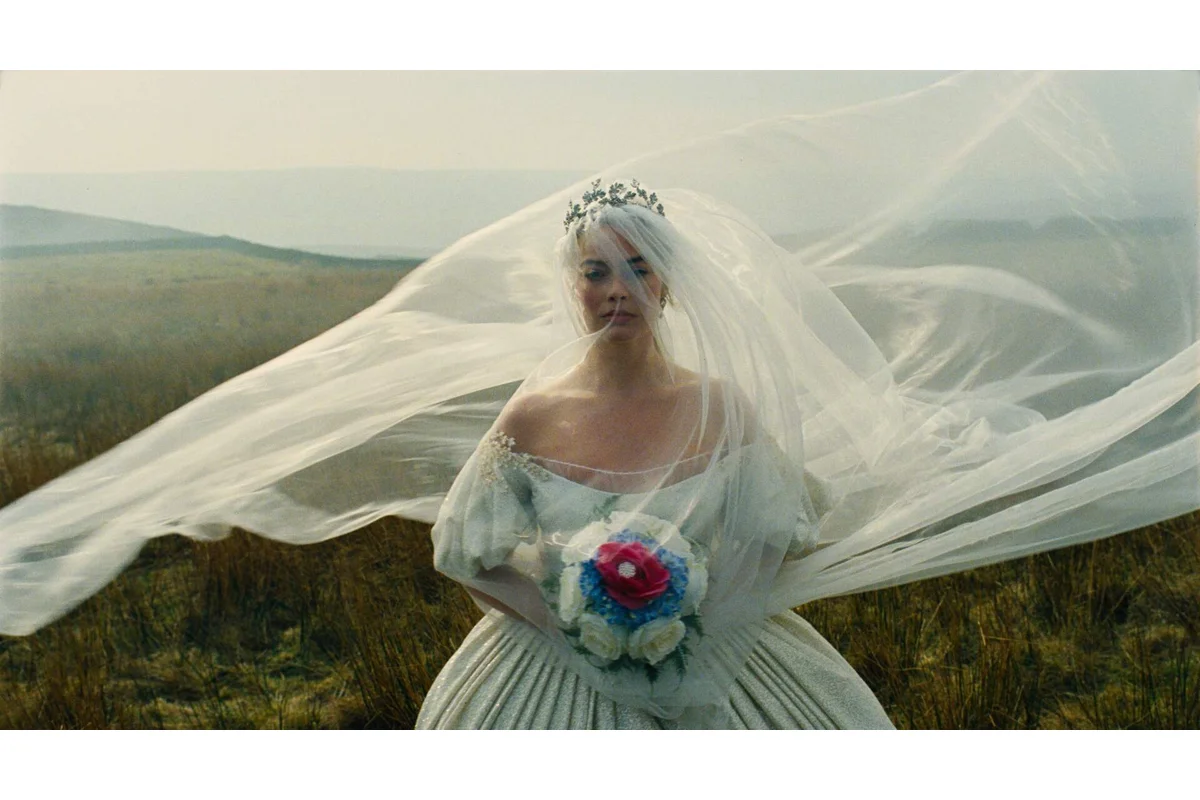
The film’s visual style also departs from traditional British settings, opting for costumes and production designs that recall the surreal and eclectic aesthetics of Tim Burton’s films. While visually striking, this stylistic choice contributes to the overall sense of camp and detachment from the setting and tone Brontë intended.
Fennell’s decision to focus on Heathcliff’s romantic appeal rather than his vengeance-driven personality dilutes the psychological complexity of the character. Where Brontë’s Heathcliff dreams of inflicting pain and lingers on violent fantasies, the film version becomes a brooding figure whose emotional turmoil is simplified into introverted passion.
The Film’s Impact and What Audiences Should Expect
Emerald Fennell’s “Wuthering Heights” challenges long-standing expectations of adaptation by breaking away from Emily Brontë’s original novel in startling ways. By focusing on a romanticized portrayal of youth and memory, the film reshapes a story of dark social commentary and existential despair into a stylized, emotional experience that some critics and fans view with disappointment and frustration.
This adaptation’s significance lies in its clear break from fidelity to the source material and its willingness to provoke debate about what it means to adapt classic literature. Fennell’s choices highlight the tension between honoring original themes and reinterpreting stories to reflect personal vision or contemporary sensibilities.
Going forward, audiences may find the film a polarizing artifact—appreciated by those open to experimental and subjective storytelling but distressing for purists seeking the depth and rigor of Brontë’s work. As with many modern remixes, the conversation sparked by Fennell’s “Wuthering Heights” may shape future creative approaches to adapting literary classics.
