
Emerald Fennell, director of Wuthering Heights, crafted a detailed mood board for her hair and makeup lead, Sian Miller, to capture the essence of Emily Brontë’s 1847 classic. The board included diverse imagery ranging from architecture and landscapes to fashion and photography, helping shape the film’s unique atmosphere. This creative foundation guided Miller’s work in bringing the tortured love story to life in a visually compelling way.
Cast and Plot Overview
Jacob Elordi stars as Heathcliff, while Margot Robbie takes on the role of Cathy in this adaptation. The story follows childhood friends whose relationship becomes a tragic saga of love and loss, driven by misunderstandings and fateful choices. Cathy breaks her ankle while watching Edgar Linton and his ward Isabella, which leads her to stay at Thrushcross Grange. Edgar soon falls deeply for her, and despite her love for Heathcliff, Cathy chooses to marry Edgar for a chance at a better life. Heathcliff overhears part of a conversation where Cathy tells her maid that marrying him “would degrade me,” misunderstanding this to mean rejection, and departs town. Cathy’s marriage to Edgar becomes loveless until Heathcliff returns, igniting turmoil once more.
Creating Character Through Hair and Makeup
Fennell’s detailed script enabled Miller to develop hairstyles and makeup that communicated the characters’ emotional journeys. Robbie underwent over 35 different hairstyles just for Cathy’s role. Among the many nicknames used for these styles were the quirky “Vagina braids” and “Jesus Elordi,” the latter referencing Jacob Elordi’s transformation as Heathcliff.
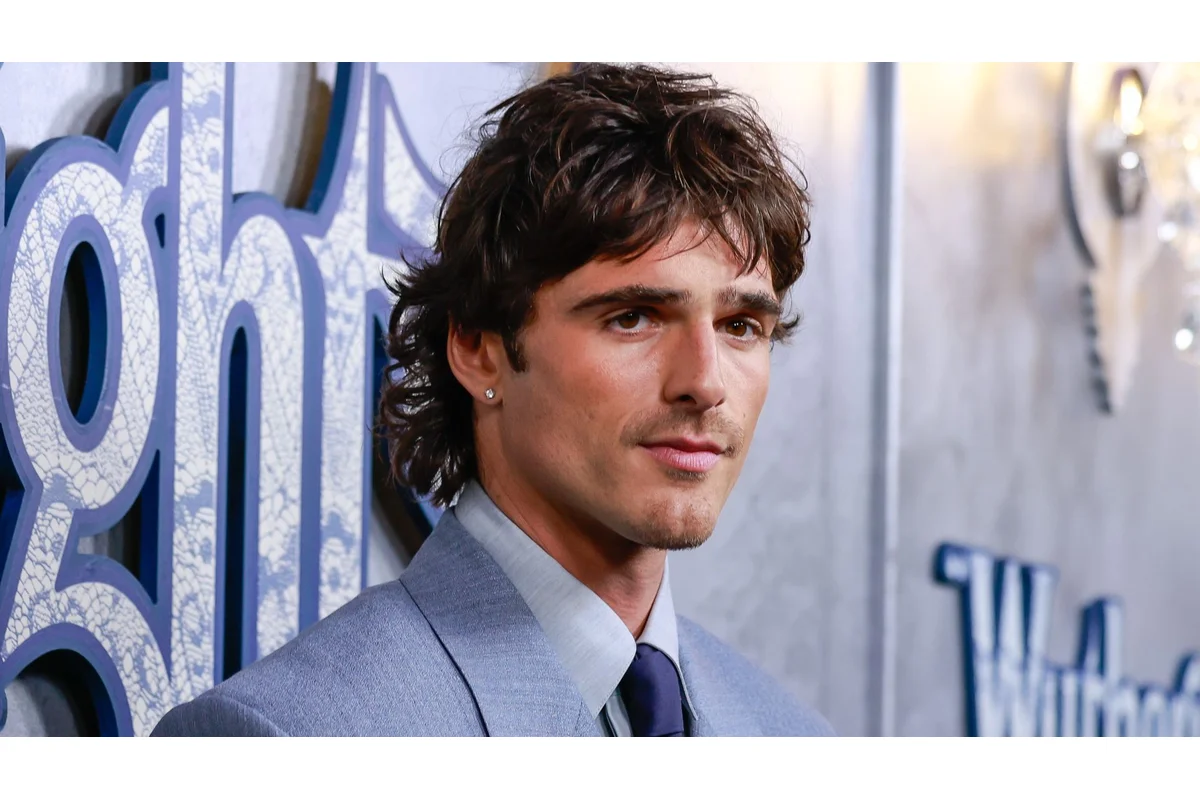
Jacob Elordi’s Physical Evolution as Heathcliff
As a boy, Heathcliff, played by Owen Cooper, appears dirty and neglected after being brought to Wuthering Heights. When Elordi took on the mature Heathcliff, Miller applied dirt and fake blood to emphasize the character’s rough upbringing. She explained,
“He’s grown up in the stables, and he should be unkempt. He’s going to hide slightly behind his hair.”
Over time, Elordi’s Heathcliff had two contrasting looks. Miller and Fennell jokingly called them “Jesus Elordi” for the scruffy, long-haired version, and “Darcy Elordi” for his polished gentleman persona. Miller asked Elordi to grow his hair and beard for the role, which he did, impressing everyone with his transformation.
“He comes back a couple of months later and he’s grown this amazing beard,”
Miller recalled.
“We went, ‘Wow! This is phenomenal! We’ve got to try and keep the beard.’”
Because filming did not follow chronological order, maintaining continuity was challenging. Miller had to convince Fennell that she could recreate Elordi’s beard with prosthetics for scenes requiring a consistent appearance. She learned advanced prosthetic techniques from artist Roberto Pastore and meticulously applied each hair for realism. To test its durability, Miller described a dramatic moment:
“Emerald, outside the studio at Elstree, got the effects guys to hose him with, I likened it to a water cannon with a Rolls-Royce engine,”
hoping the facial hair would stay intact throughout.
From Scruffy Orphan to Suave Gentleman
Upon Heathcliff’s return after five years, his character exudes newfound wealth and elegance, referred to as “Darcy Elordi” to evoke the refined style of Jane Austen’s Mr. Darcy. Miller highlighted,
“I thought I can just create that style for the Darcy look with him. [Jacob] has great hair to work with and the sideburns. We just knew it was going to suit him, and he would look amazing.”
Additionally, young Heathcliff had a missing tooth, so Miller collaborated with prosthetic dental expert Chris Lyons from Fangs Effects to create an 18-karat gold tooth that fit over Elordi’s natural tooth. This detail adds subtle symbolism, with Miller describing,
“When he sat around the table in the dining room, and he’s smoking the pipe and smiles, you just see that little sparkle.”
Innovative Hairstyles with Symbolic Meaning
One of the film’s more provocative hair choices was the “Vagina braid,” which was not included in the original script but came out of early conversations between Miller and Fennell. Miller worked alongside production designer Suzie Davies, who envisioned a fissure in Wuthering Heights shaped like a vagina, symbolizing the house’s decay. This metaphor extended to a Christmas scene where Isabella receives a pop-up book reminiscent of the same shape. Miller explained,
“I’d seen something reminiscent of this style in my search — this plait at the back of the head. I thought, ‘If I make it smaller and we dress the hair around it.’ We just called it a ‘Vagina plait.’ That’s what’s great about working with Emerald, you show her things, ‘Oh, vagina plait. Yes, I love that.’ And we gave the hairstyles names. We really spur each other on.”
Symbolism in Cathy’s Hairstyling
After Cathy’s injury and move to Thrushcross Grange, Miller needed to show the passage of time through her appearance. She describes Cathy’s new look as
“the softest, and it’s the most subtle,”
incorporating ribbons matching a rose dress to symbolize gentleness and transformation. When Cathy returns to the Grange after marrying Edgar, her ribbon-decorated room and matching wallpaper—complete with freckles, moles, and veins—illustrate her assimilation into this refined world.
In a chilling scene, Isabella presents Cathy with a doll featuring braids made from Cathy’s own hair, called a “corset braid” because of the way ribbons intertwine like a corset’s lacing. Miller described the impact:
“The look on Cathy’s face is disturbing, and so begins this endless round of dress up.”
Isabella’s doll similarly reflects her childlike and naïve personality, with wild, frizzy hair and quirky headdresses contrasting Cathy’s silky straight locks.
“The brief there was that she’s childlike, she’s naive, and Emerald wanted her to have this long, fabulous hair, but it had to be kind of frizzy. It had to be kind of wild,”
Miller said.
“It had to be adorned with these wonderful headdresses, but sort of in contrast to Cathy, who has the silky, straighter, long hair. she wanted to show [Isbaella] as this very doll-like kind of innocent girl, and quite kooky with the little glasses.”
As both women grow bored and restless, their hairstyles subtly reveal their emotional states. Miller noted,
“We can see that when [Cathy’s] sticking the finger in the fish in aspic. It’s all very wonderful, but it’s not where she wants to be. And so it was the hairstyles had to show that. It’s really about trying to show as many emotions and as many stages of the story arc as possible, and hair really sings out, and says so much about people and where they’re at and what’s going on.”
Natural Elements Reflected in Makeup
The vast Yorkshire Moors, the childhood playground of Cathy and Heathcliff, influenced subtle makeup details such as freckles and flushed cheeks. Miller worked with prosthetic designer Waldo Mason to scan actress Charlotte Mellington, who plays young Cathy, as well as Margot Robbie, to create custom masks. These enabled the seamless transfer of freckles, maintaining visual continuity from childhood through adulthood. Miller explained,
“They’re exposed to the elements, so they’ve got flushed cheeks. Little Cathy (Charlotte Mellington) has freckles, which we then see on the older Cathy.”
To ensure quick and reliable application during the demanding 51-day shoot, she used a durable makeup formulation from Skin Illustrator.
As Cathy spends more time indoors at Thrushcross Grange, the freckles fade, symbolizing her move away from her natural environment.
Cathy’s Sharp Transformation and Symbolic “Horns”
Heathcliff’s unexpected return marks a turning point, prompting Cathy to adopt a harsher look marked by victory rolls nicknamed “horns.” Miller described this style as an allusion to the ongoing cat-and-mouse dynamic between the two lovers, with Cathy seemingly taunting Heathcliff. The inspiration came from Vivien Leigh’s look in Gone with the Wind, reflecting Cathy’s darker emotional state as she spirals into turmoil.
Depicting Cathy’s Decline and Death
In Fennell’s version, Cathy dies from sepsis poisoning. Pregnant with Edgar’s child during her affair with Heathcliff, she claims the baby has died within her, after which her health rapidly deteriorates. Miller shared,
“Emerald said that she wanted the skin to look like wet concrete and to have that tone about it,”
describing Cathy’s increasingly bedridden state.
To portray sepsis accurately, the production consulted a medical advisor and based makeup effects on real-life references. Mason created decals to simulate the skin condition on her legs, which Miller and her team assembled carefully to maintain realism.
“Margot wouldn’t wash her hair for us, just letting it go in great contrast to everything that we’ve had before,”
Miller said, emphasizing the intentional unkemptness reflective of Cathy’s decline.
In an effort to save her, doctors apply leeches to Cathy’s body—these were fabricated by the art department. Miller added,
“There was an army of us sticking them in place,”
highlighting the detailed work that went into these scenes.
The Emotional Climax Between Heathcliff and Cathy
One of the film’s most poignant moments occurs when Heathcliff returns to Thrushcross Grange only to find Cathy dead. Miller paints the powerful contrast between the two:
“Heathcliff comes in and pulls the sheet back, and the contrast between his very livid face — because you can see the exasperation and the flush on his face, cheeks and the sheer desperation that upset everybody. He’s so alive. He’s never been more alive, and there she is, and it’s the polar opposite.”
This final scene captures the heart of the story’s tragic essence, emphasizing the profound divide between the living and the lost, the passionate and the defeated.
