
Jacob Elordi has recently faced heated criticism online regarding his press appearances during the promotion of Wuthering Heights. The focus of this backlash centers on the perception that Elordi presents himself with an overly serious, brooding demeanor. This debate around Jacob Elordi serious criticism gained traction after writer Isaac Grafstein published a viral video pointing out what he sees as Elordi’s self-stylization as a misunderstood artist, despite his celebrity status largely attributed to his looks.
Summary of Isaac Grafstein’s Views on Elordi
Isaac Grafstein critiques Elordi by suggesting that the actor’s fame is primarily because of his appearance rather than his depth, accusing him of adopting a pose of a “philosopher poet” who acts aloof from the entertainment industry. Grafstein’s video combines clips of Jacob speaking in various interviews alongside commentary that dismisses Elordi’s self-presentation as pretentious and calls for him to “touch some grass,” implying that he should become more grounded and less self-important.
Examining the Validity of the Critique
While the argument in Grafstein’s critique could be seen as flawed and somewhat hypocritical, it does open the door to a deeper examination of Jacob Elordi’s public image. The criticism touches on a familiar internet trope that mixes strong opinions with calls for humility. Despite the aggressive tone, it’s worth looking beyond the critique to understand Elordi’s career trajectory and commitment to his craft.
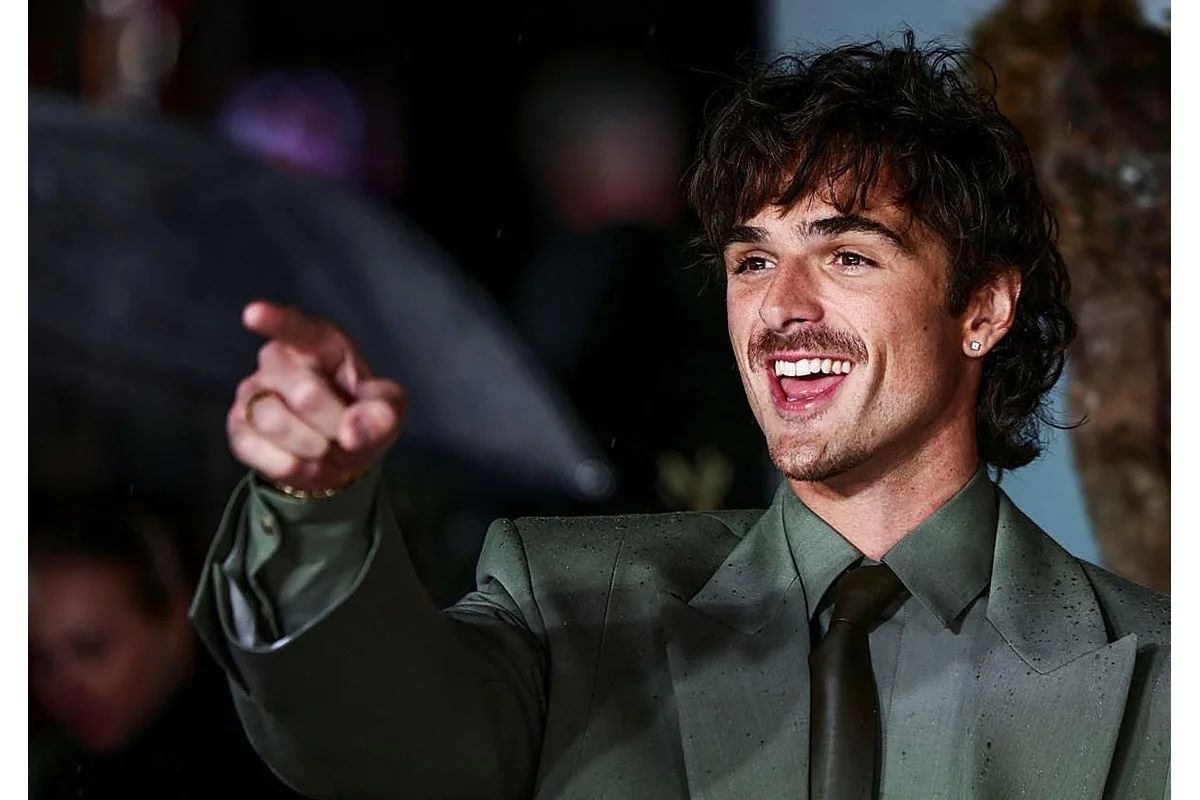
Jacob Elordi’s Growth and Skills as an Actor
Over the last decade, Elordi has demonstrated that his acting abilities extend far beyond surface-level appeal. His breakthrough role in Euphoria showcased a raw and intense performance, marked by a physicality that set him apart from many of his contemporaries. This role helped solidify him as a serious talent capable of handling complex and dark characters with authenticity.
Acting Range and Recognition
Following his success on Euphoria, Jacob has embraced a variety of roles that challenge his abilities and expand his range. His portrayal in Guillermo del Toro’s Frankenstein earned him an Oscar nomination, thanks to the humanity and emotional depth he infused into “the Creature.” This contrasted with more theatrical performances from his co-stars Oscar Isaac, Mia Goth, and Christoph Waltz, underlining Elordi’s unique approach to embodying roles sincerely.
Performance in Wuthering Heights Reflects Commitment
Elordi’s role in Wuthering Heights may not be his finest work yet, but it strongly conveys what makes him a respected actor today: a willingness to fully inhabit the character and serve the material faithfully. His interpretation of Heathcliff reveals a dark, passionate side, precisely the emotional intensity director Emerald Fennell aimed to capture. This performance highlights Elordi’s dedication to exploring different facets of his emotional and acting range.
Why Taking Acting Seriously Matters
Jacob’s seriousness about his roles is a virtue in an industry often saturated with actors who prioritize image over substance. Given the scarcity of young stars who truly commit to their craft, Elordi stands out as someone worth celebrating. Advocating for performers to care deeply about their art suggests a higher standard of talent, which benefits audiences and the industry alike. Arguing against this puts you in line with those satisfied with superficial celebrity culture.
Context Around Accusations of Sanctimoniousness
The core criticism of Elordi as “sanctimonious” comes under scrutiny when reviewing clips from his interviews. For example, he humorously told the Wall Street Journal that he became an actor to avoid being “locked away somewhere,” a comment delivered with a smile that indicates self-awareness. In another, he expressed to Vogue that “My dog is my hero,” a heartfelt statement that hardly fits the mold of being self-righteous or preachy. These examples suggest the sanctimonious label may not fully apply or might be exaggerated.
The Irony of Labeling Elordi Sanctimonious
Calling Jacob Elordi sanctimonious could itself be seen as hypocritical. According to Webster’s dictionary, “sanctimonious” means being hypocritically pious or holier-than-thou. If viewers are criticizing Elordi for caring too much about his work and persona, they must consider what they would prefer instead. Is it worse for an actor to overinvest emotionally and philosophically in their career or to show indifference and lack of genuine effort?
Open Invitation for Public Discussion
This exchange surrounding Jacob Elordi serious criticism highlights the complexities of celebrity and artistry in the digital age. Beyond the superficial judgments, it challenges audiences to consider the value of sincerity in public personas. Readers and fans are encouraged to share their perspectives on this discourse, contributing their own interpretations of how actors like Jacob should navigate fame and artistic identity.
“Jacob Elordi, please stop pretending you’re a philosopher-poet who’s above the industry and go touch some grass.” —@IsaacGrafstein pic.twitter.com/lUtbKTPZAb
— The Free Press (@TheFP) February 12, 2026
