Christoph Waltz Bio
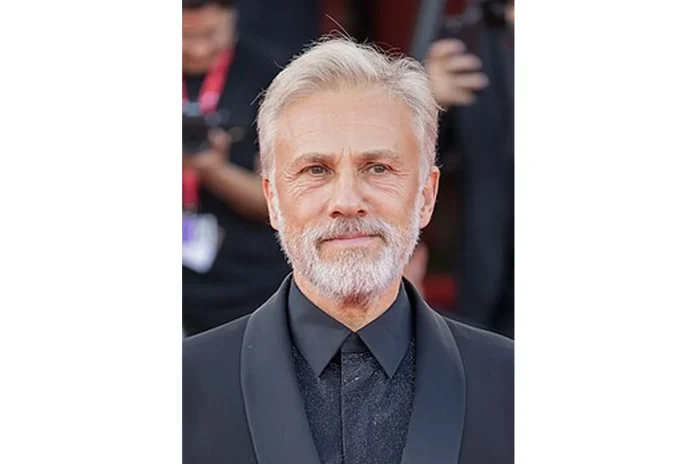
Christoph Waltz is an Austrian and German actor born on 4 October 1956 in Vienna, Austria. Primarily active in the United States, he has built a multifaceted career in European and American cinema, theatre, and television. Waltz gained international recognition for his portrayals of complex villainous and supporting characters in English-language films, earning two Academy Awards, two Golden Globe Awards, two BAFTA Awards, and two Screen Actors Guild Awards. His collaborations with director Quentin Tarantino stand as defining moments of his career, and he has expanded his work to include directing opera and feature films.
Early Life and Background
Christoph Waltz was born in Vienna to Johannes Waltz, a German set designer, and Elisabeth Urbancic, an Austrian costume designer of Austrian and Slovenian descent. He came from a family with deep theatrical roots: his maternal grandmother Maria Mayen was a Burgtheater and silent film actress, while his step-grandfather Emmerich Reimers and great-grandfather Georg Reimers were both stage actors who also appeared in silent films. His maternal grandfather Rudolf von Urban was a psychiatrist of Slovene descent and a student of Sigmund Freud.
Waltz’s father died when he was seven years old, and his mother later married composer and conductor Alexander Steinbrecher. Steinbrecher had previously been married to the mother of Austrian director Michael Haneke, making Waltz and Haneke share the same stepfather. As a youth, Waltz developed a passion for opera after seeing his first opera, Turandot starring Birgit Nilsson, at around the age of ten, and he would visit the opera twice a week as a teenager. He was uninterested in theatre at the time and originally wished to become an opera singer.
Path to Acting
After graduating from the Theresianum in Vienna, Waltz enrolled at the renowned Max Reinhardt Seminar to study acting. At the same time, he studied singing and opera at the University of Music and Performing Arts Vienna, although he eventually concluded that his voice was not good enough for an opera career. In the late 1970s, Waltz traveled to New York City, where he trained with acting teachers Lee Strasberg and Stella Adler. He studied script interpretation under Adler and has credited his analytical approach to her teaching.
On his return to Europe, Waltz worked as a stage actor, making his debut at the Schauspielhaus Zürich and performing in cities including Vienna, Salzburg, Cologne, and Hamburg. He became a prolific television actor throughout the 1980s and 1990s, and in 2000 made his directorial debut with the German television production Wenn man sich traut. His early screen work included a role in the 1990 British television series The Gravy Train opposite Ian Richardson, a story of intrigue set in the European Union offices in Brussels.
Christoph Waltz Career
Early Career (1977-2008)
Christoph Waltz began his professional acting career in 1977, working steadily in European theatre, television, and film for more than three decades before reaching global audiences. His stage debut came at the Schauspielhaus Zürich, and he built a respected career in German-language productions throughout Vienna, Salzburg, Cologne, and Hamburg. In television, he became a familiar presence in the 1980s and 1990s, taking on a range of supporting roles across European productions.
In 2000, Waltz expanded his creative work beyond acting by directing the German television production Wenn man sich traut, signaling his interest in storytelling from behind the camera. By 2007, he was narrating the German-language audiobook of Robert Sapolsky’s A Primate’s Memoir, titled Mein Leben als Pavian. Throughout this period, Waltz developed the technical foundation and patient craft that would later define his most celebrated performances.
Breakthrough (2009-2015)
Christoph Waltz’s international breakthrough arrived with Quentin Tarantino’s 2009 film Inglourious Basterds, in which he portrayed the multilingual SS-Standartenführer Hans Landa, nicknamed “The Jew Hunter.” Tarantino himself acknowledged that the role was so demanding that he feared it might be unplayable, yet Waltz’s performance was hailed by critics and audiences. The role earned him the Best Actor Award at the 2009 Cannes Film Festival and launched a sweep of critics’ awards, including Best Supporting Actor honors from the New York Film Critics Circle, the Boston Society of Film Critics, the Los Angeles Film Critics Association, the Golden Globes, the Screen Actors Guild Awards, and the BAFTAs.
The following year, Waltz won the Academy Award for Best Supporting Actor for his work in Inglourious Basterds, cementing his reputation in Hollywood. In 2011, he played gangster Benjamin Chudnofsky in The Green Hornet, starred opposite Reese Witherspoon in Water for Elephants, and appeared in Roman Polanski’s Carnage. He then reunited with Tarantino for Django Unchained in 2012, playing the German bounty hunter Dr. King Schultz in a role Tarantino wrote specifically for him. Waltz again won the Golden Globe, the BAFTA, and the Academy Award for Best Supporting Actor, becoming a two-time Oscar winner.
From 2013 to 2015, Waltz expanded his range through opera direction and additional film work. He directed a production of Der Rosenkavalier at the Vlaamse Opera in Antwerp and Ghent, served on the jury at the 2013 Cannes Film Festival, and joined the jury of the 64th Berlin International Film Festival. In 2014, he starred as Walter Keane in Tim Burton’s Big Eyes, and in 2015, he appeared as the iconic villain Ernst Stavro Blofeld in Spectre, the 24th James Bond film.
Continued Work (2016-2024)
In July 2016, Waltz portrayed the corrupt Belgian captain Captain Leon Rom in The Legend of Tarzan. The following year, he appeared in Tulip Fever and Downsizing, and in 2019 he starred in the action fantasy Alita: Battle Angel. Waltz also directed a production of the opera Falstaff at the Vlaamse Opera in Antwerp and Ghent. In 2018, he agreed to play the lead role in a film adaptation of the novel The Nazi and the Barber, describing the part of mass murderer Max Schulz as a juicy role.
In 2019, Waltz directed and starred in the crime film Georgetown, portraying a man suspected of murdering his wife to raise his social status. The film premiered at the 2019 Tribeca Film Festival and was released to cinemas on 14 May 2021. In 2020, he starred in the web series Most Dangerous Game, earning his first Primetime Emmy Award nomination. He reprised the role of Ernst Stavro Blofeld in the 2021 James Bond film No Time to Die and later starred in the Amazon Prime series The Consultant in 2023. On 17 October 2024, Waltz received an Icon award at the Newport Beach Film Festival in recognition of his career, and the festival opened with the premiere of Old Guy, starring Waltz.
Notable Works and Milestones
Waltz’s signature roles include Hans Landa in Inglourious Basterds and Dr. King Schultz in Django Unchained, both crafted by Quentin Tarantino. His career-defining moments include winning two Academy Awards for Best Supporting Actor, two Golden Globe Awards, two BAFTA Awards, two Screen Actors Guild Awards, and the Best Actor Award at the 2009 Cannes Film Festival. He has also expanded his artistic reach by directing opera productions and the feature film Georgetown.
Christoph Waltz Award Nominations
Christoph Waltz has earned multiple major award nominations throughout his career in film and television. His most prominent recognition includes two Academy Award wins for Best Supporting Actor, two Golden Globe Awards, two BAFTA Awards, two Screen Actors Guild Awards, and two Critics’ Choice Movie Awards. Waltz also received his first Primetime Emmy Award nomination for his performance in the 2020 web series Most Dangerous Game. In 2024, he was honored with an Icon award at the Newport Beach Film Festival in recognition of his career contributions.
Christoph Waltz Awards Won
Christoph Waltz has won two Academy Awards for Best Supporting Actor, both for collaborations with Quentin Tarantino. His first Oscar came for his portrayal of Hans Landa in Inglourious Basterds, and his second for playing Dr. King Schultz in Django Unchained. He also earned two Golden Globe Awards, two BAFTA Awards, two Screen Actors Guild Awards, two Critics’ Choice Movie Awards, and the Best Actor Award at the 2009 Cannes Film Festival.
Christoph Waltz Family
Christoph Waltz was born into a family with deep theatrical roots. His father, Johannes Waltz, was a German set designer, and his mother, Elisabeth Urbancic, was an Austrian costume designer. His maternal grandmother, Maria Mayen, was a Burgtheater and silent film actress, while his step-grandfather Emmerich Reimers and great-grandfather Georg Reimers were both stage actors who also appeared in silent films. After his father’s death, his mother married composer and conductor Alexander Steinbrecher, whose previous marriage connected Waltz to Austrian director Michael Haneke as a stepbrother.
Personal Life
Christoph Waltz holds dual Austrian and German citizenship and obtained American citizenship by naturalization in 2020, having lived in Los Angeles since 2010. He has three children with his former wife Jacqueline Rauch, a dance therapist originally from New York; the couple lived in London and their marriage lasted 17 years. Waltz later married German costume designer Judith Holste, with whom he has a daughter, and the family divides time between Berlin, Vienna, and Los Angeles.