
Robert Duvall, the acclaimed actor known for his unforgettable roles and dedication to his craft, died peacefully on Sunday at his home in Middleburg, Virginia, at age 95. His death marks the loss of an iconic figure in Hollywood whose versatility spanned decades and defined some of cinema’s most memorable characters.
The Robert Duvall actor obituary confirms that his passing was announced by his publicist and announced through a statement shared on Facebook by his wife, Luciana Duvall.
A Career Defined by Iconic and Varied Roles
Duvall’s acting career began in 1962 with his debut as Boo Radley, the reclusive neighbor in the film adaptation of To Kill a Mockingbird. Over the next six decades, he built a reputation as one of the most respected character actors in the industry. His tall, wiry frame and unconventional good looks made him a unique presence, often portraying complex and deeply human characters in both leading and supporting roles.
His breakthrough came with the 1972 release of The Godfather, directed by Francis Ford Coppola, who had previously worked with Duvall on The Rain People. Cast as Tom Hagen, the loyal and subtly powerful consigliere of the Corleone crime family, Duvall’s nuanced performance solidified his standing as a vital actor in Hollywood. The role, which he reprised in The Godfather Part II, showcased his talent for bringing quiet strength and complexity to the screen.
Film critic David Thomson praised this role, saying,
“Stars and Italians alike depend on his efficiency, his tidying up around their grand gestures, his being the perfect shortstop on a team of personality sluggers,”
and questioned,
“Was there ever a role better designed for its actor than that of Tom Hagen in both parts of ‘The Godfather?’”
Memorable Performances that Left a Lasting Impression
Besides his legendary role in The Godfather, Duvall’s portrayal of Lieutenant Colonel Bill Kilgore in Coppola’s Apocalypse Now remains one of the most iconic performances in cinema history. As Kilgore, Duvall embodied a chaotic and menacing military personality with chilling authenticity, delivering the unforgettable line:
“I love the smell of napalm in the morning. You know, one time we had a hill bombed, for 12 hours. When it was all over, I walked up. We didn’t find one of ‘em, not one stinkin’ dink body… The smell, you know that gasoline smell, the whole hill. Smelled like — victory.”
This role, like many others in Duvall’s career, required few takes as Coppola noted,
“Actors click into character at different times — the first week, third week. Bobby’s hot after one or two takes.”
Recognition and Awards Throughout His Life
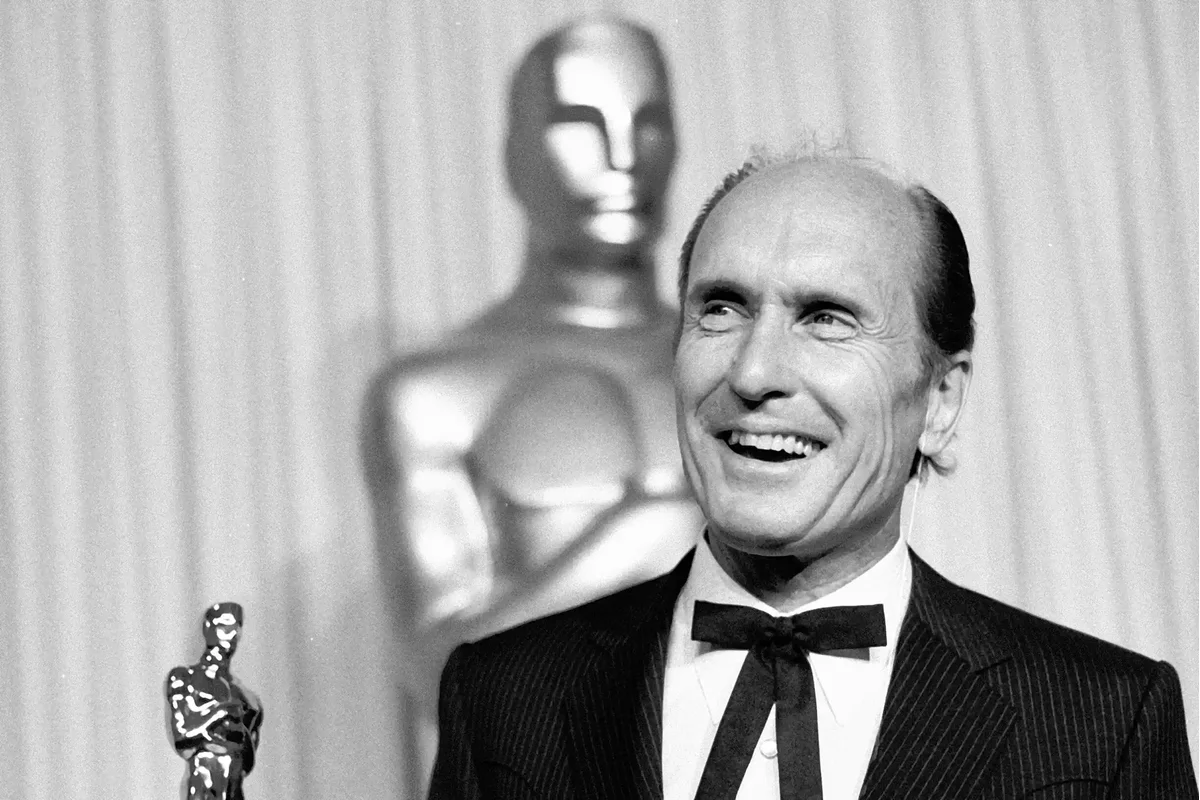
Robert Duvall earned seven Academy Award nominations throughout his career, finally winning the Oscar for Best Actor in 1984 for his lead role as Mac Sledge, a fading country singer, in Tender Mercies. He wore a cowboy tuxedo with a Western tie when accepting the award, symbolizing his connection to the role and the genre. He also received four Golden Globe awards, including one for his portrayal of a wise cattle-drive boss in the miniseries Lonesome Dove, a role he cherished deeply.
In 1998, Duvall received an Oscar nomination for The Apostle, a film he wrote, directed, produced, and starred in. The project was a labor of love that took 12 years of writing and considerable personal investment, centered on a flawed Southern evangelist who finds redemption.
His achievements were further acknowledged by the National Medal of Arts presented to him in 2005, celebrating his impact on American culture and cinema.
Notable Roles Beyond the Spotlight of Hollywood Hits
Throughout his career, Duvall portrayed a broad range of memorable characters. These include an outlaw ambushed by John Wayne in True Grit, Jesse James in The Great Northfield Minnesota Raid, the pious Frank Burns in M-A-S-H, the cynical TV executive in Network, the intellectual Dr. Watson in The Seven-Per-Cent Solution, and the severe patriarch in The Great Santini.
He remained active in later years, earning an Oscar nomination for his role in the 2014 film The Judge, in which he played a disgraced judge involved in a hit-and-run accident. His recent films included Widows and 12 Mighty Orphans, underscoring his continued passion and adaptability.
Reflecting on his longevity in acting, Duvall shared in 1990:
“When I was doing ‘Colors’ in 1988 with Sean Penn, someone asked me how I do it all these years, keep it fresh. Well, if you don’t overwork, have some hobbies, you can do it and stay hungry even if you’re not really hungry,”
revealing his approach to sustaining an enduring career.
A Childhood that Shaped a Unique Perspective
Robert Selden Duvall was born in 1931 and raised in the Navy communities of Annapolis and San Diego, Washington D.C., and other cities linked to his father’s naval career. His father, who became an admiral, influenced Duvall’s understanding of military discipline and personality, elements he later infused into roles like the volatile father figure in The Great Santini. He described his father as
“a gentleman but a seether, a stern, blustery guy, and away a lot of the time.”
Growing up, Duvall followed his mother’s artistic footsteps by learning guitar and performing, while also excelling as a wrestler, often beating older children. These early experiences enriched his performances, allowing him to bring authenticity to a wide range of characters.
His Intense Work Ethic and Collaborative Spirit
Colleagues noted Duvall’s meticulous research and quiet intensity before performing challenging scenes. Actor Michael Caine recalled,
“Before a big scene, Bobby just sits there, absolutely quiet; you know when not to talk to him.”
Despite his calm demeanor, Duvall was also known for a fierce temper on set, famously erupting during filming of True Grit after receiving direction he did not agree with.
Duvall’s refusal to participate in The Godfather Part III stemmed from a dispute over pay, which proved disappointing to fans and fellow actors alike. He publicly expressed frustration at being offered less than some co-stars, reflecting his commitment to fair recognition.
Enduring Impact and Legacy
Robert Duvall’s passing leaves a significant void in the world of film, where his talent for portraying deeply human, often morally complex characters set him apart. His career spanned more than 60 years, during which he shaped the art of screen acting, influencing both peers and audiences worldwide.
His distinct presence and dedication to truth in storytelling remain a benchmark for aspiring actors, ensuring that his legacy will continue to inspire new generations. Duvall’s work, from portraying a quiet consigliere to a troubled evangelist, highlights the range and depth that defined his remarkable journey through American cinema.
