
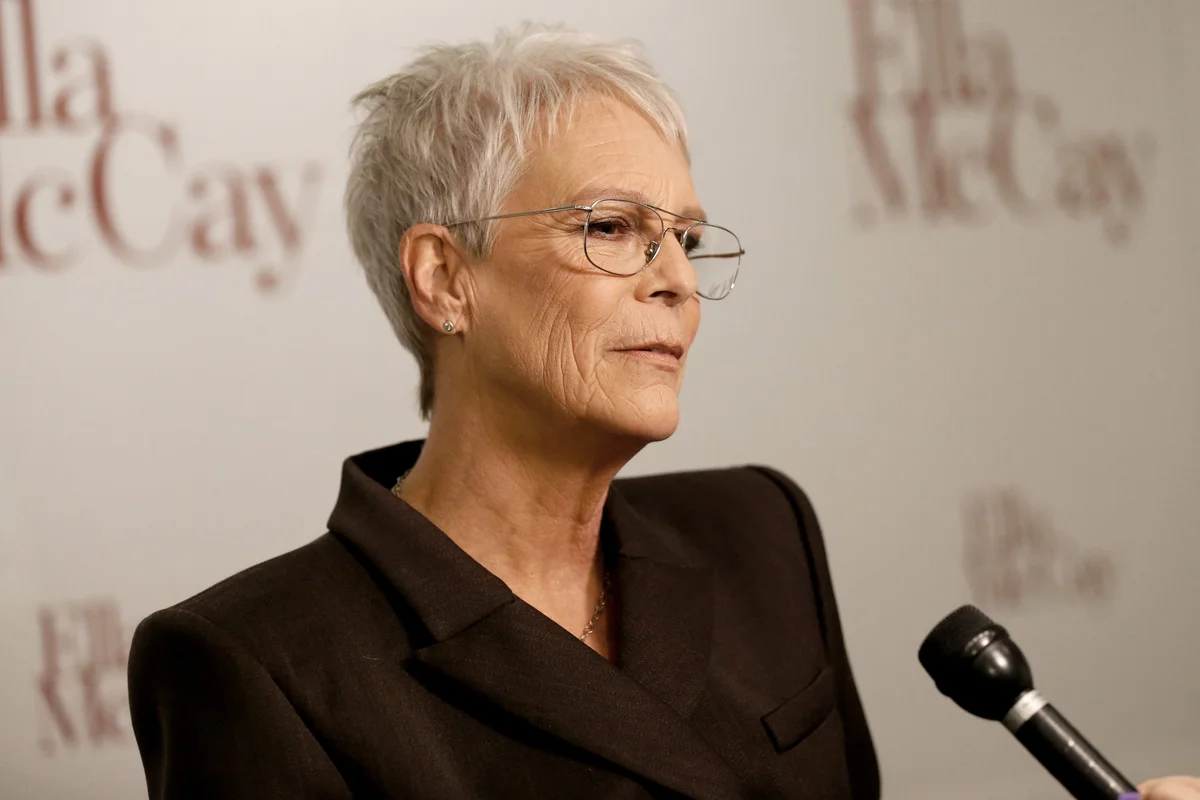
Actress Jamie Lee Curtis opened up about the difficulties child actors endure during a March 2 appearance on *Today with Jenna & Sheinelle*. Addressing the sensitive nature of the entertainment industry, Curtis highlighted the importance of providing child actors with a supportive and non-exploitative environment. The discussion emphasized Curtis’s commitment to creating a safe space for young talents amidst the transactional nature of show business.
Support from Lindsay Lohan Highlights Curtis’s Role as a Trustworthy Figure
Co-host Sheinelle Jones brought attention to actress Lindsay Lohan’s recent praise for Curtis, who played her mother in *Freaky Friday*. Lohan described Curtis as a reliable presence during her troubled adolescence, emphasizing the genuine care Curtis showed. Lohan told PEOPLE in July 2025,
“Jamie was with me at a time in my life when I was going through a lot publicly, She was privately really there for me.”
She added,
“I know I can trust her. And I can’t say that about a lot of people.”
This testimony underscores Curtis’s role as a protective figure for child actors facing public pressure.
Creating Genuine Connections in an Industry Defined by Transactions
During the interview, Curtis became emotional reflecting on the transactional reality of show business. She explained,
“You’re about to make me cry, which you guys do often in this building, you make me cry because what you’re touching on is very important,”
before adding,
“Show business is nothing but transaction.”
She expressed concern that children do not belong in such an environment, stating,
“There’s no place in a business for children, because it’s transactional. Children should be not transactional in your relationships.”
Curtis stressed that her approach to working with young actors involves being a “safe” and “home base” figure. She lets them know firmly,
“I do not want anything from you.”
This assurance aims to free children from feeling like they owe anything in an industry often driven by negotiations and deals.
The Value of Authentic Community Amid Personal and Professional Struggles
Jones reflected on Curtis as a comforting presence not only on set but also for viewers and fans. Curtis responded thoughtfully,
“Well, aren’t we supposed to be doing that with each other?”
Adding further,
“Isn’t that, in fact, why people in their houses right now turn on a television to bring you into their house, to bring me into it, so we can have something real that they can connect to? They’re not feeling like they’re watching something fake here. The reason why we care about you and Savannah [Guthrie] and your family here is because you’ve become a family.”
Without directly mentioning recent personal hardships of those involved, such as Jones’s loss of her husband, Uche Ojeh, or journalist Savannah Guthrie’s search for her missing mother, Nancy Guthrie, Curtis acknowledged the contagious nature of shared human experience. She said,
“For me, I know about your life, and we don’t know each other, and yet, I’m a human being. I’m aware and awake enough to know you’re navigating your life, you’re navigating yours, I’m navigating mine. In a way we’re doing all of it together, which is the community. Show business can be really beautiful is the community you can build.”
Recognition of Curtis’s Humanity and Generosity
Co-host Jenna Bush Hager praised Curtis’s demeanor, highlighting her kindness and generosity of spirit. Curtis responded modestly,
“It’s just being human, guys. It’s just being human.”
This humility reflects Curtis’s grounded approach to her career and relationships within the highly pressurized entertainment world.
Impact and Continuing Importance of Support for Child Actors
Jamie Lee Curtis’s emphasis on treating child actors with care and authenticity speaks to the broader challenges young performers face in the entertainment industry. Her efforts to create a protective environment for children, coupled with endorsements from peers like Lindsay Lohan, serve as a model for how Hollywood can foster healthier experiences for its youngest talents. This stance encourages a shift toward valuing genuine human connections over transactional relationships, a change that may influence how future productions handle the care of child actors.
