
Harrison Ford, at 80 years old, revisited his landmark role in the Indiana Jones franchise’s fifth and final installment released in 2023, underscoring his enduring impact on Hollywood. Known for defining characters such as Han Solo and Rick Deckard, Ford shared insights about rebooting his legacy during a recent conversation with actor Zach Braff, highlighting the ongoing appeal of returning to familiar stories and characters.
During the call, Ford candidly answered,
“Somebody once asked me if I was going to make every movie I ever made over again,”
and added, “I said, Sure, why not?” Ford’s willingness to embrace the idea of renewal reveals his openness to revisiting past successes, showing both humility and a readiness to engage with evolving audiences. His discussion with Braff, who is preparing to revive his own hit medical sitcom Scrubs after 16 years, centered on themes of legacy and reinvention in their careers.
Shared Experiences: Zach Braff’s Revival of Scrubs and Ford’s Career Insights
Zach Braff, who worked alongside Ford on Apple TV’s Shrinking, is embarking on a significant return to television with the Scrubs revival, where his character, J.D. Dorian, now serves as Chief of Medicine rather than an intern. Braff explained the revival’s concept, stating,
“It went on for nine years, and we were the students,”
and the new series explores the perspective of being the teachers. This dynamic mirrors Ford’s own reflections on career longevity and revisiting defining creative moments.
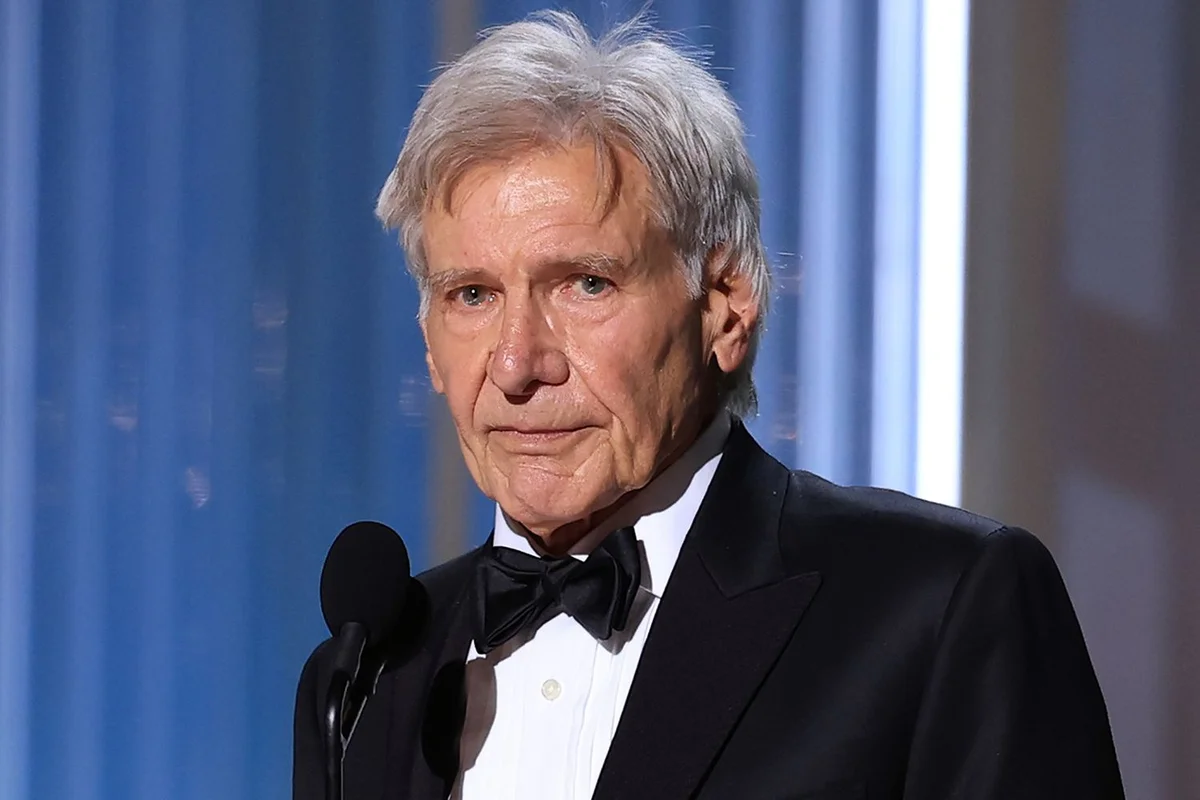
The conversation revealed the camaraderie between the two actors, with Ford humorously lamenting feeling “unsupported” without his own emotional support animal, as Braff’s pit bull sat nearby. Their dialogue illuminated how both have navigated evolving stages in their careers while maintaining creative energy and enthusiasm for their craft.
On Directing, Collaboration, and Craft
Ford and Braff also discussed their working relationship, emphasizing mutual respect and trust. Ford expressed admiration for Braff’s directorial skills, commenting,
“But as I said, densely funny, and that’s something I’ve noticed about you. You really never fucking give up, do you? You just pack it in and pack it in, as far as character and comedy. And now I’m scared to be directed by you again, because you’re too fucking good.”
Braff conveyed his approach to directing actors he admires, including legends such as Morgan Freeman and Michael Caine, by striving to connect as a fellow actor rather than being daunted by stature. He said,
“The last thing this person wants me to do is come in like, Oh my god, I can’t believe it’s you!”
This dynamic fosters a natural and open environment during filming, which both find conducive to authentic performances.
Ford reflected on how ensemble casts create strong bonds that allow actors to perform without fear, describing their group as a “tribe” united by shared goals and experiences. This supportive environment, he noted, encourages spontaneity and emotional honesty in their performances.
The Impact of Writing and the Magic of Improvisation
Discussing their projects’ success, the pair highlighted the importance of solid writing and embracing unplanned moments. Braff mentioned a scene in Shrinking where Ford improvised a hilarious line, and their mutual showrunner Bill Lawrence welcomed such spontaneous creativity. Ford echoed this admiration for unexpected bits, recounting a humorous memory from Scrubs where Braff’s character accidentally falls asleep, an improvised moment that lifted the scene’s realism and humor.
Together, they agreed that excellent writing is the foundation of any project, with Braff emphasizing,
“No matter what you’re doing or what scale it is, if you’re sitting there on the day and it isn’t working, it’s not going to work in the edit room. Everything comes down to the writing.”
Their mutual respect for Lawrence’s keen eye and meticulous editing underscored how precise adjustments can amplify comedic timing and emotional resonance.
Reflecting on the Legacy of Great Directors and Storytelling
Ford shared his memories of working with legendary directors like Alan J. Pakula, Sydney Pollack, and Mike Nichols, noting how their literary and intellectual approach distinguished them. He observed that these filmmakers crafted stories that explored human behavior and societal themes beyond mere action or entertainment. Ford explained,
“They were also reflecting a zeitgeist and amplifying it and resonating with it and even participating in it. And that’s what brought culture together in a way that I think helped organize us into positive contemplations of things.”
This reflection illuminated Ford’s appreciation for storytelling as a tool for cultural connection and understanding, contrasting with more visceral or spectacle-driven filmmaking. It also revealed his thoughtful perspective on the evolving nature of film and television narratives.
The Privilege of Ongoing Work and Creative Freedom
Ford conveyed gratitude for still working in his eighth decade, proudly describing himself as
“a working actor just like everybody else”
despite his legendary status. This self-view allows him to stay engaged with the craft on a daily basis, plunging into new roles without burden. Ford said, “It feels freeing.” He also praised the creative latitude afforded by episodic TV, where stories don’t always require a happy ending because the narrative continues week after week.
Braff echoed this sense of privilege, highlighting the meaningfulness of their work to audiences. Ford shared an anecdote about a fan at an airport who told him,
“I’m going to get you, man. You did it to me again.”
When asked what he meant, the fan replied,
“Made me cry in front of my wife.”
This response contrasts with Ford’s action-packed, stunt-heavy past roles, showing how his recent work touches viewers on a deeper emotional level.
Creative Passion and Emotional Connection Drive Their Work
Both actors spoke about how their shows blend humor with vulnerability, creating a balance that resonates powerfully with viewers. Braff noted that Shrinking and Scrubs
“catch you off guard with the humor and then your vulnerabilities are open,”
producing an emotional “magic trick” that can bring tears unexpectedly—
“just as it does in life.”
Ford called their experiences “lucky,” appreciating that they continue to engage audiences meaningfully. Braff affirmed feeling fortunate to collaborate with colleagues he loves while contributing to work that has the potential to make a difference.
Legacy, Identity, and the Joy of Returning to Familiar Stories
Ford acknowledged the complicated nature of legacy, referring to it as a “plague” but also reveling in the chance to reset perceptions through current work. On Shrinking, he is not treated as a legend but simply as a working actor, an experience he finds joyful and rejuvenating. When asked about the last time he felt this grounded, Ford admitted it is a continuous challenge to “trick” himself into that mindset, but it remains vital to his approach.
Braff praised Ford’s recent performances as some of his best work, attributing this to the actor’s freedom from genre constraints and the strong scripts they collaborate with. Ford agreed, recognizing the collaborative nature of television production and the strength of well-written material as central to their success.
Mutual Admiration and Forward Momentum
The conversation concluded with warm acknowledgments of their connection and shared enthusiasm. Braff expressed appreciation that Ford engaged with Scrubs despite it being outside his usual radar, noting the unique creativity of showrunner Bill Lawrence early in his career. Ford applauded Lawrence’s remarkable skill, calling him unmatched at diagnosing storytelling issues down to the frame level, which ultimately creates precise comedic timing that lands perfectly with audiences.
The two parted with a lighthearted farewell, underscoring the friendship and professional respect fueling their ongoing work. Their discussion encapsulated the resilience, passion, and adaptability required to navigate Hollywood across decades, while embracing the challenge and joy of rebooting legacy for contemporary viewers.
