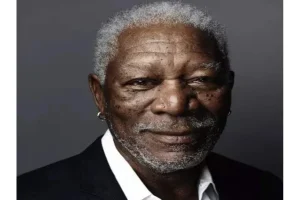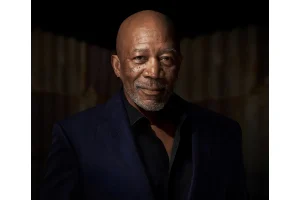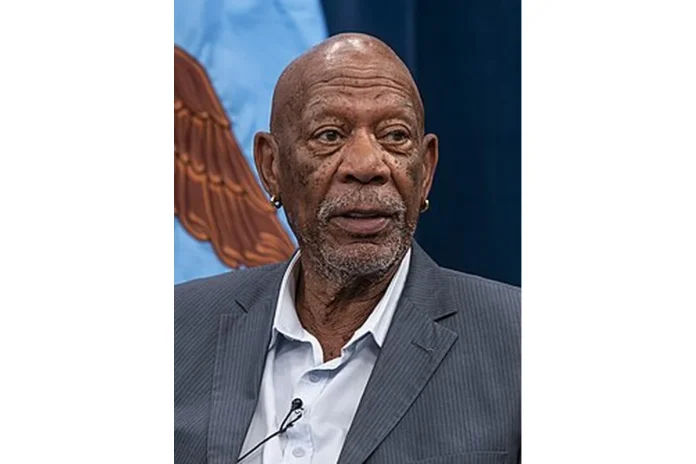
Morgan Freeman Bio
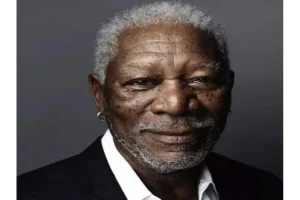
Morgan Freeman (born June 1, 1937) is an American actor, producer, and narrator whose distinctive voice and commanding screen presence have made him one of the most recognizable figures in modern cinema. With a career that began in 1964 and has continued for more than six decades, Freeman has earned an Academy Award, a Golden Globe Award, a Screen Actors Guild Award, and a Kennedy Center Honor, among other distinctions. He is known for thoughtful performances in films that often explore themes of race, resilience, and humanity, and he is frequently sought for documentary narration because of his authoritative delivery.
Beyond acting, Freeman co-founded the production company Revelations Entertainment with Lori McCreary in 1996 and made his directorial debut with the 1993 drama Bopha!. In a 2022 readers’ poll by Empire, he was voted one of the 50 greatest actors of all time. He has also received the AFI Life Achievement Award, the Cecil B. DeMille Award, and the Screen Actors Guild Life Achievement Award, cementing his standing as a defining talent of his generation.
Early Life and Background
Morgan Freeman was born on June 1, 1937, in Memphis, Tennessee. He is the son of Mamie Edna Revere, a teacher, and Morgan Porterfield Freeman, a barber who died of cirrhosis in 1961. He has three older siblings. Some of Freeman’s great-great-grandparents were enslaved people who relocated from North Carolina to Mississippi, and DNA research has traced his African ancestry largely to the Congo-Angola region and the area spanning present-day Senegal to Liberia.
As an infant, Freeman was sent to his paternal grandmother in Charleston, Mississippi, and he moved frequently during his childhood, living in Greenwood, Mississippi; Gary, Indiana; and Chicago. He made his acting debut at the age of nine, playing the lead role in a school play, and at 12 he won a statewide drama competition, an early sign of his commitment to performance. Freeman attended Broad Street High School in Greenwood, Mississippi, and graduated in 1955. While in school, he discovered music and theater, but at the age of 16 he contracted pneumonia, an experience that briefly interrupted his growing focus on the stage.
Path to Acting
After high school, Freeman turned down a partial drama scholarship from Jackson State University and enlisted in the United States Air Force, where he served as an Automatic Tracking Radar repairman and rose to the rank of airman first class from 1955 to 1959. Following his military service, he moved to Los Angeles and began formal training, taking acting classes at the Pasadena Playhouse and studying theater arts at Los Angeles City College, where a teacher encouraged him to explore movement and dance.
He began his professional career in stage productions and rose to fame in the 1970s for his role in the children’s television series The Electric Company. Freeman earned an Obie Award for his work in the Shakespearean plays Coriolanus and Julius Caesar, and in 1978 he received a Tony Award nomination for Best Featured Actor in a Play for his role as Zeke in the Richard Wesley play The Mighty Gents. These early theater and television experiences established him as a versatile performer prepared for a transition to film.
Morgan Freeman Career
Early Career (1964-1988)
Freeman has been prolific in film since 1964, working across drama, historical epics, thrillers, action, science fiction, and comedy. In the mid-1980s, he built his reputation with the stage role of Hoke Colburn in Driving Miss Daisy, a performance he would carry into the 1989 film adaptation, and he earned additional Obie Awards for his work in Mother Courage and Her Children (1980) and the stage run of Driving Miss Daisy (1987-90).
His early film work laid the foundation for his breakthrough, and his disciplined theater training gave him the craft to move easily between Broadway, regional productions, and Hollywood features. By the end of the 1980s, Freeman was widely respected as a character actor with rare range.
Breakthrough (1989-2004)
Freeman’s Hollywood breakthrough arrived in 1989 with four notable releases. He played Sergeant Major John Rawlins in Glory, a Civil War drama that won three Academy Awards. He then starred as chauffeur Hoke Colburn in Driving Miss Daisy, earning a Best Actor Academy Award nomination and winning the Golden Globe for Best Actor in a Motion Picture Drama. That same year, he portrayed a tough New Jersey principal in Lean on Me and a New Orleans police officer in Johnny Handsome. He went on to appear in Robin Hood: Prince of Thieves (1991), Clint Eastwood’s Oscar-winning Unforgiven (1992), and The Shawshank Redemption (1994), in which his portrayal of the wise, redeemed convict Red earned another Best Actor nomination and has remained a defining performance in American cinema.
Throughout the 1990s, Freeman continued to expand his range with films such as Se7en (1995), Amistad (1997), and Deep Impact (1998). He also founded Revelations Entertainment with Lori McCreary in 1996 and narrated the documentary The Long Way Home (1997). He made his directorial debut with Bopha! in 1993 and narrated Ken Burns’s The Civil War in 1990.
Continued Success (2005-2025)
Freeman reached the peak of his acclaim in 2005 with Clint Eastwood’s sports drama Million Dollar Baby, in which he played a former boxer. The role won him the Academy Award for Best Supporting Actor and the Screen Actors Guild Award for Outstanding Performance by a Male Actor in a Supporting Role. That same year, he began his run as Lucius Fox in Christopher Nolan’s Batman Begins, a part he would reprise in The Dark Knight (2008) and The Dark Knight Rises (2012). He also narrated the Academy Award-winning documentary March of the Penguins in 2005, further cementing his association with authoritative voice work.
He later starred in Wanted (2008), narrated and hosted the series Through the Wormhole (2010-2017), played Nelson Mandela in Eastwood’s Invictus (2009), and co-starred in the action hits Red (2010), Oblivion (2013), Now You See Me (2013), Lucy (2014), and The Lego Movie (2014). He narrated The Story of God with Morgan Freeman (2016-2019) and Our Universe (2022), and he returned to the heist franchise with Now You See Me: Now You Don’t, set for release in November 2025. Other notable credits include Gone Baby Gone (2007), The Bucket List (2007), and Olympus Has Fallen (2013).
Notable Works and Milestones
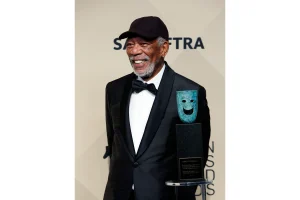
Freeman’s most acclaimed works include Driving Miss Daisy (1989), Glory (1989), The Shawshank Redemption (1994), Se7en (1995), Million Dollar Baby (2004), and Invictus (2009). His signature stage role as Hoke Colburn and his screen partnership with Clint Eastwood in Million Dollar Baby and Invictus stand as career-defining achievements. His 2018 Screen Actors Guild Life Achievement Award honored a body of work widely regarded as one of the most distinguished in American film history.
Morgan Freeman Award Nominations
Morgan Freeman has received five Academy Award nominations across his career, including Best Actor nods for Driving Miss Daisy (1989), The Shawshank Redemption (1994), and Invictus (2009), in addition to his Best Supporting Actor nomination for Street Smart (1987) and his win for Million Dollar Baby (2004). He has also been nominated for five Golden Globe Awards, three Screen Actors Guild Awards, and a Tony Award for Best Featured Actor in a Play for The Mighty Gents in 1978.
Morgan Freeman Awards Won
Freeman has won an Academy Award, a Golden Globe Award, a Screen Actors Guild Award, multiple Obie Awards, a Kennedy Center Honor (2008), an AFI Life Achievement Award (2011), a Golden Globe Cecil B. DeMille Award (2012), and a Screen Actors Guild Life Achievement Award (2018). He has also received an honorary Doctor of Arts and Letters degree from Delta State University (2006) and an honorary Doctor of Humane Letters degree from Boston University (2013), and he was awarded the Freedom of the City by the City of London in 2014.
Morgan Freeman Family
Morgan Freeman was the son of Morgan Porterfield Freeman, a barber who died in 1961, and Mamie Edna Revere, a teacher who died in 2000. He has three older siblings and is a descendant of formerly enslaved people who moved from North Carolina to Mississippi. Freeman has four children: Alfonso, Deena, Morgana, and Saifoulaye.
Personal Life
Freeman was married to Jeanette Adair Bradshaw from October 22, 1967, until November 18, 1979. He married Myrna Colley-Lee on June 16, 1984, and the couple separated in December 2007 before divorcing on September 15, 2010. He resides in Charleston, Mississippi, and maintains a home in New York City. He earned a private pilot’s license at the age of 65, owns a blues club called Ground Zero in Clarksdale, Mississippi, and turned his 124-acre ranch into a bee sanctuary in 2014.