
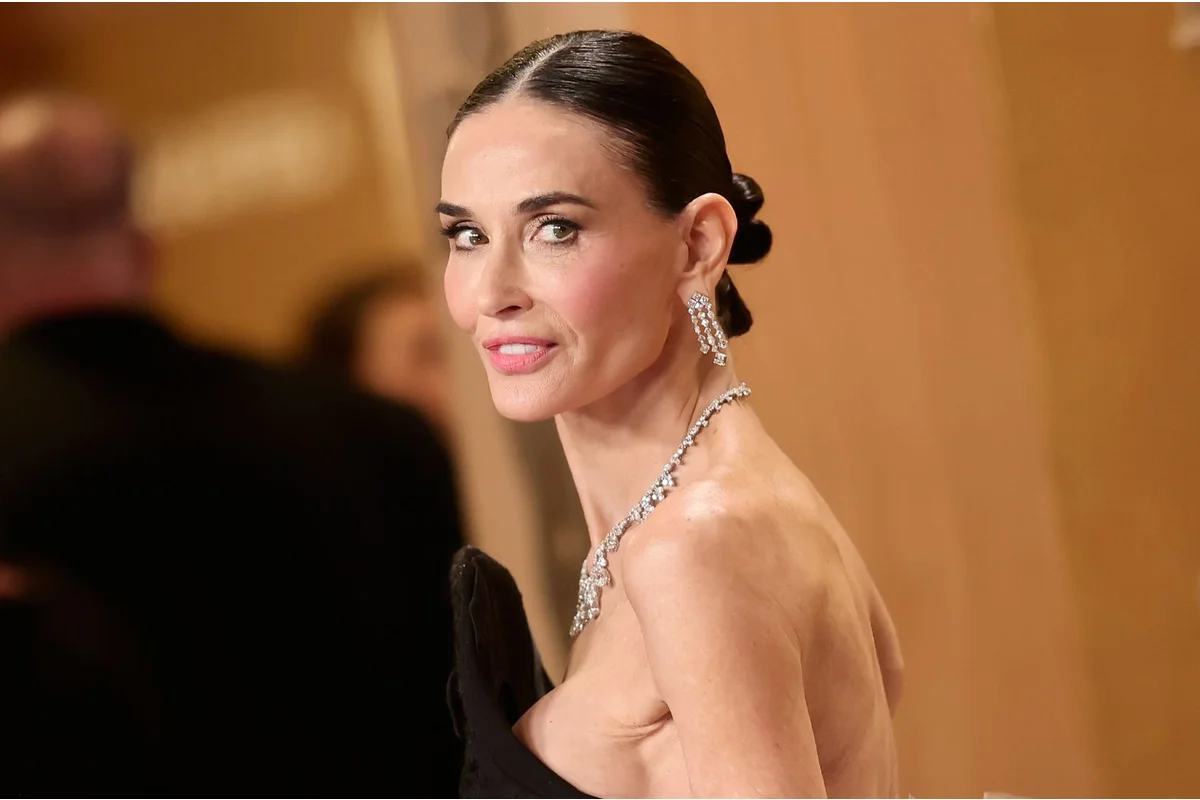
Demi Moore’s skeletal appearance at the recent SAG-AFTRA Actor Awards and Milan Fashion Week has ignited widespread concern about the dangerous trend of extreme thinness among celebrities. At 63, the actress’s gaunt look, marked by protruding collarbones and an unusually wide thigh gap, has drawn attention not only to her physical state but also to the broader cultural obsession with ultra-thin bodies in Hollywood.
This unsettling shift from red carpet fashion to exposed bones and sunken cheeks on prominent stars raises questions about the pressures celebrities face and the consequences of pursuing such unrealistic beauty standards with potential health risks.
Hollywood’s Obsession with Extreme Thinness Extends Beyond Demi Moore
The current wave of emaciated appearances among celebrities extends well beyond Demi Moore. Figures such as Emma Stone, with her notably concave abs at the BAFTA awards, and Robin Wright, seen displaying veiny arms, present a haunting image suggestive of underlying health struggles. This trend echoes the 1990s “heroin chic” look popularized by supermodel Kate Moss, who once infamously stated,
“Nothing tastes as good as skinny feels.”
Other high-profile personalities like Sharon and Kelly Osbourne have also sparked debates. At last month’s Brit Awards in London, both displayed dramatic weight loss and facial alterations that critics likened more to a Victorian freakshow than a modern family tribute. Their appearance overshadowed their heartfelt homage to the late Ozzy Osbourne, their father and the legendary Black Sabbath frontman, whose Lifetime Achievement Award was being honored.
The Influence of Cosmetic Procedures and New Weight-Loss Drugs
The rumors surrounding Demi Moore’s transformation include a reported $500,000 cosmetic overhaul along with suggestions of Ozempic use—a drug increasingly mentioned in connection with rapid weight loss among celebrities. Combined with surgeons willing to perform drastic procedures, these factors fuel the relentless pursuit of the taut, youthful appearance pervasive among stars.
Moore’s red carpet look of dramatic Schiaparelli couture emphasized her delicate frame and immaculately frozen facial expression, which critics note appears less a celebration of aging gracefully and more an attempt to push dangerously narrow standards of beauty.
Personal and Familial Ramifications Highlighted in Public Scrutiny
The public’s worry extends beyond general health concerns to the personal realm. As a mother to three daughters, including Tallulah Moore, who has openly acknowledged her battle with anorexia, Demi Moore’s choices resonate deeply. The example set by such a visible figure may influence vulnerable fans and family members alike.
Complimentary to this is the recent sighting of Oprah Winfrey at Paris Fashion Week, where the 72-year-old appeared frail and unsteady, needing support while walking the cobbled streets. Once celebrated for her joyful attitude towards food, Oprah’s now visibly diminished state adds to the growing catalogue of famous faces whose thinness prompts concern rather than admiration.
Celebrity Reactions and Public Backlash to Thin Appearances
Public discourse around these trends is often charged, marked by both sympathy and criticism. Kelly Osbourne addressed online backlash following the Brit Awards by sharing a comment that labeled her “tooooo thin and fragile” on Instagram, accompanied by her response:
“Public grief is not public property.”
Nevertheless, critics argue that those who choose to live in the public eye must accept scrutiny, especially when their images may promote unhealthy ideals among impressionable fans. Emma Stone and La Toya Jackson have similarly been described as “scarily thin” and “unhealthily thin,” respectively, underscoring how frailty in appearance has become a worrying norm in celebrity culture.
Wider Impact of the Pursuit of Thinness in Celebrity Culture
The resurgence of ultra-thin figures within the sphere of entertainment also ties into portrayals seen in popular productions like the global tour of Wicked, featuring Ariana Grande and Cynthia Erivo. These stars’ delicate frames inadvertently reinforce the notion that success and recognition come with increasingly smaller body sizes, a message that can be damaging when spread beyond fashion models to established film actors and musicians.
This phenomenon raises significant concerns about responsibility, as the entertainment industry’s influencers often establish standards that younger generations might dangerously emulate. The celebrity echo chamber, where few challenge extreme weight loss or drastic cosmetic alterations, perpetuates a culture that prizes shrinking bodies over health.
Urgent Need to Reevaluate Hollywood’s Beauty Ideals
As the public and medical experts grow more alarmed, the growing trend of skeletal looks among celebrities like Demi Moore highlights the urgent need for change in how beauty and aging are portrayed in media. The current fixation on extreme thinness is not only unhealthy but also unsustainable and sets a troubling precedent for fans and peers alike.
Hollywood’s continued promotion of these standards risks reinforcing self-destructive behaviors and overshadowing achievements by valuing appearance over talent. It is becoming increasingly clear that these dangerously thin images must be challenged to foster a more inclusive and healthy definition of beauty that respects natural aging and varying body types.
