
Charlize Theron, the Academy Award-winning actress and Dior Beauty Ambassador, has dedicated herself to addressing some of the most urgent issues affecting her homeland of South Africa. Through her Charlize Theron Africa Outreach Project (CTAOP), launched in 2007, she actively combats gender-based violence and supports marginalized communities amid a crisis where femicide rates are five times higher than the global average.
From Personal Experience to Public Advocacy
Cape Town, South Africa, encapsulates a striking contrast of wealth and poverty, where thriving universities and cultural hubs sit alongside sprawling slums and townships. This duality deeply informs Theron’s perspective and commitment. Having witnessed these inequalities firsthand, she created CTAOP to channel both her influence and passion into meaningful change. The initial focus was HIV and AIDS prevention, a major health crisis in South Africa, with the goal of empowering youth with information and support.
We wanted to do something that we really felt was needed, instead of getting in the way of what other people were already doing.
Building Leadership and Opportunities for Youth
CTAOP operates by partnering with existing local programs, identifying their needs, and enhancing their capabilities through added funding and support. One standout initiative is its scholarship program, supporting young women through university education. These women are carefully selected based on academic ability, leadership potential, and a demonstrated commitment to giving back to their communities.
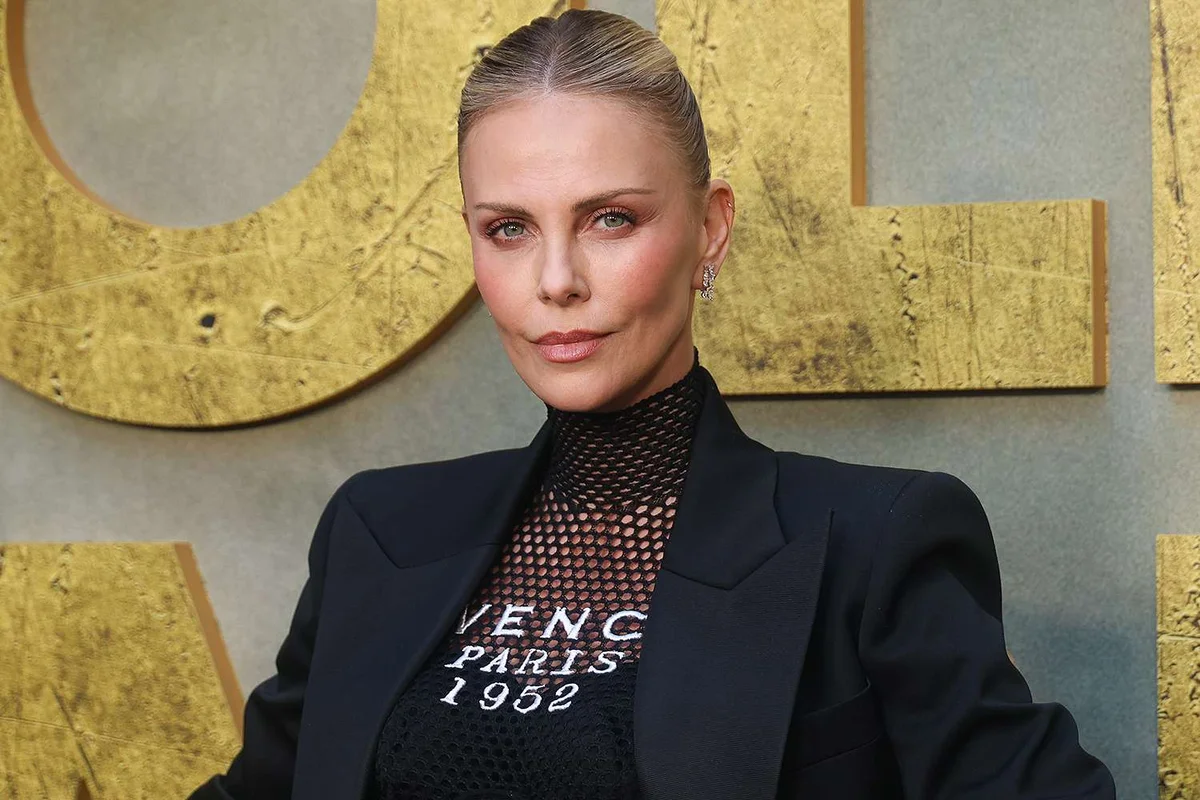
Theron enthusiastically praises the program:
because I have personally seen what powerful young people are capable of.
Students like Onesimo express how the scholarship has transformed their lives:
I was always worried about school fees, and now throughout my studies, I’ve never had to worry about tuition, or whether I would go to bed hungry.
This safety net allows recipients to focus on shaping their futures rather than mere survival.
Miché, another beneficiary, shared the raw realities of her upbringing in her scholarship essay:
It said: I come from shootings in my neighborhood. I come from little girls and little kids running in the streets barefoot. I come from young mothers tirelessly working for their families. I come from hardworking black women.
These narratives underscore the resilience and determination fueling the program’s success.
Empowering Marginalized Voices and Identities
Siphosihle’s story illustrates the program’s broader social impact. Responsible for caring for their sister’s son, who lacked a birth certificate crucial for accessing education and healthcare, Siphosihle aims to support other children facing similar struggles by advocating for their legal recognition.
One of my goals was to help the kids in the township, because my brother’s not the only one. I wanted to create a campaign to foster the process for these kids to get identification papers so that they can go to school. Otherwise, they end up on the street, being influenced by older kids, getting up to no good.
Siphosihle’s studies in gender and African feminist thought contribute to research and advocacy for marginalized identities, particularly LGBTQIA+ youth, who frequently face hostility and violence in traditional South African society.
I want to go back to a school like the one I went to, and work with queer kids to equip them with skills. The killing of queer bodies and the stigma that surrounds them… people say things but the aggressions can also be very violent and physical. I want to create a space to give these kids tools to advocate for themselves… and also help them see that there’s nothing wrong with their identity.
Safe Spaces and Support within the Township
One of the program’s vital sites is Philisa Abafazi Bethu (PAB), an organization in the township led by Lucinda Evans, whose efforts are reshaping community support. The PAB compound features brightly painted, repurposed shipping containers providing safe spaces for children and the elderly, complete with an emergency refuge for LGBTQIA+ youth and after-school programs that include meals, therapy, and activities designed to heal trauma.
In PAB, a playground and brightly colored houses made from repurposed shipping containers offer children a space to be carefree and play, without fear of violence.
The “baby box” initiative at PAB allows mothers unable to care for their newborns to leave babies safely, ensuring they receive immediate attention and protection, despite local authorities’ resistance.
We fed three thousand people a day, seven days a week, for nineteen months. I had 21 kitchens, 105 volunteers, serving protein-rich, mostly plant-based meals.
Through programs like art and music therapy, PAB provides children coping mechanisms to express and manage emotions, breaking cycles of violence from an early age. Lucinda Evans remarks:
It’s not right to speak about resilience, when children need to just be children, to play and experience. But we find that in some cases it is not so. And so we have to build them up.
Community Healing and Intergenerational Care
PAB also serves the elderly, many of whom care for grandchildren after a generation was devastated by AIDS. These older adults are vulnerable to abuse yet often remain silent due to family ties.
This makes them vulnerable to be abused. Domestic violence is rife, but the biggest problem is that they don’t report it because it’s either their child or their grandchild hurting them.
Theron adds:
A whole generation was wiped out by AIDS. They were the mothers and fathers of those children who ended up being raised by their grandparents, older people who come from a different time and place and are not always equipped.
The day centre at PAB helps the elderly stay active and earn a modest income through crafts or gardening. Activities even include dance classes, celebrating their cultural identity.
Theron’s Role As an Advocate Amplifying Local Leadership
Charlize Theron leverages her celebrity status to shine a light on CTAOP and its partners’ grassroots work, recognizing that genuine change comes from within communities themselves. She became a United Nations Messenger of Peace to extend her reach and build international support.
It’s really hard to grow up in a place like South Africa, to see the unnecessary suffering around you and not feel like you have to try and do something.
Charlize Theron
Theron acknowledges the complexity of South Africa’s struggles, noting that despite progress, the country faces setbacks and persistent violence, particularly toward women and marginalized groups. She attributes part of this to the aftermath of apartheid and unfulfilled expectations after Nelson Mandela’s presidency.
You know, we take four steps forward and then sometimes 10 steps back. And right now, we’re about 20 steps back. Look at statistics, the femicide rate in South Africa is five times higher than any other country globally.
Long-Term Commitment to Sustainable Impact
CTAOP prioritizes long-standing relationships with community leaders who best understand local challenges. Ashlee George, CTAOP’s executive director, emphasizes that success depends on supporting these leaders to realize their visions effectively.
I think one of the things that is unique about CTAOP is that length of time we’ve been in existence and working closely with local partners. For Charlize and the team, this has always been a long-term commitment. A core piece of our work is that we always knew we wanted to work with community leaders. They know the needs and challenges better than anyone. Our role is to figure out how we can best support them as they envision and execute the dream they have for their community.
Theron’s advocacy also inspires students and young leaders who see her success as a beacon of possibility. Onesimo notes:
The fact that her name is the name of the program inspires me to do more. It inspires me not only to invest in myself, but in others as well.
Collaboration with Dior Beauty Enhances Community Reach
As a Dior Beauty ambassador, Theron played a pivotal role in encouraging the brand to deepen its engagement with CTAOP. Dior Beauty’s Sustainability Director, Cécile Lochard, recalls the eye-opening experience of visiting the projects and seeing firsthand their transformative influence.
It gave us the opportunity to go on the ground in South Africa, to explore and get a better understanding of the remarkable real-life impact that CTAOP was having on local organizations.
Lochard particularly highlights Lucinda Evans’ leadership at PAB as an inspiring example warranting support:
Visiting this unique space was a revelation. Lucinda is a powerful woman and one of the strongest voices in her country. It became immediately obvious that this was an initiative worth supporting. And the presence of a therapeutic garden that was actually in use just sealed the deal for us.
Personal Stories Illuminate Broader Social Change
The young leaders supported by CTAOP are not only pursuing their personal ambitions but are driven to address systemic problems affecting their communities. Miché, a passionate storyteller and future filmmaker, envisions returning home to empower youth through the arts:
There are so many interesting people and stories where I come from. I like to sit and listen to the older people talk about their lives before apartheid ended, and about how things are now. I sit and absorb these stories and think: This is something! I want to break into the movie industry. I want to write and direct. And then, once I’ve built a platform for myself, I want to go back to my community and do workshop with young people, help them also break into the industry.
A Vision for a United and Resilient South Africa
Charlize Theron’s deep-rooted hope for her country is reflected in her unwavering commitment to CTAOP’s mission. She emphasizes the strength and determination inherent in South Africans, while acknowledging the need to accelerate progress toward equality and safety.
My hope for South Africa is to be able to live up to the potential that the country naturally has. It’s one of the most beautiful places that you’ll ever go to. And South Africans are a stunning people. They’re special in the sense that they have endured so much and yet there is still this light, this resilience, this hope in some of the darkest moments. And my hope is that those people get what they deserve because they’ve endured a lot, and that it happens fast.
Theron also underlines the power of empowering women, who constitute the majority of the population, to unite and lead change:
Obviously! We’re the majority of the population. We’re incredibly powerful if we come together. I think it’s important for us to talk about it, because it can give a lot of women who have all the right intentions a direction. You can go online, read about CTAOP and now you have access to a place where you can help. You can become part of that sisterhood. You can do this.
Continued Dedication Amidst Overwhelming Challenges
Despite South Africa’s complex social and political landscape, Theron remains steadfast in her advocacy. She acknowledges the emotional toll such efforts can take but finds strength in the tangible difference made through sustained community work.
I’ve never lived in a bubble. And I think when you live a life like that, you can be very overwhelmed by the problems that you see. CTAOP has given me a way to not feel that way, to feel like: sure, there’s a lot of shitty things happening in the world right now, but I can do something that I know is effective. To me that’s incredibly hopeful. Because I think we all need hope. Without hope, we die.
