
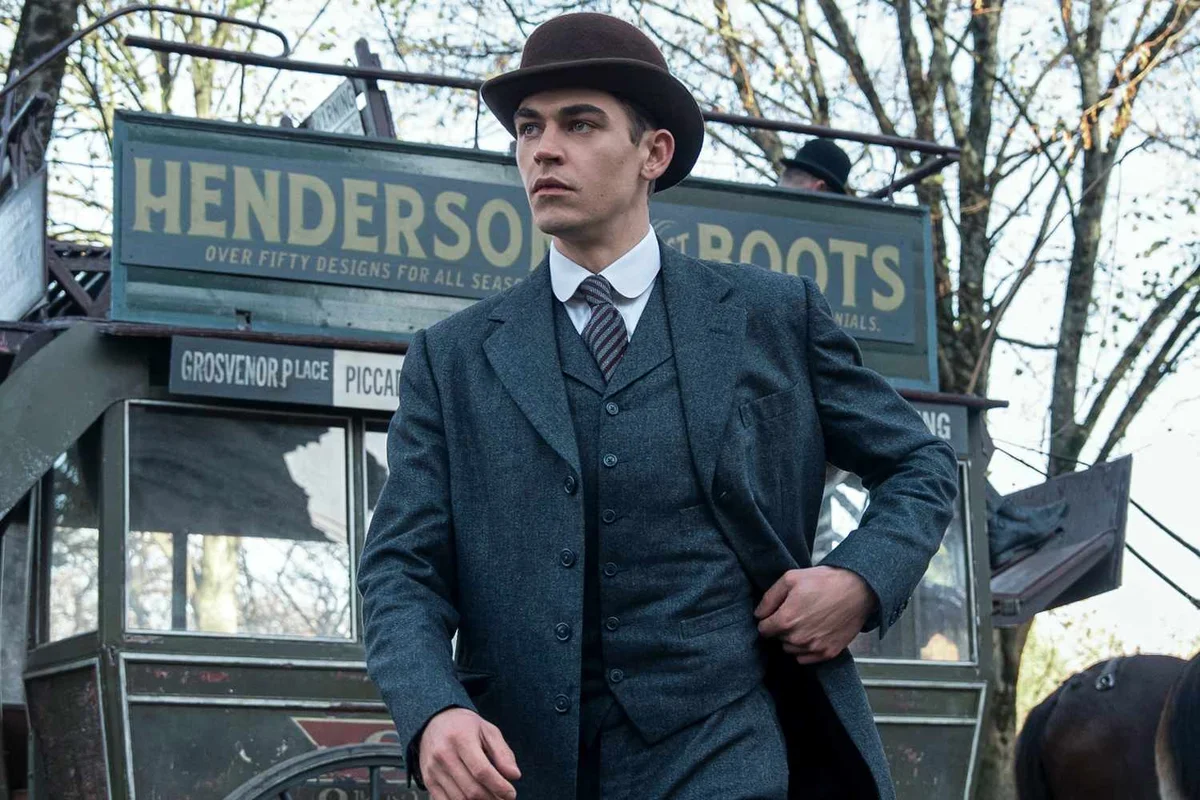
Prime Video’s series Young Sherlock premieres with Hero Fiennes Tiffin portraying Sherlock Holmes during his early, reckless days at Oxford, where he works as a housekeeper rather than a student. The show explores Sherlock’s initial forays into detective work alongside his close friend James Moriarty, played by Dónal Finn, before Moriarty becomes the infamous nemesis. This fresh approach delves into how the legendary detective first grapples with intricate mysteries while navigating complicated personal relationships and dangers.
Throughout the season, Sherlock and Moriarty are framed for a professor’s suspicious death and theft of critical scrolls from the enigmatic Princess Gulun Shou’an, played by Zine Tseng. Their journey to prove their innocence takes them across the globe and entangles them in a vast conspiracy that threatens global safety. Sherlock’s older brother, Mycroft, portrayed by Max Irons, also plays a pivotal role as a law-abiding police officer who keeps an eye on him.
The Complex Web of Betrayal and Family Secrets
As the season progresses, the truth about Princess Gulun Shou’an’s identity emerges: she is not a princess but someone seeking vengeance against Oxford professors responsible for annihilating her village with a deadly virus. The sudden death of one of those professors, Bucephalus Hodge (Colin Firth), points suspicion toward her, but it ultimately uncovers darker family secrets involving Sherlock’s father, Silas Holmes, portrayed by Joseph Fiennes, who is also Hero Fiennes Tiffin’s uncle.
Silas has been orchestrating sinister plans from behind the scenes, aiming to acquire the lethal virus, while his past actions caused the disappearance of the youngest Holmes sibling, Beatrice (Holly Cattle). Her vanishing created a deep fracture in the Holmes family, ultimately leading to Sherlock’s confinement in a mental institution. However, Beatrice had in fact gone undercover as Hodge’s assistant before turning against him.
Final Confrontation Brings Shocking Revelations
The season finale escalates to a tense showdown in Spain, where Beatrice, Shou’an, and Sherlock confront Silas at the edge of a cliff. The conflict reveals a betrayal within the family as Silas offers to make Sherlock his heir but uses him as a shield in a dangerous moment, resulting in Silas falling off the cliff. This dramatic twist underscores the ruthless nature of Silas and the emotional turmoil within the Holmes family.
Actor Joseph Fiennes expressed enthusiasm about playing such a complex villain:
“The whole family is rooted in dysfunction — they’re fractured and scarred because of Silas,”
Joseph Fiennes shares.
“He’s Machiavellian, but he still loves his family and loves playing the family off each other. He’s a devious guy, but he’s delicious to play.”
Hero Fiennes Tiffin added on the character’s dark charisma:
“And he does it all with so much charm,”
he says.
“He’s one of those kinds of villains who you love to hate.”
When asked about Silas’s return in a possible second season, Joseph Fiennes showed willingness to reprise the role but Fiennes hinted at the character’s grim fate:
“It looks like quite a fall to me,”
he joked.
Bringing Depth to Supporting Characters
Max Irons, portraying Mycroft Holmes, comments on the character’s reserved nature with a perspective on typical English restraint:
“I think ‘stoicism’ is a nice word for English repression! These guys held a lot of emotion back to the detriment of their own health. What we see with Mycroft — and this was the anchor that I held onto — was his profound love for his brother and then, by extension, for his sister. There’s also jealousy in places, but always deep respect for his unique and exceptional intelligence.”
These insights provide dimension to Mycroft’s role in Sherlock’s life and the family dynamics explored throughout the series.
Behind the Scenes: Insights from the Showrunner and Cast
Matthew Parkhill, the showrunner of Young Sherlock, explains his interest in revealing the personal side of Sherlock, especially how family secrets sculpt his emotional barriers in later life.
“The loss of a sibling only to discover that that was [fake] — I can’t think of many things that are more soul-destroying than that,”
Parkhill states.
“It helped me answer the question of why he becomes this slightly odd, eccentric, emotionally detached person when he’s older.”
Parkhill also links Sherlock’s emotional trauma regarding Silas to his future adversarial relationship with Moriarty. Dónal Finn agrees, elaborating:
“If you learn that your reality’s been entirely distorted like that, how could you not become someone who hyper-analyzes everything within your life? It probably is the thing that sets him on the course to become who he becomes.”
The chemistry between Hero Fiennes Tiffin and Joseph Fiennes also enriches the portrayal of Sherlock’s vulnerable moments. Tiffin reflects on acting alongside his real uncle:
“There were so many parallels between me having those first scenes with Joe as Silas and this being my Uncle Joe, but also an incredible actor who I’ve always wanted to work with and aspired to be like,”
he admits.
“I was so desperate for him to prove to him that I’m half decent at what I do and that I wanted to make him proud, but he’s so supportive. I very quickly got that confidence back.”
What Lies Ahead for Young Sherlock?
The intense family drama, globe-trotting mysteries, and emotional complexity in the first season of Young Sherlock set the stage for a captivating continuation, pending renewal decisions. The series dives deeply into Sherlock Holmes’s formative years, giving audiences unprecedented insight into the detective’s psyche, his troubled relationships, and how those early experiences shaped the iconic figure known worldwide. Fans can anticipate further exploration of these themes should the show return for another season, continuing to blend suspenseful storytelling with rich character studies in an urgent and emotionally charged narrative.
