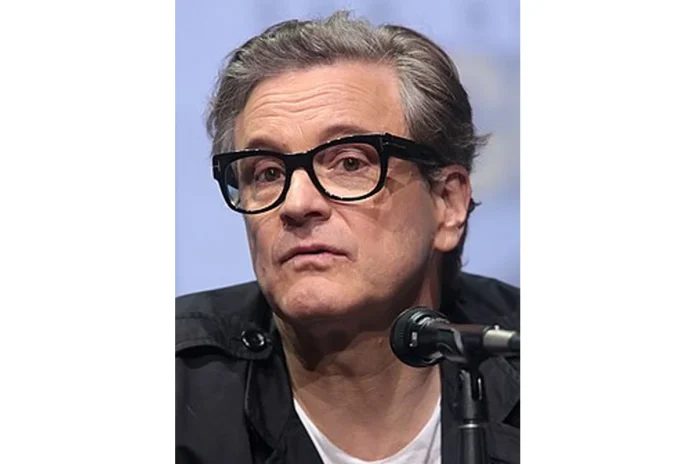
Colin Firth Bio
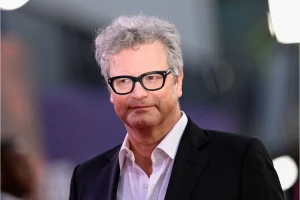
Colin Andrew Firth (born 10 September 1960) is an English actor and producer whose career spans more than four decades across film, television, and stage. He is the recipient of several major accolades, including an Academy Award, two British Academy of Film and Television Arts (BAFTA) Awards, a Golden Globe Award, and a Volpi Cup, along with nominations for two Primetime Emmy Awards. In 2011, Firth was appointed Commander of the Order of the British Empire (CBE) for his services to drama, and was named to Time magazine’s list of the 100 most influential people in the world.
Identified in the mid-1980s with a wave of rising British actors, Firth first drew wide public attention for his portrayal of Mr. Darcy in the 1995 BBC adaptation of Jane Austen’s Pride and Prejudice. He went on to build a varied filmography that includes historical dramas, romantic comedies, and action thrillers, and his films have grossed more than $3 billion from 42 releases worldwide. He is also a vocal campaigner for Indigenous rights, asylum seekers, refugees, and environmental causes.
Early Life and Background
Colin Andrew Firth was born on 10 September 1960 in the village of Grayshott, Hampshire, England, to parents who were academics and teachers. His mother, Shirley Jean (née Rolles), was a comparative religion lecturer at King Alfred’s College (now the University of Winchester), and his father, David Norman Lewis Firth, was a history lecturer at the same institution and an education officer for the Nigerian government. Firth is the eldest of three children; his sister Kate is an actress and voice coach, and his brother Jonathan is also an actor. His maternal grandparents were Congregationalist ministers and his paternal grandfather was an Anglican priest, and both of his parents were born and spent part of their childhoods in India.
As a child, Firth frequently travelled due to his parents’ work, spending some years in Nigeria. He also lived in St. Louis, Missouri, when he was 11, a period he later described as difficult. On returning to England, he attended the Montgomery of Alamein Secondary School (now Kings’ School, Winchester), a state comprehensive school in Winchester, Hampshire, where he struggled to fit in and was the target of bullying. To counter this, he adopted the local working-class Hampshire accent and copied his schoolmates’ lack of interest in schoolwork.
Firth began attending drama workshops at age 10 and by 14 had decided to become a professional actor. After his sixth form years at Barton Peveril Sixth Form College in Eastleigh, where an enthusiastic teacher, Penny Edwards, sparked a lasting love of English literature, he moved to London. There he joined the National Youth Theatre, where he made many contacts and worked in the wardrobe department at the National Theatre, before enrolling at Drama Centre London to study acting.
Path to Acting
Firth played Hamlet in the Drama Centre end-of-year production, and in 1984 he made his film debut as Tommy Judd in the screen adaptation of the play Another Country, starring alongside Rupert Everett. In 1986, he starred with Laurence Olivier in the television adaptation of J. B. Priestley’s novel Lost Empires. The following year, Firth and other rising British actors, including Tim Roth, Bruce Payne, and Paul McGann, were dubbed the “Brit Pack” by the British press, a label that helped signal his arrival on the national stage.
He appeared with Kenneth Branagh in the 1987 film version of J. L. Carr’s A Month in the Country, and in 1988 portrayed real-life British soldier Robert Lawrence in the BBC dramatisation Tumbledown, a role that detailed the struggles of a Falklands War veteran adjusting to severe injuries. The performance brought Firth a Royal Television Society Best Actor Award and a nomination for the 1989 BAFTA Television Award. In 1989, he played the title role in Miloš Forman’s Valmont, based on Les Liaisons dangereuses, and that same year took a supporting role in the Argentinian psychological thriller Apartment Zero.
Firth became a British household name through his 1995 portrayal of the aloof aristocrat Mr. Darcy in the BBC television adaptation of Jane Austen’s Pride and Prejudice. Producer Sue Birtwistle’s first choice for the part, he was eventually persuaded to take it despite his unfamiliarity with Austen’s writing. The series was an international success and unexpectedly elevated Firth to stardom, in part due to a scene in which he emerges from a lake swim in a wet shirt. Although he accepted being recognised as a romantic idol, he expressed the wish not to be associated with the role forever and was reluctant to accept similar parts that might lead to typecasting.
Colin Firth Career
Early Career (1983–1995)
Firth’s first major screen credits came in the mid-1980s, beginning with Another Country in 1984 and continuing with the 1986 television film Lost Empires. These early roles established him as a serious young actor drawn to characters shaped by war and moral conflict. His 1988 performance in Tumbledown, about a Falklands War veteran, brought him a Royal Television Society Best Actor Award and a BAFTA Television Award nomination, marking his first significant recognition from industry bodies.
During this period, Firth also appeared in the 1987 film A Month in the Country with Kenneth Branagh, took the title role in Miloš Forman’s 1989 feature Valmont, and played a paranoid, socially awkward character in the 1989 Argentinian thriller Apartment Zero. These projects cemented his reputation within British cinema and laid the groundwork for the breakthrough that would follow.
Breakthrough (1996–2008)
After the success of Pride and Prejudice, Firth sought to move beyond his Mr. Darcy image and accept more challenging roles. In 1996, he had a significant supporting role in the Academy Award-winning drama The English Patient, and that year also played a husband figure in the television miniseries Nostromo. He went on to lead the romantic adaptation Fever Pitch (1997), a fictional version of Nick Hornby’s autobiographical essay about an obsessed Arsenal F.C. football fan.
He took parts in light romantic period pieces such as Shakespeare in Love (1998), Relative Values (2000), and The Importance of Being Earnest (2002), while also taking on more serious television work, including a role as Dr. Wilhelm Stuckart in the 2001 BBC film Conspiracy, about the Nazi Wannsee Conference, which earned him a Primetime Emmy Award nomination. He featured in the ensemble cast of Richard Curtis’s Love Actually (2003), which became a financial success, and co-starred with Emma Thompson in the family fantasy Nanny McPhee (2005). In 2008, he made his first foray into musicals with Mamma Mia!, which became the highest-grossing British-made film of all time at the time of its release, taking in over $600 million worldwide.
Notable Works and Milestones
Among his most celebrated performances of this period were his roles in The English Patient, Shakespeare in Love, Love Actually, and the Bridget Jones film series, in which he played Mark Darcy from 2001 onward. His portrayal in Conspiracy earned him a Primetime Emmy Award nomination, and his appearance in Mamma Mia! helped cement his popularity with international audiences. By the end of this period, Firth was widely regarded as one of the most versatile and reliable leading men in British cinema.
Colin Firth Award Nominations
Colin Firth has received multiple award nominations across his career, including nominations from the Academy Awards, the Golden Globe Awards, the British Academy Film Awards (BAFTA), the Screen Actors Guild Awards, the Broadcast Film Critics Association, the Primetime Emmy Awards, and the Royal Television Society. His early-career work in Tumbledown brought a BAFTA Television Award nomination in 1989, and his later performances earned him consecutive Academy Award, Golden Globe, BAFTA, and Screen Actors Guild nominations in 2009 and 2010. He has also received Primetime Emmy Award nominations for his portrayals of Dr. Wilhelm Stuckart in the BBC film Conspiracy (2001) and Michael Peterson in the HBO limited series The Staircase (2022).
Colin Firth Awards Won
Firth has won several major awards, including an Academy Award, two BAFTA Awards, a Golden Globe Award, a Volpi Cup, a Royal Television Society Best Actor Award, and a Screen Actors Guild Award. He received the Volpi Cup for Best Actor at the 66th Venice International Film Festival in 2009 for his role in A Single Man, and went on to win the BAFTA Award for Best Actor in a Leading Role in February 2010 for the same performance. In 2011, he won the Golden Globe, BAFTA, Academy Award, and Screen Actors Guild Award for Best Actor for his portrayal of King George VI in The King’s Speech.
| Award | Wins | Year |
|---|---|---|
| Academy Award for Best Actor | 1 | 2011 |
| BAFTA Award for Best Actor in a Leading Role | 1 | 2010 |
| BAFTA Award for Best Actor in a Leading Role | 1 | 2011 |
| Golden Globe Award for Best Actor – Motion Picture Drama | 1 | 2011 |
| Volpi Cup for Best Actor | 1 | 2009 |
| Screen Actors Guild Award for Outstanding Performance by a Male Actor in a Leading Role | 1 | 2011 |
| Royal Television Society Best Actor Award | 1 | 1988 |
Colin Firth Family
Colin Firth is the eldest of three children. His sister Kate Firth is an actress and voice coach, and his brother Jonathan Firth is also an actor. Their mother, Shirley Jean (née Rolles), was a comparative religion lecturer, and their father, David Norman Lewis Firth, was a history lecturer and education officer for the Nigerian government. Firth’s maternal grandparents were Congregationalist ministers and his paternal grandfather was an Anglican priest, and both of his parents were born and spent part of their childhoods in India.
Personal Life
In 1989, Firth began a relationship with Canadian-American actress Meg Tilly, his co-star in Valmont, and their son, William Joseph Firth, was born in 1990. William has since followed his parents into acting, appearing alongside his father in Bridget Jones’s Baby (2016). Firth and Tilly separated in 1994. In 1997, Firth married Italian film producer and activist Livia Giuggioli, with whom he has two sons, Luca and Matteo. The family have divided their time between Wandsworth, in London, and Umbria, Italy. Firth speaks fluent Italian, and the couple announced their separation in 2019.