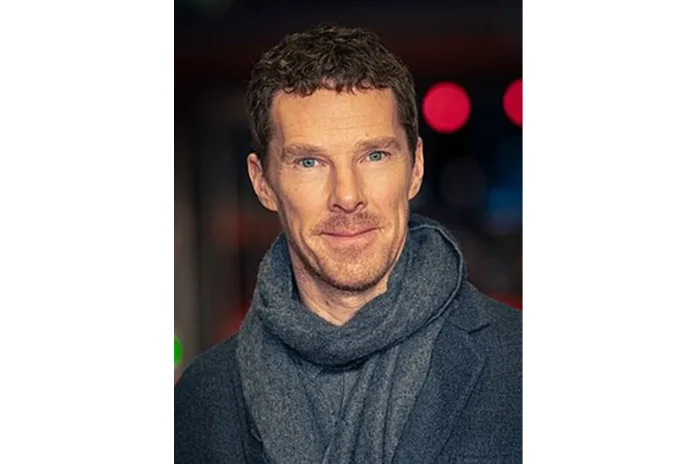
Benedict Cumberbatch Bio
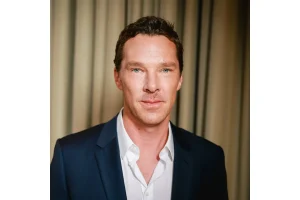
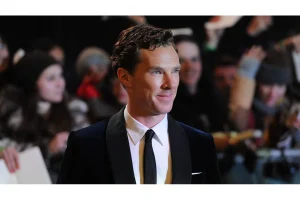
Benedict Timothy Carlton Cumberbatch (born 19 July 1976) is an English actor known for his versatile work across theatre, television, and film. He has earned widespread acclaim for his portrayals of complex characters, including Sherlock Holmes in the BBC series Sherlock, Alan Turing in The Imitation Game, and Doctor Stephen Strange in the Marvel Cinematic Universe. Over the course of his career, he has received a BAFTA TV Award, a Primetime Emmy Award, and a Laurence Olivier Award, along with nominations for two Academy Awards and four Golden Globe Awards. In 2015, he was appointed Commander of the Order of the British Empire (CBE) for his services to the performing arts and to charity.
Early Life and Background
Benedict Timothy Carlton Cumberbatch was born on 19 July 1976 in Hammersmith, London, England. He is the son of actors Timothy Carlton and Wanda Ventham, both of whom worked in British television and theatre. Growing up in a creative household, Cumberbatch was exposed to the world of acting from an early age, often accompanying his parents to film and television sets.
He attended Harrow School, where he first became involved in school drama productions. Following his secondary education, Cumberbatch took a gap year to teach English at a Tibetan monastery in Darjeeling, India. He later described this period as a formative experience that broadened his outlook on life.
Cumberbatch then studied drama at the Victoria University of Manchester before pursuing a Master of Arts in classical acting at the London Academy of Music and Dramatic Art (LAMDA). In January 2018, he succeeded Timothy West as president of LAMDA, further cementing his connection to the institution that helped launch his professional career.
Path to Acting
Cumberbatch began his professional acting career in 1998, initially appearing in small television roles. He built his early resume with guest parts in series such as Heartbeat, Tipping the Velvet, and Spooks, gradually working his way toward more substantial opportunities. His first major leading role on television came in 2004, when he portrayed physicist Stephen Hawking in the BBC film Hawking. The performance earned him a BAFTA TV Award nomination for Best Actor and won him the Golden Nymph for Best Performance by an Actor at the Monte-Carlo Television Festival.
He continued to build his theatre credentials in London, taking on classical roles at venues including the Regent’s Park Open Air Theatre, the Almeida Theatre, and the Royal National Theatre. In 2005, his performance as George Tesman in a West End revival of Hedda Gabler earned him an Olivier Award nomination for Best Supporting Role, marking his arrival as a serious stage actor.
Throughout the late 2000s, Cumberbatch balanced television projects with supporting film roles in productions such as Amazing Grace, Atonement, and The Other Boleyn Girl. These early film appearances helped establish his reputation for bringing depth to historical and literary figures.
Benedict Cumberbatch Career
Early Career (2000-2009)
During the early 2000s, Benedict Cumberbatch built a steady television and film career in the United Kingdom. He appeared in projects such as Cambridge Spies, Fortysomething, and Silent Witness, gaining experience in a variety of genres. His portrayal of Stephen Hawking in Hawking (2004) was widely praised and signaled his potential as a leading actor.
He also began appearing in historical and literary adaptations, including a memorable role in Stuart: A Life Backwards (2007) opposite Tom Hardy. By the end of the decade, Cumberbatch had earned a reputation as a reliable and compelling performer in British television, leading to his casting in more prominent projects.
Breakthrough (2010-2017)
Cumberbatch achieved international fame when he took on the role of Sherlock Holmes in the BBC series Sherlock, which premiered in 2010. His modern, sharp-edged interpretation of the character drew critical praise and a passionate global fanbase. He won a Primetime Emmy Award for Outstanding Lead Actor in a Miniseries or Movie for the episode His Last Vow, and earned multiple additional Emmy and BAFTA nominations across the show’s run.
In 2011, Cumberbatch starred in Danny Boyle’s stage production of Frankenstein at the Royal National Theatre, playing both Victor Frankenstein and his creature on alternate nights. The performance earned him the Olivier Award, Evening Standard Award, and Critics’ Circle Theatre Award, completing the so-called Triple Crown of London Theatre.
On the big screen, he played Smaug and the Necromancer in The Hobbit film trilogy from 2012 to 2014, Khan in Star Trek Into Darkness (2013), and WikiLeaks founder Julian Assange in The Fifth Estate (2013). His portrayal of British codebreaker Alan Turing in The Imitation Game (2014) brought him his first Academy Award nomination for Best Actor, along with Golden Globe, BAFTA, and SAG Award nominations. He launched his production company, SunnyMarch Ltd., in late 2013, producing projects including the short film Little Favour.
In 2015, Cumberbatch returned to the stage to play the title role in Hamlet at the Barbican Theatre, earning his third Laurence Olivier Award nomination. He was also appointed CBE in the 2015 Birthday Honours for services to the performing arts and to charity. He began his tenure as Doctor Stephen Strange in the Marvel Cinematic Universe with the release of Doctor Strange in November 2016.
Notable Works and Milestones
Beyond Sherlock and Doctor Strange, Benedict Cumberbatch has built a diverse filmography that includes powerful dramatic turns in 12 Years a Slave (2013), Tinker Tailor Soldier Spy (2011), The Current War (2017), 1917 (2019), and The Courier (2020). His leading role in Jane Campion’s The Power of the Dog (2021) earned him a second Academy Award nomination for Best Actor, alongside BAFTA, SAG, and Golden Globe nominations.
Benedict Cumberbatch Award Nominations
Across his career in theatre, television, and film, Benedict Cumberbatch has earned nominations for some of the most prestigious honors in the entertainment industry. He has been nominated for two Academy Awards for Best Actor, four Golden Globe Awards, multiple BAFTA Awards across film and television categories, and several Screen Actors Guild Awards. He has also received three Laurence Olivier Award nominations, including one win, and multiple Primetime Emmy Award nominations. His consistent recognition by major awarding bodies reflects his wide-ranging talent across dramatic, comedic, and historical roles.
Benedict Cumberbatch Awards Won
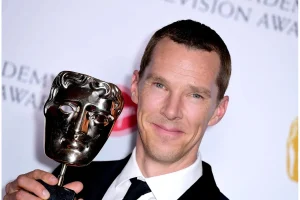
Benedict Cumberbatch has accumulated a notable collection of major awards throughout his career. He won a Primetime Emmy Award for Outstanding Lead Actor in a Miniseries or Movie for Sherlock, a BAFTA TV Award for Best Actor for Patrick Melrose, and a Laurence Olivier Award for Best Actor for his performance in Frankenstein. In 2015, he was appointed Commander of the Order of the British Empire (CBE) for services to the performing arts and charity. In 2025, he was honoured at the Sitges Film Festival with the Time Machine Award.
Benedict Cumberbatch Family
Benedict Cumberbatch is the son of actors Timothy Carlton and Wanda Ventham, both of whom have had long careers in British television and theatre. He has spoken publicly about the influence his parents had on his decision to pursue acting. His family heritage includes a line of ancestors connected to colonial-era landholdings in Barbados, a topic that has drawn media attention, though Cumberbatch has noted that the family wealth had diminished long before his birth and that he grew up middle class.
Personal Life
Benedict Cumberbatch married English theatre and opera director Sophie Hunter on 14 February 2015 at St Peter and St Paul’s Church in Mottistone on the Isle of Wight, after a friendship that spanned seventeen years. The couple has three sons. Cumberbatch previously had a twelve-year relationship with actress Olivia Poulet, which ended in 2010. In his personal time, he subscribes to Buddhist philosophy and has expressed an interest in meditation and mindfulness. During the COVID-19 pandemic, Cumberbatch and his family lived in New Zealand, where he had been filming The Power of the Dog.