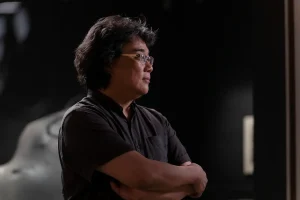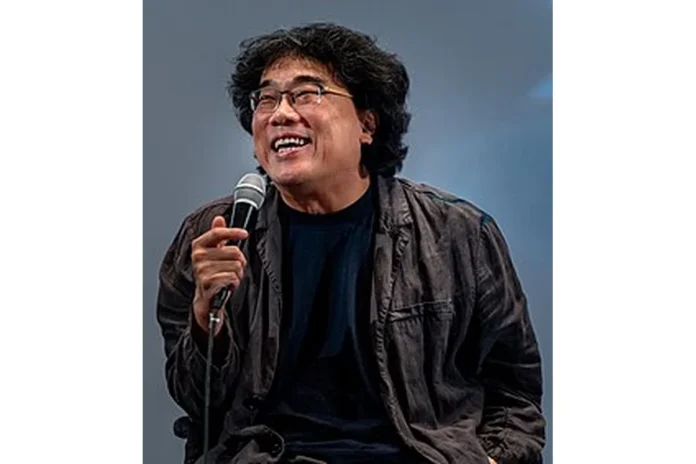
Bong Joon Ho Bio
Bong Joon Ho (born September 14, 1969) is a South Korean film director, screenwriter, and producer whose work is widely recognized for blending genres, exploring social and class themes, and shifting sharply between dark drama and sharp humor. He first gained a cult following with his feature debut Barking Dogs Never Bite (2000) and went on to direct the acclaimed films Memories of Murder (2003), The Host (2006), Snowpiercer (2013), Okja (2017), and Parasite (2019). His South Korean productions Memories of Murder, The Host, and Parasite rank among the highest-grossing films in South Korean cinema history. He has won three Academy Awards, two British Academy Film Awards, and five Asian Film Awards, and in 2020 he was named one of Time’s 100 most influential people in the world.
Early Life and Background
Bong Joon Ho was born on September 14, 1969, in Bongheok-dong, Daegu, South Korea, the youngest of four siblings. His mother, Park So-young, was a housewife, and his father, Bong Sang-gyun, was a graphic designer, industrial designer, and longtime professor of design who served as head of the art department at the National Film Institute. His maternal grandfather, Park Taewon, was a noted author of the Japanese colonial period best known for the novel A Day in the Life of Kubo the Novelist, who defected to North Korea in 1950. His older brother, Bong Joon-soo, is an English professor at Seoul National University, and his older sister, Bong Ji-hee, teaches fashion styling at Anyang University. Bong was raised as a Catholic and was given the Christian name Michael.
During his elementary school years, Bong’s family moved to Seoul and settled in Jamsil-dong near the Han River. He later attended Jamsil High School, where, while preparing for his college entrance exam in 1987, he reported seeing what he believed to be a large creature crawling on a pillar of the Jamsil Bridge and falling into the river. Already dreaming of becoming a film director, Bong swore he would one day make a movie about such a creature, a vision he would realize nearly two decades later with The Host (2006). The riverside neighborhood left a deep mark on the settings and imagery of much of his later work.
In 1988, Bong enrolled at Yonsei University, where he majored in sociology and also studied English, later crediting American filmmaker Spike Lee’s movies for teaching him English profanity. His college years coincided with the height of the South Korean democracy movement, and he was an active participant in student demonstrations, often exposed to tear gas. After two years of compulsory military service, he returned to Yonsei in 1992, co-founded a student film club called Yellow Door, and made his earliest short films, including the stop-motion work Looking for Paradise and the 16 mm short Baeksaekin (White Man). He graduated from Yonsei University in 1995.
Path to Director
After graduating, Bong enrolled in the two-year program at the Korean Academy of Film Arts, where he produced a series of 16 mm short films. His graduation works, Incoherence and Memories in My Frame, were selected for the Hong Kong International Film Festival and the Vancouver International Film Festival, giving him early international exposure. He worked alongside classmates who would also become important Korean filmmakers, serving as cinematographer on the well-regarded short 2001 Imagine (1994) directed by his friend Jang Joon-hwan, and taking on lighting and assistant director roles on other student productions.
His growing reputation led to professional credits on larger projects, including the screenplay for the anthology film Seven Reasons Why Beer is Better Than a Lover (1996), screenplay and assistant director duties on Park Ki-yong’s debut Motel Cactus (1997), and a co-writing credit on the screenplay for Phantom: The Submarine (1999). These early jobs, made under the mentorship of producer Cha Seung-jae, helped Bong secure the financing and creative independence to direct his first feature, the dark comedy Barking Dogs Never Bite, which began shooting in 1999 and opened in February 2000.
Bong Joon Ho Career
Early Career (1994–2005)
Bong’s first feature, Barking Dogs Never Bite, follows a low-ranking university lecturer who abducts a neighbor’s dog and was filmed in the same apartment complex where Bong lived after his marriage. Released in February 2000, it drew limited commercial interest at home but received positive reviews abroad, competing at Spain’s San Sebastián International Film Festival and winning awards at the Slamdance Film Festival and the Hong Kong International Film Festival. Slowly building international word of mouth eventually brought the film to financial break-even more than two years after its local release.
His second feature, Memories of Murder (2003), adapted a stage play about a real-life serial killer who terrorized a rural South Korean town in the 1980s and set a local record for the number of filming locations used. The film sold more than five million tickets in South Korea, rescued producer Cha Seung-jae’s company Sidus from near-bankruptcy, and won multiple Grand Bell Awards, including Best Picture, Best Director, and Best Actor for Song Kang-ho. Following that success, Bong contributed shorts to anthology projects, including the CCTV-based Influenza (2004) and the alumni tribute Sink & Rise (2003).
Breakthrough (2006–2018)
The Host (2006) marked a major leap in scale for both Bong and the Korean film industry. Made on a roughly $11 million budget and featuring a digital creature brought to life primarily by San Francisco-based studio The Orphanage, the monster film follows a family confronting a beast that emerges from the Han River to attack Seoul. Premiering in the Directors’ Fortnight at the 2006 Cannes Film Festival, it became a summer smash in South Korea, selling 13 million tickets on its widest-ever domestic release and prompting Universal to acquire remake rights.
Bong continued to expand his range with the anthology segment Tokyo! (2008), co-directed with Michel Gondry and Leos Carax, and with Mother (2009), a tightly wound drama about a devoted mother trying to clear her disabled son’s name. Mother premiered in the Un Certain Regard section at Cannes to strong reviews and earned Kim Hye-ja the Los Angeles Film Critics Association Award for Best Actress. The following year, he directed the short Iki for the Japan earthquake response project 3.11 A Sense of Home Films and served on juries at Sundance, Cannes, and the Edinburgh International Film Festival.
Bong’s first English-language film, Snowpiercer (2013), adapted the French graphic novel Le Transperceneige into a science fiction action story set aboard a class-segregated train. The film earned near-universal praise, holding a 94 percent fresh rating on Rotten Tomatoes and an 84 score on Metacritic, and became the tenth highest-grossing domestic film in South Korea at the time. His follow-up, Okja (2017), premiered in competition at the 2017 Cannes Film Festival, where it sparked debate about Netflix-produced cinema before going on to win a four-minute standing ovation and earning strong reviews for its blend of adventure, satire, and emotion.
2019–present: Parasite and Mickey 17
In 2019, Bong directed Parasite, a dark comedy thriller about a poor family that gradually infiltrates a wealthy household by posing as unrelated employees. The film premiered at the 2019 Cannes Film Festival, where it won the Palme d’Or as the first South Korean film ever to receive the award and the first film to do so with a unanimous vote since Blue Is the Warmest Colour in 2013. Released in South Korea by CJ Entertainment on May 30, 2019, and in the United States by Neon on October 11, 2019, Parasite earned $266 million worldwide, becoming Bong’s highest-grossing release and the highest-grossing South Korean film in history.
During the 2019–2020 awards season, Bong and Parasite swept top prizes, including the Hollywood Filmmaker Award, a tied Critics’ Choice Movie Award for Best Director, a Golden Globe Award for Best Foreign Language Film, and the Screen Actors Guild Award for Outstanding Performance by a Cast in a Motion Picture, the first foreign-language film ever to win that honor. At the 92nd Academy Awards, Parasite became the first South Korean film nominated in any category, the first non-English language film to win Best Picture, and earned Bong Academy Awards for Best Picture, Best Director, and Best Original Screenplay, the first time Asian writers had won for screenwriting.
In September 2021, Bong served as jury president of the 78th Venice International Film Festival. His next feature, Mickey 17, an adaptation of Edward Ashton’s novel Mickey7, was revealed in January 2022 and stars Robert Pattinson, with Naomi Ackie, Toni Collette, Mark Ruffalo, and Steven Yeun joining the cast as it entered pre-production at Warner Bros. Studios, Leavesden. Mickey 17 premiered at the 75th Berlin International Film Festival on February 15, 2025, before opening in South Korea on February 28, 2025, and in the United States on March 7, 2025, distributed by Warner Bros. Pictures.
Notable Works and Milestones
Bong’s signature works include Memories of Murder, The Host, Snowpiercer, Okja, and Parasite, with Parasite standing as the most decorated, taking the Palme d’Or, four Academy Awards including Best Picture, and the Golden Globe for Best Foreign Language Film. His films are known for genre-blending, sudden shifts between drama, darkness, and black humor, and a preference for practical locations over green screens, including filming in Seoul’s actual sewers for The Host. He has been recognized on Metacritic’s list of the 25 best directors of the 21st century and by Time as one of the 100 most influential people in the world in 2020.
Bong Joon Ho Award Nominations
Across his career, Bong Joon Ho has accumulated a wide range of major award nominations for his direction and screenwriting. Parasite alone brought him nominations for Best Director and Best Screenplay at the 77th Golden Globe Awards, four nominations at the 73rd British Academy Film Awards, and six nominations at the 92nd Academy Awards, including Best Picture, Best Director, and Best Original Screenplay. He was also nominated for Best Director at the 25th Critics’ Choice Awards, sharing the win with Sam Mendes for 1917, and his earlier features Memories of Murder and The Host earned him multiple nods at South Korean ceremonies such as the Grand Bell Awards.
Bong Joon Ho Awards Won
Bong Joon Ho’s most prominent wins include three Academy Awards for Parasite, Best Picture, Best Director, and Best Original Screenplay, the first non-English language film to take Best Picture. Parasite also won the Palme d’Or at the 2019 Cannes Film Festival, the Golden Globe for Best Foreign Language Film, the Sydney Film Prize, and two British Academy Film Awards, for Best Original Screenplay and Best Film Not in the English Language. Earlier in his career, Barking Dogs Never Bite won awards at the Slamdance Film Festival and the Hong Kong International Film Festival, while Memories of Murder won multiple Grand Bell Awards and three prizes at the San Sebastián International Film Festival.
| Award | Wins | Year |
|---|---|---|
| Academy Award for Best Picture (Parasite) | 1 | 2020 |
| Academy Award for Best Director (Parasite) | 1 | 2020 |
| Academy Award for Best Original Screenplay (Parasite) | 1 | 2020 |
| Palme d’Or (Parasite) | 1 | 2019 |
| Golden Globe Award for Best Foreign Language Film (Parasite) | 1 | 2020 |
Bong Joon Ho Family
Bong Joon Ho was born into a family with deep roots in the arts and academia. His father, Bong Sang-gyun, was a graphic designer, industrial designer, and professor of design who headed the art department at the National Film Institute and later retired from Seoul Institute of Technology in 2007, passing away in 2017. His mother, Park So-young, was a housewife, and his maternal grandfather, Park Taewon, was a celebrated novelist of the Japanese colonial period who defected to North Korea in 1950. He is close to his siblings, including his older brother, Bong Joon-soo, an English professor at Seoul National University, and his older sister, Bong Ji-hee, who teaches fashion styling at Anyang University.
Personal Life
Bong married screenwriter Jung Sun-young in 1995, and the couple have a son, Bong Hyo-min, who is also a filmmaker. In 2009, he had a bird tattoo done on his left arm to mark the release of Mother and to pay tribute to a scene in the film. Politically engaged throughout his career, Bong was a supporter of the Democratic Labor Party in the 2000s before joining its successor, the New Progressive Party, in 2008, and on December 7, 2024, he was among roughly 2,520 South Korean film industry workers who publicly called for the impeachment of President Yoon Suk Yeol after his declaration of martial law.