Jeff Bridges Bio
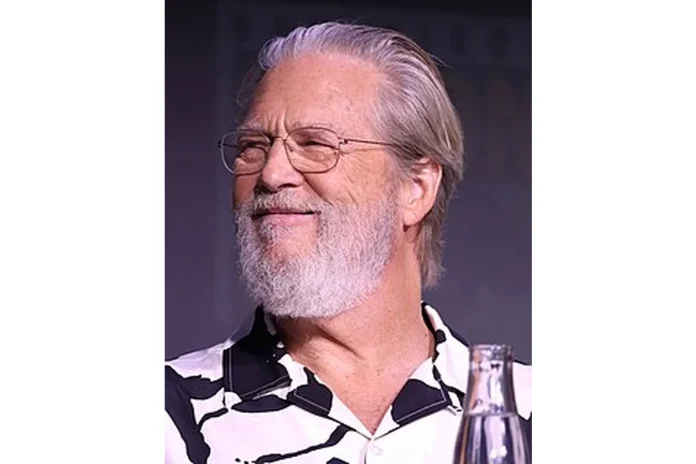
Jeffrey Leon Bridges, born December 4, 1949, is an American actor whose career has spanned more than seven decades across film, television, and music. Widely regarded as one of the most versatile and underappreciated actors of his generation, Bridges has earned an Academy Award, a Golden Globe Award, a Screen Actors Guild Award, and the Cecil B. DeMille Award. He is best known for his leading man roles in celebrated films including The Big Lebowski, Crazy Heart, True Grit, and Iron Man, and for his starring role in the Hulu series The Old Man.
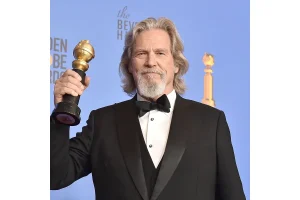
In 2009, Bridges achieved his most significant professional recognition by winning the Academy Award for Best Actor for his portrayal of an alcoholic country singer in Crazy Heart, becoming one of the oldest actors ever to win in that category at age 60. He had previously been one of the youngest actors ever nominated for an Academy Award at age 22, for his debut in The Last Picture Show in 1972. In 2019, the Hollywood Foreign Press Association honored him with the Cecil B. DeMille Award for his outstanding contribution to the world of entertainment. As of 2024, he is set to reprise his fan-favorite role of Kevin Flynn in Tron: Ares.
Early Life and Background
Jeffrey Leon Bridges was born in Los Angeles, California, into one of Hollywood’s most prominent acting families. He is the son of actor Lloyd Bridges and actress and writer Dorothy Bridges, and the younger brother of actor Beau Bridges. His maternal grandfather was an immigrant from Liverpool, England, adding an international dimension to his family background. Bridges and his siblings were raised in the Holmby Hills neighborhood of Los Angeles, where they shared a close and creative household shaped by their parents’ careers in entertainment.
Bridges shared a particularly close relationship with his brother Beau, who acted as a surrogate father when Lloyd Bridges was working. He graduated from University High School in Los Angeles in 1967, where he first developed his passion for music, studying piano at a young age under the strong encouragement of his mother. At age 17, Bridges toured with his father in a stage production of Anniversary Waltz, gaining early exposure to the demands and discipline of performing. He then moved to New York City to study acting at the Herbert Berghof Studio, one of the most respected theater training institutions in the United States. From 1967 to 1975, Bridges also served in the United States Coast Guard Reserve in San Luis Obispo, California, attaining the rank of Boatswain’s Mate Second Class.
Path to Actor
Bridges made his first screen appearance at less than one year old, in an uncredited role in the 1951 film The Company She Keeps. Throughout his childhood and teenage years, he and his brother Beau made occasional appearances on their father’s television series Sea Hunt from 1958 to 1961, and on the CBS anthology series The Lloyd Bridges Show from 1962 to 1963. These early experiences immersed Bridges in the practical realities of film and television production from a uniquely young age, giving him a head start in understanding camera work and set etiquette.
By 1965, Bridges was taking on more substantial supporting roles, including an appearance alongside his father in an episode of the Western series The Loner. In 1969, he played Job Corps crew member Cal Baker in an episode of Lassie titled “Success Story.” These early television credits allowed him to build confidence and craft on screen, while his formal acting training at the Herbert Berghof Studio in New York gave him a strong methodological foundation. The combination of hands-on set experience as a child and disciplined classical training as a young adult positioned Bridges uniquely well for a career in film.
Jeff Bridges Career
Early Career (1970–1975)
Bridges made his feature film debut in the drama Halls of Anger in 1970, playing a supporting role in a film that examined racial tensions in an integrated Los Angeles high school. His first major role came the following year in The Last Picture Show, directed by Peter Bogdanovich and based on Larry McMurtry’s novel. His performance earned him his first Academy Award nomination for Best Supporting Actor, making him one of the youngest nominees in that category in Oscar history. In 1972, he co-starred in Fat City, a gritty boxing drama directed by John Huston, further establishing his credentials as a serious young actor capable of inhabiting complex, flawed characters.
The mid-1970s brought additional leading roles and recognition. In 1973, Bridges starred as Junior Jackson in The Last American Hero, a film based on the true story of NASCAR driver Junior Johnson. He was nominated for his second Academy Award for Best Supporting Actor for his performance opposite Clint Eastwood in the 1974 film Thunderbolt and Lightfoot. This period established Bridges as a reliable and compelling presence in American cinema, capable of shifting between dramatic intensity and wry humor with equal facility.
Breakthrough (1976–1989)
In 1976, Bridges achieved mainstream recognition with his starring role as Jack Prescott in the first remake of King Kong, opposite Jessica Lange. The film was a significant commercial success, earning $90 million worldwide against a $23 million budget, and won the Academy Award for Best Visual Effects. In 1980, he appeared in Michael Cimino’s epic Western Heaven’s Gate alongside Kris Kristofferson, Christopher Walken, and Isabelle Huppert. Though the film was a critical and commercial disappointment, the experience deepened Bridges’s musical collaborations with Kristofferson, who would later serve as a partial inspiration for his character in Crazy Heart.
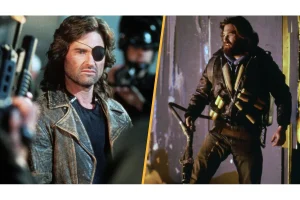
In 1982, Bridges starred in the science fiction film Tron as Kevin Flynn, a video game programmer trapped inside a digital world. Widely praised for its groundbreaking visual effects and visionary storytelling, Tron became a cult classic and cemented Bridges’s status as a science fiction icon. That same year, he voiced Prince Lír in the animated fantasy film The Last Unicorn, performing vocals on two songs including a duet with Mia Farrow. In 1984, he delivered what many critics consider one of his finest performances in Starman, directed by John Carpenter, earning his third Academy Award nomination for Best Actor. The late 1980s brought further critical acclaim for his portrayal of automobile entrepreneur Preston Tucker in Francis Ford Coppola’s Tucker: The Man and His Dream, and his performance opposite Michelle Pfeiffer and Beau Bridges in The Fabulous Baker Boys in 1989.
Notable Works and Milestones
Bridges delivered what many consider his most iconic role in 1998 as Jeffrey Lebowski, affectionately known as The Dude, in the Coen brothers’ noir comedy The Big Lebowski. Though initially a modest commercial success, the film grew into a massive cultural phenomenon, and The Dude became one of the most recognizable and beloved characters in American cinema. In 2008, Bridges played the villainous Obadiah Stane in Marvel’s Iron Man, introducing himself to a new generation of audiences in one of the most successful superhero films ever made. He reprised his role as Kevin Flynn in Tron: Legacy in 2010. His 2009 performance as singer-songwriter Bad Blake in Crazy Heart earned him the Academy Award for Best Actor, the Golden Globe for Best Actor in a Drama, and the Screen Actors Guild Award for Best Actor in a Leading Role.
Jeff Bridges Award Nominations
Across a career of extraordinary breadth, Bridges has received seven Academy Award nominations, making him one of the most nominated actors in Oscar history. His nominations span categories from Best Supporting Actor for The Last Picture Show at age 22 to Best Supporting Actor for Hell or High Water six decades later. He has also been nominated for three BAFTA Awards for his performances in Starman, The Contender, and True Grit, and has earned two Primetime Emmy Award nominations for his work in the HBO film A Dog Year and the Hulu series The Old Man. The breadth of these nominations reflects an unusually wide range, from intimate independent dramas to blockbuster studio films and acclaimed television work.
Jeff Bridges Awards Won
Bridges won the Academy Award for Best Actor in 2010 for his portrayal of an alcoholic country singer in Crazy Heart, a performance that also earned him the Golden Globe Award for Best Actor in a Drama and the Screen Actors Guild Award for Best Actor in a Leading Role. In 2013, he received an Infinity Award from the International Center of Photography in New York for his photographic work, which has been exhibited and published in two books. In 2019, he was honored with the Cecil B. DeMille Award by the Hollywood Foreign Press Association for his lifetime contribution to motion pictures. In 2024, he received the Chaplin Gala Award at Alice Tully Hall at Lincoln Center.
| Award | Category | Year |
|---|---|---|
| Academy Award | Best Actor for Crazy Heart | 2010 |
| Golden Globe Award | Best Actor in a Drama for Crazy Heart | 2010 |
| Screen Actors Guild Award | Best Actor in a Leading Role for Crazy Heart | 2010 |
| Cecil B. DeMille Award | Lifetime Achievement | 2019 |
| Chaplin Gala Award | Lifetime Achievement | 2024 |
Jeff Bridges Family
Jeffrey Leon Bridges was born to Lloyd Bridges, a prolific American actor whose career spanned film and television, and Dorothy Bridges, an actress and writer. His older brother Beau Bridges is also a respected and decorated actor, and the two have collaborated professionally on numerous projects throughout their careers. Bridges and his siblings inherited their family house in Malibu, California, from their parents; the home was destroyed in the Palisades Fire in January 2025.
Personal Life
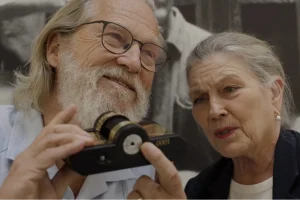
Bridges married Susan Geston in 1977, after meeting her on the set of the 1975 film Rancho Deluxe, where Geston was working as a waitress on the ranch where the film was being shot. The couple has three daughters, born in 1981, 1983, and 1985. Bridges has maintained a long-standing interest in music beyond acting, studying piano from a young age, selling songs to Quincy Jones in his early career, and releasing two solo albums: Be Here Soon in 2000 and Jeff Bridges in 2011, the latter produced by T Bone Burnett. He is also an accomplished photographer, using a Widelux F8 camera given to him by his wife, and has published two books of his photographs. He has studied Buddhism for many years and describes himself as a Buddhistly bent guy, meditating for approximately half an hour before most film sets. In October 2020, Bridges announced that he had been diagnosed with Non-Hodgkin lymphoma and underwent chemotherapy, also contracting COVID-19 during his treatment; he announced in September 2021 that his cancer was in remission. He is an active philanthropist, having founded the End Hunger Network in 1984 and serving as spokesman for the No Kid Hungry campaign since 2010.