John Waters Bio
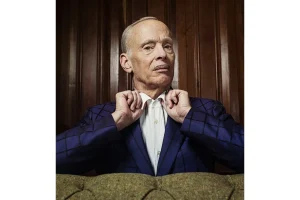
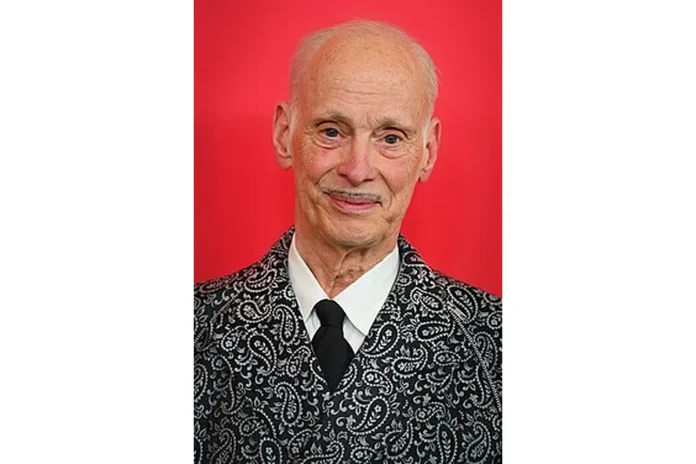
John Samuel Waters Jr. (born April 22, 1946) is an American filmmaker, actor, writer, and visual artist. He rose to fame in the early 1970s for his transgressive cult films, including Multiple Maniacs (1970), Pink Flamingos (1972), and Female Trouble (1974). Waters wrote and directed the comedy film Hairspray (1988), which was later adapted into a hit Broadway musical and a 2007 film musical.
His work blends post-modern comedy with surrealism, and he remains an influential figure in American independent cinema. Beyond film, Waters is a noted visual artist whose photo-based installations have been exhibited in galleries and museums worldwide.
Early Life and Background
John Samuel Waters Jr. was born on April 22, 1946, in Baltimore, Maryland. He was one of four children born to Patricia Ann Whitaker and John Samuel Waters, a manufacturer of fire-protection equipment. Waters was raised Catholic by his mother, who had immigrated as a child to the United States from Victoria, British Columbia, Canada. He grew up in Lutherville, Maryland, a suburb of Baltimore.
Waters developed an early fascination with cinema and performance. The 1953 film Lili inspired a love of puppets in the young Waters, who staged violent Punch and Judy shows at children’s birthday parties. Through his mother’s side of the family, he is the third-great-grandson of George P. Whitaker of the Whitaker iron family. His boyhood friend Glenn Milstead, later known as the performer Divine, also lived in Lutherville, and the two began making films together in their teenage years.
Path to Director
Waters was privately educated at the Calvert School in Baltimore and later attended Towson Junior High School and Calvert Hall College High School. He graduated from the Boys’ Latin School of Maryland before enrolling at the Maryland Institute College of Art. While still a teen, he made frequent trips into downtown Baltimore to visit Martick’s, a beatnik bar, where he met many of his future collaborators.
His first short film was Hag in a Black Leather Jacket, and he continued making short and feature-length films throughout the late 1960s. Waters’s early films, including Mondo Trasho and Multiple Maniacs, were shot in the Baltimore area with his company of local actors known as the Dreamlanders. This troupe included Divine, Mink Stole, Cookie Mueller, Edith Massey, David Lochary, and Mary Vivian Pearce, among others.
John Waters Career
Early Career (1964-1980)
Waters began his career in 1964 and quickly established himself as an underground filmmaker. His early features, including Multiple Maniacs (1970), Pink Flamingos (1972), and Female Trouble (1974), pushed hard at the boundaries of conventional propriety and censorship. Pink Flamingos, Female Trouble, and Desperate Living (1977) became known as the Trash Trilogy. These cult classics cemented his reputation as a daring and uncompromising voice in independent cinema.
In addition to directing, Waters collaborated with his Dreamlanders on screenplays, costumes, and production design. He drew equal influence from high-brow art films and exploitation cinema, a philosophy that shaped his distinctive storytelling style.
Breakthrough (1981-2004)
Waters’s 1981 film Polyester starred Divine opposite former teen idol Tab Hunter and marked his first collaboration with cinematographer David Insley. His 1988 comedy Hairspray became a mainstream hit and was later adapted into a Broadway musical that swept the 2003 Tony Awards. A film adaptation of the Broadway musical was released on July 20, 2007, to positive reviews and commercial success. Cry-Baby (1990) also became a Broadway musical.
Waters continued directing through the 1990s and early 2000s with films including Serial Mom (1994), Pecker (1998), and Cecil B. Demented (2000). In 2004, the NC-17-rated A Dirty Shame marked a return to his earlier controversial style. He also hosted the television series John Waters Presents Movies That Will Corrupt You (2006) and served as host, under the title “The Groom Reaper,” of the Court TV program ‘Til Death Do Us Part in 2007.
Notable Works and Milestones
Waters’s signature works include the Trash Trilogy, Hairspray, and Cry-Baby. His 1988 film Hairspray remains his most commercially successful directorial effort, having spawned a Broadway hit and a major studio adaptation. His films are celebrated for their exaggerated characters, outrageous situations, and hyperbolic dialogue, all trademarks of his irreverent comedic voice.
John Waters Award Nominations
John Waters has received two Grammy Award nominations in his career. In 2014, he was nominated for Best Spoken Word Album for the audiobook version of his book Carsick. He received a second nomination in 2020 in the same category for Mr. Know-It-All: The Tarnished Wisdom of a Filth Elder.
John Waters Awards Won
John Waters has been honored with several distinctions across film and the arts. He received a star on the Hollywood Walk of Fame in 2023, with friends and collaborators Mink Stole, Greg Gorman, and Ricki Lake speaking at the induction. In 2018, he was named an Officer of the Order of Arts and Letters by the French government.
| Award | Wins | Year |
|---|---|---|
| Hollywood Walk of Fame Star | 1 | 2023 |
| Officier de l’Ordre des Arts et des Lettres | 1 | 2018 |
| Timeless Star (GALECA) | 1 | 2017 |
| Ted M. Larson Award (Fargo Film Festival) | 1 | 2015 |
| Filmmaker on the Edge Award (Provincetown IFF) | 1 | 1999 |
John Waters Family
John Samuel Waters Jr. was born to Patricia Ann Whitaker and John Samuel Waters, a manufacturer of fire-protection equipment. He was one of four children and was raised in the Lutherville suburb of Baltimore. Through his mother’s side, he is descended from George P. Whitaker of the Whitaker iron family. His boyhood friend Glenn Milstead, known to the world as the drag performer Divine, became one of his closest collaborators and the star of his earliest cult films.
Personal Life
Waters is a gay man and an outspoken supporter of gay rights and gay pride. He has maintained apartments in New York City and San Francisco’s Nob Hill, along with a summer home in Provincetown, but he primarily resides in Baltimore, where all his films have been set and shot. In a 2019 interview, he noted that he had a partner but that they both preferred to keep the relationship private.
Waters is a bibliophile with a collection of over 8,000 books and has had his fan mail delivered to Atomic Books, an independent Baltimore bookstore, for over 20 years. He hosts an annual performance called “A John Waters Christmas,” launched in 1996 at the Castro Theatre in San Francisco, and since 2017 has hosted “Camp John Waters” in Kent, Connecticut.